
Your floors take a beating every single day. Foot traffic, pet claws, spilled liquids, tracked-in grit — all of it works against the finish and structure beneath your feet. Understanding why floors need regular maintenance goes far beyond keeping things looking tidy. Without a consistent routine, you risk floor lifespan dropping from a potential 100 years to just 10 or 20, forcing a costly replacement that most homeowners simply aren’t prepared for. This guide gives you the full picture on what’s actually at stake and exactly what to do about it.
Table of Contents
- Key takeaways
- The real benefits of regular floor maintenance
- How to maintain floors with a practical routine
- Common floor maintenance mistakes to avoid
- Why floors need seasonal maintenance
- When to call in a professional
- My honest take on floor maintenance
- Restore your floors before they need replacing
- FAQ
Key takeaways
| Point | Details |
|---|---|
| Neglect shortens floor life dramatically | Skipping routine care can cut hardwood floor lifespan to 10–20 years instead of a potential century. |
| Safety risks are real and preventable | Poorly maintained floors contribute to slips and falls that regular cleaning and resealing can prevent. |
| Seasonal changes demand adjusted care | Winter salt, summer humidity, and spring buildup each affect your floors differently and require specific responses. |
| Reactive cleaning accelerates damage | Cleaning only when floors look dirty allows grit and moisture to wear down finishes faster than most homeowners realize. |
| Professional refinishing extends investment | A professional screen and recoat can defer replacement costs by over a decade while restoring full appearance. |
The real benefits of regular floor maintenance
Most homeowners think about floor maintenance in terms of appearance. Clean floors look nice. That’s true, but it’s also the smallest part of the story. The benefits of floor maintenance go deeper than shine, and once you see them clearly, skipping your routine feels a lot harder to justify.
Lifespan and financial protection. Hardwood floors are one of the most durable materials in your home. However, that durability depends entirely on whether you protect the finish layer consistently. Grit tracked in from outside acts like sandpaper on every step, grinding down the sealant and exposing raw wood to moisture and stains. This “sandpaper effect” is the leading hidden cause of finish failure, and once it gets ahead of you, refinishing becomes a necessity rather than an option.
Safety in your own home. Slips and falls are not just a commercial building concern. Floors that lose their finish or accumulate residue from improper cleaners become slicker over time. The data makes this concrete: 85% of slip and fall incidents linked to workplace comp claims stem from poorly maintained floors. The same principle applies at home, where children and older adults are most at risk.
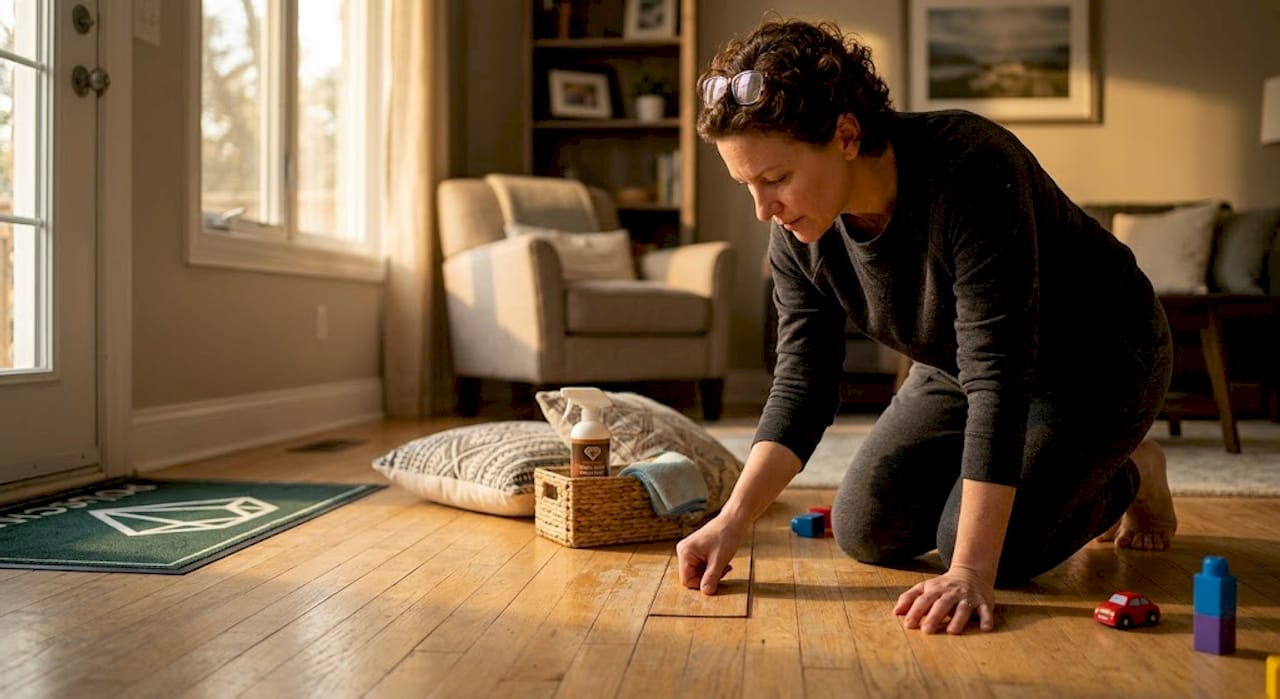
Indoor air quality you can actually breathe. Your floor is where dust, pet hair, allergens, and bacteria collect. Floors accumulate allergens and bacteria that directly affect the air your family breathes, especially in homes with pets or high humidity. Regular vacuuming and cleaning removes these contaminants before they become airborne again.
Here’s what regular care protects against:
- Finish degradation from abrasive grit and foot traffic
- Moisture penetration causing warping and subfloor damage
- Allergen and bacteria buildup that affects family health
- Staining and discoloration from spills left too long
- Costly early replacement from accumulated neglect
Pro Tip: Place a high-quality entry mat at every exterior door. Studies consistently show that most floor-damaging grit enters the home on shoe soles, and a mat catches a significant percentage before it ever reaches your hardwood.
How to maintain floors with a practical routine
One of the biggest misconceptions homeowners carry is that floor maintenance means one big cleaning session every few weeks. The reality is that a layered maintenance approach works far better. Small, consistent actions prevent the buildup that larger, infrequent cleanings try to reverse after the fact. Think of it the way you think about brushing your teeth. Brief daily care prevents problems that are far more disruptive to fix.
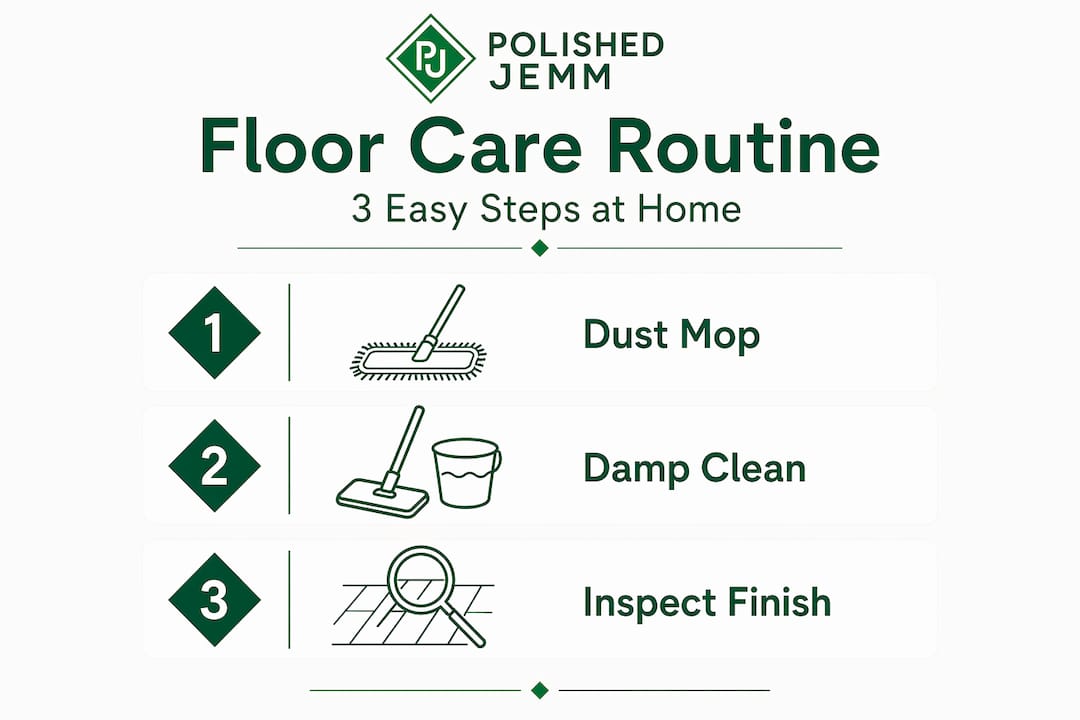
Here is a practical, frequency-based routine that works for most hardwood homes:
- Daily or every other day: Dust mop or vacuum using a hardwood-safe setting (no beater bar). This removes loose grit before it gets ground into the finish. Pet owners and homes with high traffic should not skip this step.
- Every one to two weeks: Damp mop with a pH-neutral cleaner formulated for your floor type. The mop should be barely moist, not wet. A slightly damp microfiber mop that leaves the floor dry within seconds is the correct level of moisture.
- Monthly: Do a more thorough pass, paying attention to corners, edges near baseboards, and under rugs or furniture. Remove area rugs to clean beneath them and check the floor surface for any early signs of wear or scratching.
- Seasonally: Adjust your entire approach based on weather and the specific contaminants each season brings. More on this in the next section.
- Annually or as needed: Assess the finish condition. If water no longer beads on the surface and instead absorbs quickly, the finish is thinning. That’s your cue for a professional screen and recoat before damage reaches the wood itself.
Pro Tip: Never use vinegar or dish soap on hardwood floors, even diluted. Both strip the finish over time and leave a dull residue. Stick to cleaners that specifically say “safe for hardwood” or “pH-neutral” on the label.
Homes with dogs or cats need to increase their dust mopping frequency regardless of how clean things look. Increasing frequency during muddy seasons or when pets are present significantly reduces allergen and debris load. You can also check out hardwood floor care tips from Polishedjemmfloor for a step-by-step breakdown tailored to residential homes.
Common floor maintenance mistakes to avoid
Knowing how to maintain floors matters, but knowing what not to do matters just as much. Several common habits actively damage floors, and most homeowners don’t realize it until the finish is already compromised.
- Over-wetting the floor. This is the single most destructive DIY mistake. Saturated mops push moisture into seams and between boards, causing warping from water damage that often doesn’t become visible for months. By the time you see the buckle, the damage is already structural.
- Using the wrong cleaners. Multi-surface sprays, bleach dilutions, oil soaps, and steam cleaners all degrade hardwood finishes. Steam, in particular, forces moisture directly into the wood grain.
- Ignoring seasonal gaps. Small gaps between boards are normal. Gaps of 1/16 to 1/8 inch are typical in dry winter months as wood contracts. But if a gap exceeds 1/4 inch or doesn’t close when humidity returns in spring, that signals a problem worth investigating.
- Skipping the doormat. It sounds basic, but removing shoes at the door or placing quality mats at all entrances prevents the majority of abrasive particles from reaching your floor in the first place.
- Cleaning reactively instead of proactively. Many homeowners clean only when floors appear dirty, which allows embedded grit and residue to do compounding damage between sessions.
“Your floor doesn’t look dirty until it already is damaged. By then, you’re not cleaning — you’re trying to recover.”
Treating floors as a high-performance capital asset that needs consistent preventive care, similar to the way you maintain a vehicle, is the mindset shift that changes outcomes.
Why floors need seasonal maintenance
Seasons change what your floor faces. Why floors need seasonal maintenance is a question most homeowners answer too late, usually after noticing a problem that a proactive routine would have prevented.
| Season | Primary threat | Recommended action |
|---|---|---|
| Winter | Salt, sand, and moisture tracked inside | Increase damp mopping frequency; use entry mats at all doors |
| Spring | Winter buildup residue, humidity increase | Deep clean floors; inspect finish condition before summer |
| Summer | High humidity causing expansion and adhesive stress | Maintain indoor humidity between 35–55%; avoid excess water |
| Fall | Leaves, mud, and early frost debris | Check for scratches and seal wear before winter arrives |
Winter salt residue creates a chalky, abrasive film on floors that degrades finish without looking obviously damaging. It requires more frequent damp mopping, not just a single pass. And then when winter lifts, spring is the ideal time for a deep clean and refinishing assessment, while mild temperatures and lower humidity create good conditions for both cleaning products and any sealant work.
Summer humidity is a different concern. Wood expands as it absorbs moisture from humid air, and seasonal moisture variations can cause adhesive failures in glued-down floors or push boards into each other in nail-down installations. A consistent indoor humidity level protects the floor from both directions of seasonal movement.
Pro Tip: Invest in a simple hygrometer (a humidity gauge) for your main living area. Keeping indoor humidity between 35 and 55 percent protects hardwood floors year-round and costs almost nothing to manage with a dehumidifier or humidifier.
When to call in a professional
Even the best homeowner routine has limits. Knowing when to call a professional is part of knowing how to protect your floors over the long term.
Signs that your floor needs professional attention include:
- Visible scratches and dull patches that don’t improve with cleaning
- Water stains or gray discoloration, which indicate moisture has penetrated the finish
- Loss of sheen across entire rooms, meaning the protective coat is too thin to function
- Boards that creak, flex, or feel soft, which may signal subfloor moisture damage
- Finish peeling or flaking, which cannot be fixed by homeowner-level cleaning
Professional scrub-and-recoat services can defer replacement costs by over a decade. That is not a small number. A full floor replacement for even a modest home runs into the thousands, and a professional recoat typically costs a fraction of that. When caught at the right time, professional maintenance restores both protection and appearance without sanding all the way down to bare wood. Learn more about when and why professional care pays off at professional floor care.
My honest take on floor maintenance
I’ve seen the full range of floor conditions that homeowners bring to us, and the pattern is almost always the same. The floors that needed the most expensive interventions weren’t the ones in old houses or high-traffic homes. They were the ones where the owner simply waited too long between maintenance sessions.
What I’ve learned is that most homeowners understand floors matter in theory but treat them reactively in practice. They wipe up spills. They vacuum before guests arrive. But consistent preventive care? That gets skipped, week after week, until the finish is gone and the wood tells the story.
The part that surprises people most is how much seasonal adjustments matter. I’ve walked into homes where the summer deep clean had never been done and the winter salt had never been properly mopped off. The floors looked okay from across the room. Up close, the finish had that gray, chalky texture that means the wood is unprotected and the clock is running.
My honest advice is this: think of your floor the way you think of your car. You wouldn’t skip oil changes because the engine looks fine from the outside. The same logic applies here. Small, consistent efforts protect a significant financial and aesthetic investment. And when it is time for professional help, catching things early makes all the difference between a recoat and a full replacement.
— Jim
Restore your floors before they need replacing
If your floors are showing any of the warning signs above, or if you simply want to get ahead of the wear before it becomes a problem, Polishedjemmfloor is ready to help. Since 2014, this family-owned team has been refinishing hardwood floors across the tri-state area with expert craftsmanship and eco-friendly products.
Whether you need a complete refinishing or a faster turnaround, the One-Day Hardwood Floor Screen and Recoat service restores your floor’s protective finish without the disruption of a full sand-down. It’s one of the most cost-effective ways to extend your floor’s lifespan and prevent the kind of damage that leads to full replacement. For homeowners ready to take the next step, explore the hardwood floor refinishing guide at Polishedjemmfloor to understand exactly what the process involves and what results to expect.
FAQ
Why do floors need regular maintenance?
Floors need regular maintenance because daily foot traffic, grit, moisture, and spills continuously wear down the protective finish. Without consistent care, hardwood floors can deteriorate from a potential 100-year lifespan to just 10 to 20 years.
How often should you clean and inspect hardwood floors?
Experts recommend dust mopping every one to two days, light damp mopping every one to two weeks, and a deeper cleaning monthly. A regular floor inspection for finish wear should happen at least once a season.
What are the biggest mistakes in floor maintenance?
The most damaging mistakes are over-wetting floors with saturated mops, using the wrong cleaners (such as vinegar or steam), and only cleaning reactively when floors already look dirty. All three accelerate finish breakdown faster than normal wear.
When does a hardwood floor need professional refinishing?
If your floor shows dull patches that don’t respond to cleaning, visible scratches, gray or water-stained areas, or finish that is flaking, it is time for professional attention. A screen and recoat at this stage prevents far more expensive full replacement later.
Does seasonal weather really affect indoor hardwood floors?
Yes. Winter salt and moisture tracked indoors degrade finish, while summer humidity causes wood expansion that stresses adhesives and joints. Adjusting your care routine with each season is one of the most overlooked but impactful floor care tips available.