
If you’re planning a renovation this year, the hardwood floor trends 2026 has to offer are genuinely exciting. Warm tones are replacing the gray palettes that dominated for nearly a decade, plank widths are getting bolder, and sustainability is no longer an afterthought. The challenge is that the options have never been more numerous. This article cuts through the noise with a practical breakdown of the top trends, a side-by-side comparison, and specific guidance on matching the right style to your home, lifestyle, and budget.
Table of Contents
- Key takeaways
- How to choose hardwood floors in 2026
- 1. Warm natural tones
- 2. Wide plank flooring
- 3. Matte and low-sheen finishes
- 4. Sustainable and eco-friendly hardwood options
- 5. Mixed-width plank installations
- 6. Herringbone and chevron patterns
- 7. High color and grain variation boards
- Comparison table of top 2026 hardwood floor trends
- Choosing the right trend to fit your home and lifestyle
- My take on the 2026 flooring trends
- Bring your 2026 floor vision to life with Polishedjemmfloor
- FAQ
Key takeaways
| Point | Details |
|---|---|
| Warm tones are dominant | Honey oak, golden walnut, and chocolate brown have replaced gray as the leading hardwood flooring color trends. |
| Wide planks change the room | Planks from 7 to 10 inches make spaces feel larger but require careful subfloor preparation. |
| Matte finishes are practical | Low-sheen finishes hide daily wear and scratches better than high-gloss in busy households. |
| Sustainability matters more | FSC-certified and reclaimed wood options are now mainstream, not niche choices for eco-conscious buyers. |
| Pattern floors are resurging | Herringbone and chevron installations are appearing beyond formal rooms and into everyday living spaces. |
How to choose hardwood floors in 2026
Before picking a trend, get clear on your criteria. Even the best-looking floor will frustrate you if it doesn’t fit how you actually live.
Color and tone are your starting point. Ask yourself whether your home leans warm or cool. Warm-toned floors work with beige, cream, and earthy wall colors. Cooler spaces with whites and blues can still accommodate warm wood tones, but the contrast needs to feel intentional.
Plank width affects how large or intimate a room feels. Wider planks open up a space visually, which is why they work especially well in open floor plans. Narrow planks suit smaller rooms or traditional layouts where a busier grain pattern adds character without overwhelming the eye.
Finish type is where most homeowners underestimate their options:
- Matte and low-sheen finishes look natural and age gracefully. They align with the organic modernism trend that’s defining 2026 interiors.
- Semi-gloss finishes offer a middle ground between sheen and practicality.
- High-gloss finishes make a bold statement but show every scuff and dust particle in high-traffic areas.
Durability and species matter just as much as looks. European oak is gaining ground because it’s harder and more stable than many domestic species and takes finishes particularly well. Hickory and white oak are also strong performers for active households.
Sustainability is no longer a premium add-on. FSC-certified and reclaimed wood floors are now standard offerings from most suppliers. They carry an authenticity that factory-uniform boards simply can’t match.
Pro Tip: Before committing to a trend, live with a large sample board in your home for at least 48 hours. Light changes dramatically between morning and evening, and so does your perception of the floor color.
1. Warm natural tones
Gray floors had a long run. For nearly seven years, cool gray tones dominated the flooring market. That era is definitively over. Warm tones now lead in 2026 hardwood flooring trends, with honey oak, golden walnut, and rich browns replacing the cool, detached palette of the previous decade.
The shift isn’t arbitrary. Warmer tones photograph better in the natural-light aesthetic that dominates social media and real estate listings. They also create a sense of comfort and groundedness that many homeowners are prioritizing after years of stark, minimalist interiors.
Chocolate brown has seen remarkable growth in popularity, cited by 33% of designers as a top trending color in 2026 compared to just 17% in 2022. If you want a floor that feels current but won’t look dated in five years, warm walnut tones are your safest bet.
2. Wide plank flooring
The shift toward 7 to 10 inch planks is one of the clearest signals in modern hardwood floor designs for 2026. Wider boards show off the natural grain in a way narrow strips never can. Each board becomes its own visual element.
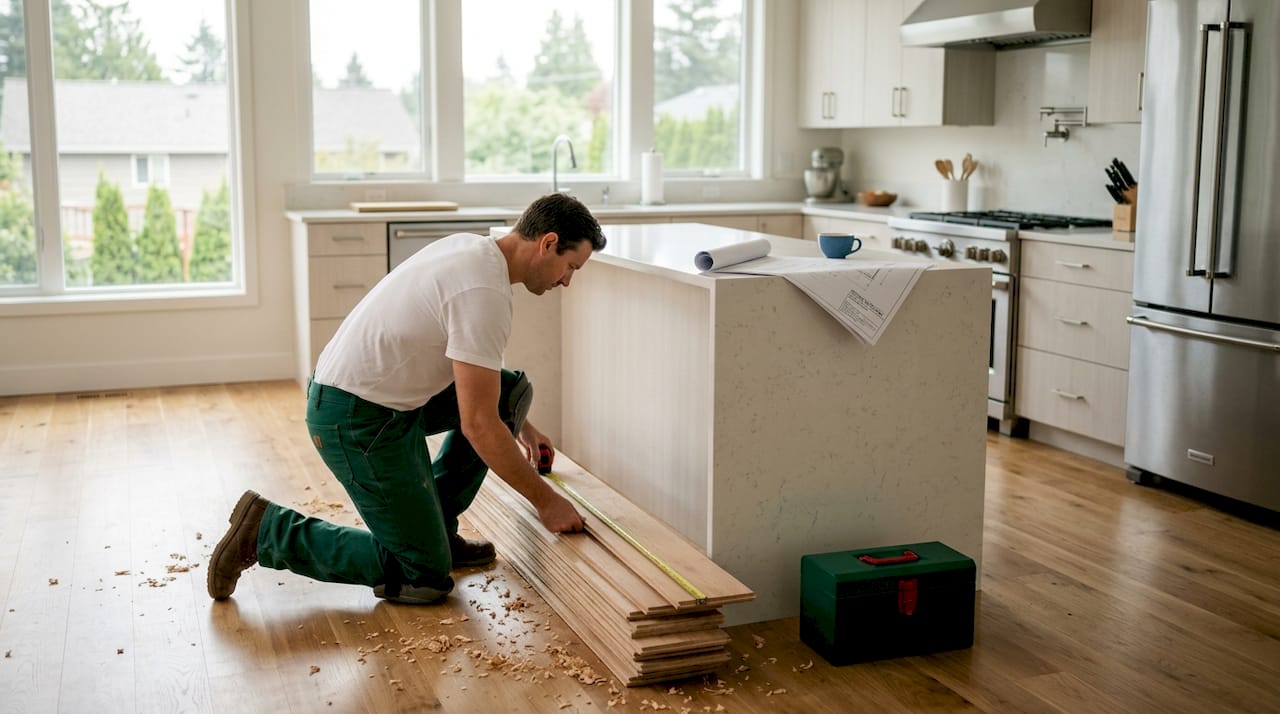
Wide planks work best in rooms with adequate square footage. In a tight hallway or small bedroom, they can feel cramped. In an open-concept living and dining area, they’re transformative. The fewer seams mean the floor reads as one continuous surface, which amplifies any room’s sense of scale.
Pro Tip: Wide planks demand a flat, properly prepared subfloor. Unevenness causes hollow sounds and gaps over time. Get your subfloor assessed before purchasing wide-plank material.
3. Matte and low-sheen finishes
This is the trend with the most practical upside. Matte and low-sheen finishes don’t just look better in 2026 interiors; they actually hide minor scratches and daily wear far more effectively than their high-gloss counterparts.
High-gloss floors act like a mirror. Every footprint, pet paw, and chair drag is visible within hours of cleaning. Matte finishes scatter light instead of reflecting it, which means imperfections simply don’t register the same way. For households with kids, dogs, or heavy foot traffic, this is not a minor benefit.
The deeper appeal is aesthetic. Matte finishes let the wood speak for itself. You see the grain, the texture, and the character of the species without the artificial shine that can make a floor look more like laminate than solid wood. A guide to hardwood floor finishes can help you compare specific products and sheen levels before making a final call.
4. Sustainable and eco-friendly hardwood options
Sustainability is driving purchasing decisions in a way that didn’t exist even five years ago. FSC-certified and reclaimed wood floors are now sought by homeowners who want environmental responsibility and authentic quality in the same product.
Reclaimed wood comes with built-in character. Antique nail holes, saw marks, and color variation from decades of exposure give reclaimed floors a depth that new wood can’t replicate. Eco-friendly hardwood options from certified sources also offer peace of mind that the material was responsibly harvested.
From a design standpoint, reclaimed and FSC-certified floors align naturally with the warm, organic aesthetic that defines 2026 hardwood flooring styles. These aren’t two separate conversations. They’re the same trend viewed from different angles.
5. Mixed-width plank installations
Rather than committing to a single plank width, more homeowners are combining narrow and wide planks in the same installation. The result is a floor with an old-world, artisanal quality that feels collected rather than purchased.
This look suits farmhouse, transitional, and even some contemporary interiors. The key is to vary widths intentionally, typically alternating between two or three sizes rather than using them randomly. Random installation can look unfinished. Intentional variation looks curated.
Mixed-width installations are slightly more complex to plan and install, so get a professional assessment if you’re considering them. The material waste factor also increases since cutting to fit becomes more involved.
6. Herringbone and chevron patterns
Patterned hardwood floors are no longer exclusive to formal dining rooms or upscale hotels. Herringbone and chevron patterns are appearing in living rooms, primary bedrooms, and even kitchens as homeowners discover that geometric layouts add sophistication without bold color.
Herringbone uses rectangular planks laid at 90-degree angles to create a zigzag effect. Chevron uses mitered ends cut at precise angles to form a continuous V-shape. Both add movement to a room. Chevron is sharper and more modern; herringbone is warmer and more classic.
“Patterned floors are one of those choices that seem intimidating until you see them installed. The visual payoff is almost always greater than homeowners expect, especially in rooms with high ceilings or minimal furniture.”
These installations cost more in labor and material waste. Budget roughly 10 to 15 percent more than a standard straight-lay installation of the same wood.
7. High color and grain variation boards
The trend toward uniform, consistent boards is fading fast. Natural color and grain variation is now prized as a premium quality rather than treated as a defect to minimize.
This shift is partly philosophical. Homeowners are increasingly drawn to floors that look like they came from a real tree rather than a factory line. Boards with knots, mineral streaks, and color shifts from light to dark tell a story. They also age better because variation in the base color means that any wear or color change over time blends in rather than standing out.
White oak and hickory are particularly well-suited to this trend because their natural grain patterns are pronounced and visually interesting without looking wild. If uniformity was the standard for the last decade, authentic imperfection is the standard for 2026.
Comparison table of top 2026 hardwood floor trends
| Trend | Cost range | Durability | Maintenance | Style fit | Eco-friendly |
|---|---|---|---|---|---|
| Warm natural tones | $$ | High | Low | Most home styles | Depends on source |
| Wide plank flooring | $$$ | High | Low to medium | Modern, open floor plans | Depends on species |
| Matte / low-sheen finish | $$ | High | Very low | Universal | Yes, water-based options |
| Sustainable / reclaimed wood | $$$ | Medium to high | Medium | Farmhouse, transitional | Yes |
| Mixed-width installation | $$$ | High | Low | Rustic, farmhouse | Depends on source |
| Herringbone / chevron | $$$$ | High | Low | Classic, modern | Depends on source |
| High grain variation boards | $$ to $$$ | High | Low | Organic, natural styles | Yes |
Cost key: $$ = mid-range, $$$ = premium, $$$$ = luxury.
Choosing the right trend to fit your home and lifestyle
With seven strong options on the table, narrowing down comes down to matching each trend to your specific situation. Here’s how to think about it:
- Open floor plans and large rooms: Wide plank flooring and warm natural tones work best. The scale of wide planks complements big spaces, and warm tones unify large areas without feeling cold.
- Homes with children or pets: Prioritize matte finishes and warm mid-tones. Matte finishes hide wear far better than gloss, and mid-range warm tones are more forgiving with dirt and scuffs than very light or very dark floors.
- Sustainability-focused homeowners: Reclaimed wood and FSC-certified options should lead your search. Pair them with water-based, low-VOC finishes for a floor that’s genuinely eco-responsible from board to coating.
- Small rooms or traditional layouts: Mixed-width planks or herringbone patterns add visual interest without requiring wide individual boards that could overwhelm the space.
- Tight budgets: Warm natural tones in a standard plank width with a matte finish deliver on trend without the premium cost of wide planks or patterned installations.
Pro Tip: If you love a trendy option like herringbone but your budget is limited, consider using it only in an entryway or powder room. A small statement space often makes a bigger impression than an entire floor in a neutral layout.
The floor refinishing trends for 2026 also offer a path for homeowners who already have hardwood. Refinishing with a new stain color or finish type can bring an existing floor fully in line with current 2026 hardwood flooring styles without the cost of replacement.
My take on the 2026 flooring trends
I’ve worked with hundreds of homeowners on floors over the years, and the gray trend always felt like it was fighting against the warmth that wood naturally offers. The shift back to honey, walnut, and brown tones feels like a correction rather than a new fashion. It’s wood being allowed to look like wood again.
The matte finish surge is the one I’m most enthusiastic about recommending to clients. I’ve seen high-gloss floors go from beautiful to beaten-looking within two years in active households. Matte finishes simply live better. That’s not a style preference. It’s a functional reality.
What I see homeowners get wrong most often is skipping the subfloor assessment when upgrading to wide planks. I’ve watched beautiful floor installations develop creaks and hollow spots within months because the prep work was rushed. Don’t let that be you.
The sustainability trend is real, not performative. The clients who choose reclaimed or FSC-certified wood consistently end up with floors that have more character and hold up better over time. Authentic materials perform like authentic materials.
My one caution: don’t chase trends at the expense of timelessness. A warm natural tone or a matte finish will still look right in 15 years. A very specific color treatment or ultra-trendy pattern might not. Choose a foundation that ages well, then express personality in your furniture and décor.
— Jim
Bring your 2026 floor vision to life with Polishedjemmfloor
You don’t always need to replace your floors to get in line with 2026 trends. Refinishing can change the color, finish, and character of an existing hardwood floor at a fraction of the replacement cost.
Polishedjemmfloor has been serving tri-state homeowners since 2014, offering professional refinishing, custom stain matching, and eco-friendly finish options that align directly with what’s trending this year. Whether you want a warm walnut stain, a matte low-sheen finish, or a full floor transformation, the team brings the same family-owned attention to detail to every project. Read the full hardwood floor refinishing guide to understand exactly what the process looks like and what results you can realistically expect. For a step-by-step breakdown, the refinishing step-by-step guide is a strong starting point before booking a consultation.
FAQ
What are the top hardwood floor color trends for 2026?
Warm, nature-inspired tones including honey oak, golden walnut, and chocolate brown are the dominant hardwood flooring color trends for 2026, replacing the cool gray palettes that led the market for the previous seven years.
Are wide plank floors a good choice for all homes?
Wide planks between 7 and 10 inches work best in larger rooms and open floor plans. They require a flat, well-prepared subfloor to avoid hollow sounds or gaps after installation.
Why are matte finishes so popular in 2026 hardwood flooring?
Matte finishes hide minor scratches and daily wear far better than high-gloss options, making them a practical and stylish choice for busy households with kids or pets.
Is reclaimed wood a durable option for hardwood floors?
Reclaimed wood can be highly durable depending on the original species, but it requires proper assessment and preparation before installation. It offers authentic character and strong eco-friendly credentials.
Can I update my existing hardwood floors to match 2026 trends without replacing them?
Yes. Professional refinishing with a new stain color and a matte or low-sheen finish can bring existing hardwood floors fully in line with current 2026 hardwood flooring styles at a significantly lower cost than full replacement.