
Hardwood floor refinishing is quietly delivering some of the highest returns of any home upgrade available today, yet most homeowners still think of it as a minor cosmetic fix. The North America wood flooring market is projected to hit $9.6 billion by 2033, driven largely by renovation demand, and tri-state homeowners are right at the center of that momentum. In 2026, the conversation around refinishing has expanded far beyond simply repairing scratches. Style choices, sustainable materials, and cutting-edge technology are all reshaping what’s possible beneath your feet. This guide breaks down what’s trending, what’s worth your investment, and how to make smart choices for your specific home.
Table of Contents
- Why floor refinishing is a top investment in 2026
- Top design and finish trends shaping tri-state homes
- Technology and techniques revolutionizing refinishing in 2026
- How sustainability and wellness drive refinishing choices
- Why chasing “trends” isn’t enough: The real secret to lasting floor appeal
- Ready to transform your floors? Explore professional solutions
- Frequently asked questions
Key Takeaways
| Point | Details |
|---|---|
| Exceptional ROI | Refinishing floors delivers a 100-147 percent return in today’s market. |
| Style leadership | Modern finishes and stains like matte, satin, and grays dominate tri-state homes. |
| Tech-driven upgrades | Innovations like dustless sanding and UV-cured finishes make refinishing smarter and cleaner. |
| Sustainable choices | Eco-friendly and health-focused products are now the industry norm. |
| Timeless design focus | Prioritize durability and classic design for value that lasts beyond fleeting trends. |
Why floor refinishing is a top investment in 2026
Floor refinishing has always made financial sense. But in 2026, the numbers are genuinely striking. Homeowners who refinish hardwood floors can see a 100-147% return on investment when measuring the boost in resale value against project cost. That means for most properties, you’re getting back more than you put in. Few home improvement projects deliver that kind of math.
In the tri-state area, where property values already sit above national averages, this return compounds further. Buyers in markets like northern New Jersey, Westchester County, and Connecticut’s Fairfield County are extremely sensitive to flooring condition. A worn, dull floor signals deferred maintenance to buyers and lowers perceived value across the whole home. A freshly refinished floor, on the other hand, signals care, quality, and move-in readiness.
“Refinishing hardwood floors routinely offers some of the strongest cost-to-value ratios of any home renovation, making it a go-to strategy for sellers and long-term owners alike.”
Homeowners increasingly choose refinishing over replacement in 2026 for several very practical reasons:
- Cost: Full replacement can cost three to five times more than refinishing, especially in premium markets.
- Sustainability: Refinishing uses far fewer materials and resources than tearing out and installing new flooring.
- Speed: Modern refinishing methods, including one-day techniques, can be completed without extended displacement from your home.
- Heritage preservation: Older homes in the tri-state area often have original-growth hardwood that simply cannot be replicated with new products.
- Resale signal: Real estate agents consistently note that updated flooring improves first impressions and can shorten time on market.
Understanding the hardwood floor refinishing benefits goes far beyond aesthetics. You’re also protecting the structural integrity of your floors and adding documented value to your home’s appraisal baseline. If you want a thorough breakdown of what the full process involves, the complete floor refinishing guide is an excellent starting point before you contact any professional.
Top design and finish trends shaping tri-state homes
Understanding the value and demand sets the foundation. Now let’s look at the hottest looks and finishes distinguishing tri-state homes in 2026. Style preferences have shifted in meaningful ways, and what looked modern five years ago may now read as dated.
Stain and sheen comparison for 2026
| Stain color | Finish sheen | Best room fit | Overall popularity |
|---|---|---|---|
| Natural/blonde | Matte | Open-plan living spaces | Very high |
| Cool gray | Satin | Modern bedrooms, offices | High |
| Dark walnut | Low gloss | Traditional dining rooms | Moderate |
| Warm honey | Satin | Family rooms, hallways | High |
| Ebony/espresso | Matte | Luxury primary suites | Moderate |
The clearest takeaway from this table is that matte and satin sheens now dominate. High-gloss finishes, once associated with luxury, have fallen out of favor because they show scratches, dust, and foot traffic much more visibly. Matte finishes hide everyday wear beautifully and fit the organic, understated aesthetic that tri-state buyers currently prefer.
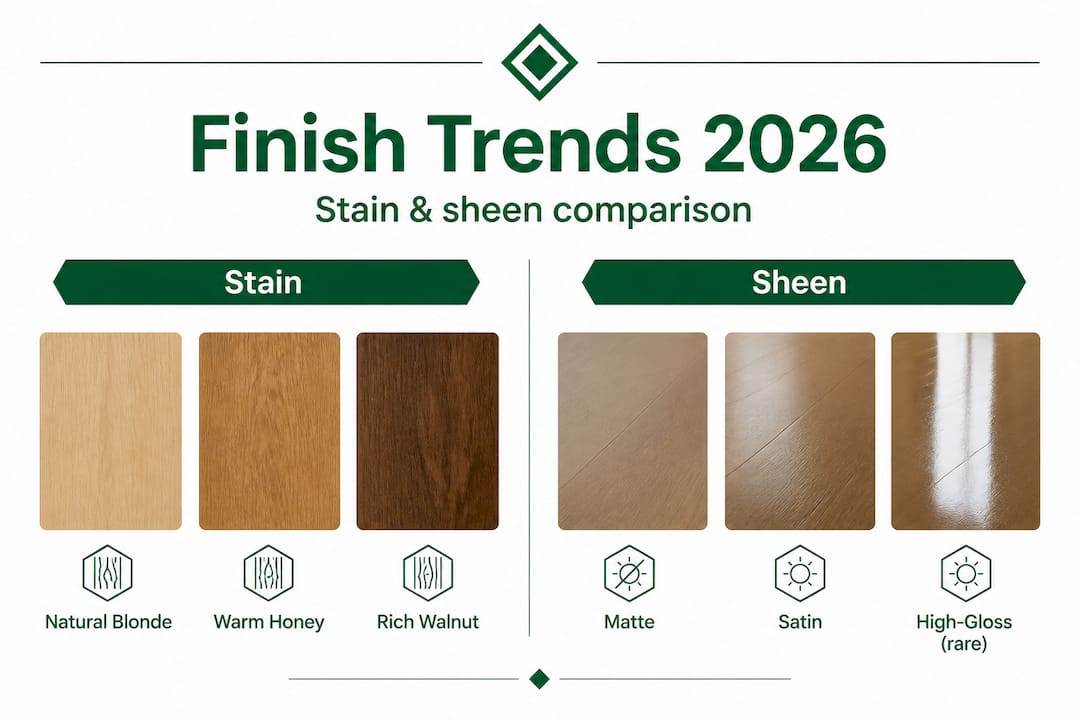
Natural and light stains are resurging strongly, particularly in homes with an open-plan layout where natural light flows across the floor. Gray tones, while still popular, are beginning to feel slightly mature as a trend. Warm honey and natural blondes are edging back in, especially in New Jersey suburbs where the Scandinavian-influenced interior look has gained ground.
Beyond color, pattern layouts are making a significant design statement in 2026:
- Wide-plank boards (5 inches and wider) create a grounded, spacious feel and are extremely popular in new renovations.
- Herringbone and chevron patterns signal elegance and intentionality, especially in formal spaces like entryways and dining rooms.
- Mixed-width layouts add visual texture without requiring a dramatic stain change.
- Wire-brushed textures give floors a handcrafted, tactile feel while also helping conceal minor imperfections between refinishing cycles.
Pro Tip: Walk through your main living area at different times of day and notice how light changes. A floor stain that looks warm and welcoming at noon may look flat and lifeless in the evening under artificial lighting. Sample stains on a small section of your actual floor before committing to any full project.
For a steady stream of ideas and floor care tips relevant to tri-state homes, bookmarking a professional resource will save you time when planning your next project.
Technology and techniques revolutionizing refinishing in 2026
With styles set, the next natural question is how the work gets done. The technical side of refinishing has evolved dramatically, and these innovations are not just about convenience. They directly affect the quality of the finished result, the health of your household during the project, and the long-term durability of your investment.
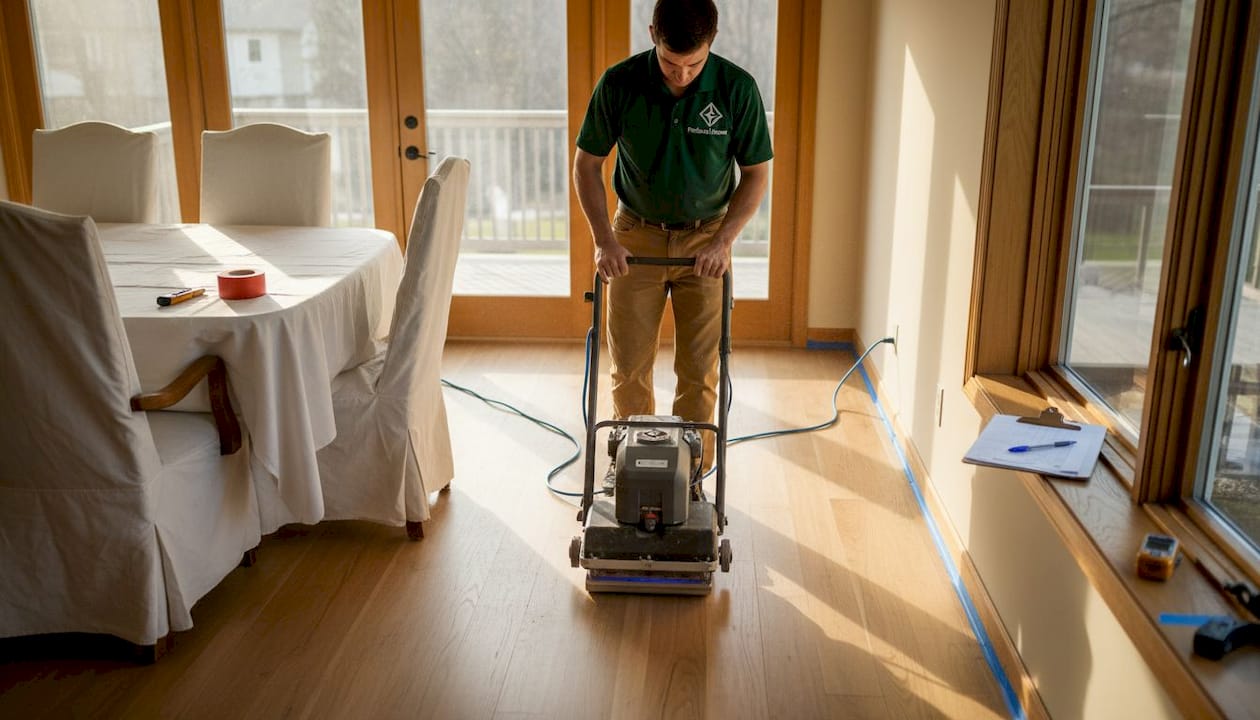
Refinishing technology comparison
| Method | Time to complete | Dust produced | Durability | Best use case |
|---|---|---|---|---|
| Traditional sanding | 3-5 days | High | Good | Major repairs needed |
| Dustless sanding | 2-3 days | Minimal | Good | Occupied homes, allergies |
| UV-cured finish | 1 day | Minimal | Excellent | Busy households, quick turnaround |
| Water-based polyurethane | 2-3 days | Minimal | Very good | Eco-priority projects |
| Oil-modified polyurethane | 3-4 days | Low | Excellent | High-traffic commercial areas |
UV-cured hardwood floors represent arguably the biggest single leap in refinishing technology in recent years. Traditional polyurethane finishes require 24 to 48 hours per coat to cure, meaning a full project can displace a family for several days. UV-cured finishes harden almost instantly under ultraviolet light, enabling a full refinish to be completed in a single workday. The finish itself is also harder and more scratch-resistant than many traditional alternatives.
Dustless sanding has become a standard expectation, not a premium upgrade, for professional refinishing in the tri-state area. The system uses industrial vacuums integrated directly into the sanding equipment, capturing the vast majority of wood dust at the source before it can circulate through your home. For households with children, pets, or anyone with respiratory sensitivities, this is not optional. It’s essential.
How to plan a technology-forward refinishing project:
- Assess your floor’s condition before choosing a method. Floors with deep gouges or significant warping may need more aggressive traditional sanding before any advanced finish can be applied.
- Confirm dustless sanding is available with any contractor you interview. Ask specifically what percentage of dust the system captures and how they protect vents and adjacent rooms.
- Discuss UV-curing availability if your household cannot afford multi-day displacement. Not every contractor has the equipment, so ask early.
- Request water-based finish options as a starting point, then evaluate oil-modified alternatives if your specific traffic patterns call for extra durability.
- Get a written timeline that accounts for drying time between coats, furniture removal and return, and any follow-up inspection.
- Budget for quality upfront. Cutting costs on materials often shortens the time before your next refinishing cycle.
Pro Tip: UV-cured finishes typically carry a premium cost of 15 to 25 percent over traditional methods. But when you factor in reduced downtime, faster return to normal life, and the superior durability of the cured surface, most tri-state homeowners find the math works in their favor over a five to seven-year horizon.
How sustainability and wellness drive refinishing choices
Besides trends and technology, the focus on health and the environment is genuinely reshaping how homeowners evaluate their refinishing options. This isn’t a marketing angle. It’s a functional shift in what people are requesting and what professionals are providing.
Indoor air quality is a top-tier concern for homeowners in 2026. VOC (volatile organic compound) emissions from traditional oil-based finishes can linger in a home for days or even weeks, affecting anyone sensitive to chemical smells or respiratory irritants. Low-VOC and zero-VOC water-based finishes have improved dramatically in quality over the past decade. They now match or exceed the durability of their oil-based predecessors in most residential applications.
The most requested sustainable refinishing options in the tri-state market include:
- Water-based polyurethane finishes that emit significantly fewer VOCs and dry faster than oil-modified versions.
- Plant-based and natural oil sealants for homeowners who want the most minimal chemical footprint possible.
- Reclaimed wood repairs and patching that use salvaged material rather than virgin-cut lumber when boards need replacing.
- No-sand screen and recoat methods that refresh the surface without full sanding, extending the life of existing finish and reducing material waste.
- Third-party certified products that carry labels like GREENGUARD Gold, ensuring tested and verified low emissions.
Green-certified homes command premium pricing in competitive real estate markets, and buyers in the tri-state area increasingly ask about material choices during home inspections.
The practical approach is straightforward: ask any contractor you interview to specify the exact finish products they use by brand and product name, then look up the VOC content independently. Reputable professionals will have no hesitation providing this information. If a contractor is vague about product specifics, that’s a red flag worth noting.
Exploring eco-friendly refinishing options early in your planning process will help you ask better questions and set clearer expectations before any work begins. For homeowners who want a single source handling everything from assessment through completion, looking into premium turnkey floor services removes the guesswork from coordinating multiple steps.
Why chasing “trends” isn’t enough: The real secret to lasting floor appeal
Here’s something we’ve seen play out dozens of times since we started working in this industry in 2014. A homeowner chooses a finish because it was featured in a design magazine or showed up in a social media feed. Three years later, that same homeowner is already wondering if it looks dated. The cycle is exhausting and expensive.
The floors in tri-state homes that hold their appeal the longest are almost never the ones built around the trendiest look of a given year. They’re the ones where the homeowner matched the floor tone to their home’s natural light, the architectural character of the space, and a finish that ages gracefully with wear. Classic warm tones and understated sheens do not go out of style because they were never defined by a style in the first place.
That doesn’t mean ignoring what’s current. It means filtering current trends through a longer-term lens. Wide-plank boards, for example, are not just trendy. They reflect a genuine structural and visual advantage that will remain true regardless of what design cycles do. Matte finishes that hide wear are not a passing fad. They’re a practical response to how real families live in real homes.
The refinishing benefits that compound over time always come back to two things: the quality of the initial work and the consistency of maintenance after the fact. A gorgeous floor left without proper care for five years will underperform a modest floor that was properly maintained every season. The market data showing 100-147% ROI assumes you’re protecting that investment with basic ongoing care.
Pro Tip: Before choosing any stain color, pull out three photos of rooms in your home that you genuinely love the feel of, regardless of floor color. Look at what those rooms have in common in terms of light, furniture tone, and wall color. That visual vocabulary will guide your floor choice far better than any trend report.
Ready to transform your floors? Explore professional solutions
Knowing what’s possible is the first step. Taking action on it is where the real return begins.
At Polished JEMM Floor Care, we’ve been refining tri-state homes since 2014 with exactly the methods, materials, and design knowledge covered throughout this article. Whether you’re starting with a hardwood floor refinishing guide to understand your options or you’re ready to book a professional assessment, we make the process simple and transparent. Our refinishing services include everything from full-scale projects to one-day screen and recoat solutions using eco-friendly, low-VOC products. If you want to see the full picture of what a well-executed refinish delivers for your property value and daily living experience, explore the depth of refinishing benefits before your next project starts.
Frequently asked questions
What is the average ROI for hardwood floor refinishing in the tri-state area?
Homeowners can expect a 100-147% return on investment through resale value gains, with tri-state markets amplifying that return due to premium property values and highly competitive buyer expectations.
Which floor finishes are most popular in 2026?
Matte and satin finishes paired with natural blonde or warm honey stains lead design preferences this year, largely because they hide everyday wear while complementing the organic, understated interiors that tri-state buyers currently favor.
How does dustless sanding compare to traditional methods?
Dustless sanding captures the vast majority of wood particles at the source, dramatically reducing mess and protecting indoor air quality, making it the preferred choice for occupied homes and anyone with respiratory sensitivities.
Are sustainable refinishing products widely available?
Low-VOC and water-based finishes are now standard offerings at most professional refinishers in the tri-state area, with certifications like GREENGUARD Gold making it easier to verify product safety claims independently.
What is the best way to choose a refinishing style that won’t go out of fashion?
Opt for classic tones and subtle sheens that complement your home’s existing architecture, natural light, and furniture palette, rather than selecting based purely on what’s trending in any single year.
Recommended
- From Worn to Wow: The Complete Guide to Hardwood Floor Refinishing Benefits – Polished Jemm
- Revive Your Home: Your Hardwood Floor Refinishing Guide
- Floor Care Tips & Guides | Polished Jeem Floor Care Blog
- Hardwood Floor Refinishing Franklin Lakes – Polished Jemm
- Master wall decor trends in 2026 for stylish homes