
Hardwood floors are one of the few home features that genuinely appreciate when cared for well and deteriorate fast when ignored. If you’ve noticed your floors looking dull, scratched, or uneven, you already understand how to maintain hardwood floors is less about occasional cleaning and more about consistent habits. New Jersey homes deal with humid summers, dry winters, and plenty of foot traffic, all of which accelerate wear. This guide covers everything from daily cleaning routines to professional refinishing decisions so you can protect your investment and keep your floors looking sharp year after year.
Table of Contents
- Essential tools and materials for hardwood floor maintenance
- Daily and weekly cleaning routines to prevent damage
- Safe wet cleaning and deep cleaning practices
- Protecting your floors from scratches and moisture damage
- Repair, refinishing, and when to call professionals
- Rethinking hardwood floor care: Beyond cleaning to holistic maintenance
- Professional hardwood floor refinishing services in New Jersey
- Frequently asked questions
Key Takeaways
| Point | Details |
|---|---|
| Regular cleaning routine | Sweeping and vacuuming regularly prevents grit that scratches hardwood floors. |
| Use minimal moisture | Damp mopping with pH-neutral cleaner protects wood finish without warping. |
| Humidity control | Keep indoor humidity consistent between 35% and 50% to avoid wood movement damage. |
| Protective measures | Use mats, felt pads, and rotate rugs to reduce scratches and uneven fading. |
| Know repair options | Refinishing is cost-effective for surface wear; replacement is for severe structural issues. |
Essential tools and materials for hardwood floor maintenance
Before you can maintain your floors effectively, you need the right tools. The wrong equipment, even something as simple as the wrong mop, can scratch your finish or push moisture into the wood.
Soft-bristle brooms, microfiber mops, pH-neutral cleaners, and felt pads are the foundation of any proper hardwood floor care kit. Here’s what to have on hand:
- Microfiber dust mop: Traps dust and fine grit instead of pushing it around. Far better than a standard broom for daily use.
- Soft-bristle broom: A backup option when a microfiber mop isn’t available, but always sweep in the direction of the grain.
- Vacuum with a hardwood floor setting: The dedicated setting lifts the beater bar off the surface to prevent micro-scratches.
- pH-neutral hardwood cleaner: Anything too acidic or alkaline can strip your finish over time. Look for products specifically labeled for hardwood floors.
- Furniture felt pads: Applied to the bottom of chair legs, table legs, and any furniture that moves regularly.
- Spray bottle: For applying cleaner to your mop, not directly to the floor.
Following a smart care workflow for hardwood floors makes a real difference in how long your finish holds up between professional services.
What to avoid entirely: Steam mops, abrasive scrubbers, oil soaps not formulated for your finish type, and any cleaner containing ammonia or bleach. Steam mops are particularly damaging because they push heat and moisture directly into the wood, which breaks down the finish bond and can cause the boards to swell.
| Tool | Function | Recommended frequency |
|---|---|---|
| Microfiber dust mop | Traps surface dust and fine grit | Daily or every other day |
| Soft-bristle broom | Sweeps larger debris without scratching | As needed |
| Hardwood vacuum (beater bar off) | Pulls debris from between boards | Weekly |
| pH-neutral spray cleaner | Safe damp cleaning of surface | Weekly or as needed |
| Felt furniture pads | Prevents scratches and dents from furniture | Check and replace annually |
Daily and weekly cleaning routines to prevent damage
With the right tools ready, here’s how to clean your floors regularly to keep them damage-free.
The single biggest cause of finish wear is grit. Sand, dirt, and debris act like sandpaper underfoot, and every step grinds them into your finish. This is especially true in New Jersey homes where sandy soil from the shore or gritty winter debris tracks in easily. Consistent cleaning removes that grit before it can do real damage.
Hardwood floors should be swept or dusted every few days, vacuumed weekly, and deep cleaned every one to two months to prevent grit from scratching the finish.
Your weekly cleaning routine:
- Start with a dry microfiber dust mop each morning or every other day in high-traffic areas like entryways, kitchens, and hallways.
- Vacuum once per week using your vacuum’s hardwood floor setting, moving with the grain of the wood.
- Pay extra attention to the edges of boards and corners where dust accumulates but mops can’t reach.
- After vacuuming, do a visual scan for any spills or residue that needs spot treatment before your weekly damp cleaning.
Pro Tip: Always turn off your vacuum’s brushroll before running it over hardwood floors. Even a soft brushroll can leave micro-scratches over time that dull the finish long before you’d expect it to.
Consistent dry cleaning reduces how often you need to wet mop, which is important because every wet cleaning session carries some moisture risk. The cleaner your floors stay day to day, the better your finish holds up long term. For more detail on how deep cleaning hardwood floors fits into your schedule, that resource walks through timing and product choices by finish type.
Safe wet cleaning and deep cleaning practices
Beyond your weekly routine, here’s how to safely perform wet and deep cleaning without risking damage.
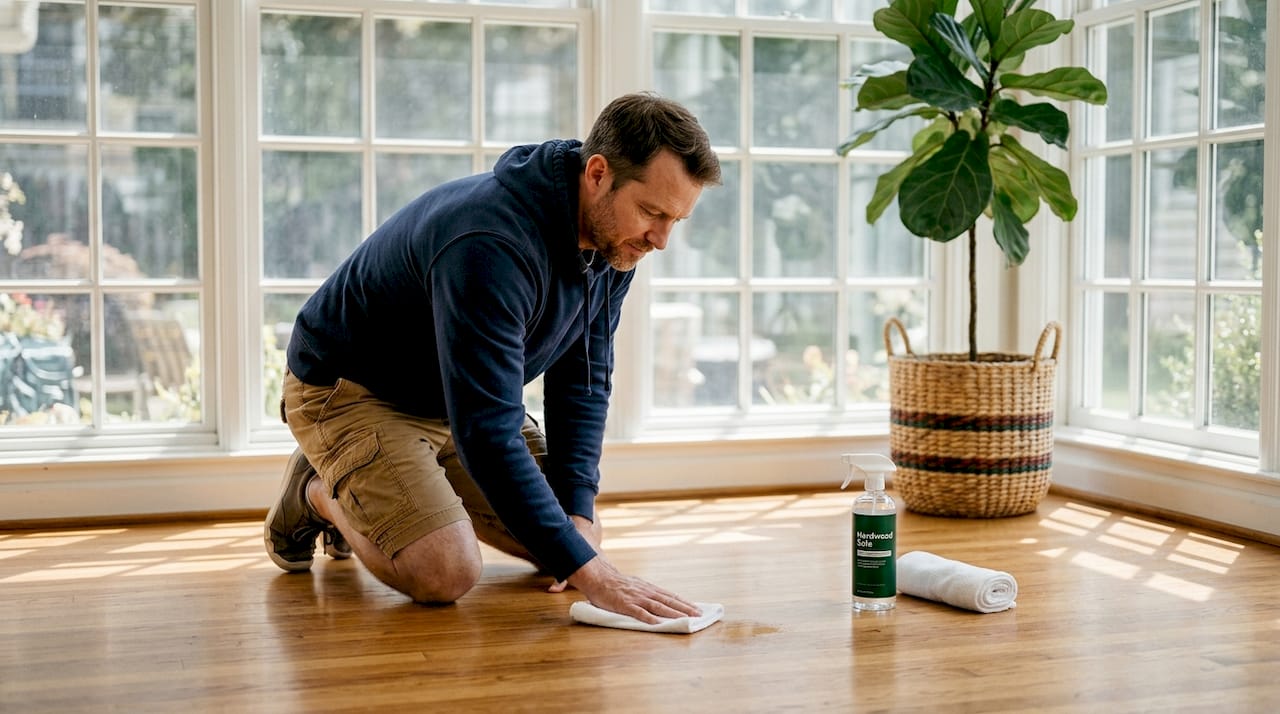
Not all hardwood floors are the same, and the cleaning method that works for one finish can damage another. The two most common finishes are polyurethane (surface-sealed) and oiled. Knowing which you have changes everything about how you clean.
Use a lightly damp microfiber mop and pH-neutral spray cleaner on polyurethane finishes, and never soak the floor or let moisture sit. For oiled floors, clean with manufacturer-approved oil-based products and re-oil high-traffic areas every six to twelve months.
Step-by-step damp mopping for polyurethane floors:
- Spray your pH-neutral cleaner directly onto your microfiber mop pad, not the floor.
- Mop a small section (about 4 to 6 feet) using straight, overlapping passes in the direction of the grain.
- Dry that section immediately with a clean, dry microfiber pad before moving to the next.
- Never leave standing water or visible dampness on any section.
- Open windows or run a fan after mopping to help any residual moisture evaporate.
| Floor finish | Suitable cleaner | Mop method | Deep clean frequency |
|---|---|---|---|
| Polyurethane (surface-sealed) | pH-neutral hardwood spray | Damp microfiber, dry immediately | Every 1 to 2 months |
| Oiled finish | Manufacturer-approved oil-based cleaner | Barely damp cloth, re-oil regularly | Every 1 to 3 months |
| Waxed finish | Liquid wax cleaner, no water | Dry or barely damp, buff after | Every 2 to 3 months |
Pro Tip: For deep cleans, use a dedicated hardwood floor restorer or polish that is compatible with your specific finish. These products fill minor surface scratches and restore clarity to a dull finish without sanding. Pair this with strategies for maximizing hardwood floor lifespan to get the most out of each cleaning cycle.
Protecting your floors from scratches and moisture damage
Regular cleaning keeps floors clean, but protecting them from physical and moisture damage is equally important.
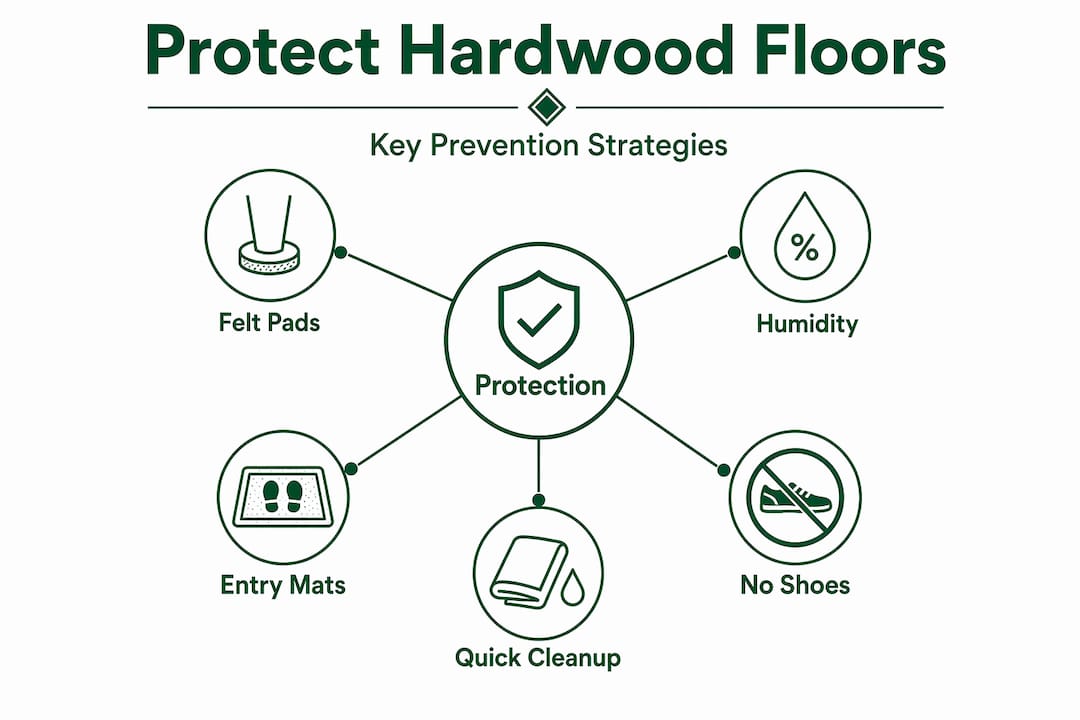
Every piece of furniture without felt pads is a potential scratch waiting to happen. Every wet umbrella left by the door, every dog bowl placed directly on the floor, every potted plant with no tray is a moisture risk. In New Jersey, the seasonal humidity swings between July and January can be dramatic enough on their own to cause boards to gap or cup, even without any visible spills.
Use entry mats and felt pads under furniture, replace pads at least once a year, and rotate rugs to prevent uneven fading and damage. Maintain indoor humidity around 35 to 50% and avoid large swings to reduce hardwood movement and damage.
Practical protection checklist:
- Place entry mats at every exterior door to catch grit and moisture before it reaches your floors.
- Apply felt pads to all furniture legs, including beds, dressers, and dining chairs. Check them every three to four months because they wear flat and stop working.
- Wipe up any spill within two minutes. Water left for even ten minutes can penetrate micro-gaps in the finish.
- Use a tray under all potted plants and pet water bowls.
- Rotate area rugs every six months to prevent uneven color fading from UV exposure.
- Avoid walking on hardwood with high heels or cleats, which concentrate weight into a tiny point and dent the wood surface.
Pro Tip: New Jersey’s winters push indoor humidity very low, and summers push it high. A whole-home humidifier in winter and a dehumidifier or central air in summer will do more to protect your floors than almost any cleaning product. Consistent humidity matters more than temperature control when it comes to wood stability. For a deeper look at hardwood floor maintenance strategies across all four seasons, that breakdown is worth bookmarking.
Repair, refinishing, and when to call professionals
Even with best care, damage may occur. Here’s how to repair, refinish, or when to seek professional help.
Scratches and dull patches are normal signs of a finish that’s doing its job. The finish wears so the wood doesn’t. The question homeowners face is when to address it and how.
Refinishing typically costs $3 to $6 per square foot and is far less disruptive than replacement, which ranges from $8 to $15 per square foot. Replacement makes sense only when there is structural damage, such as severe warping, rot, or termite damage, that refinishing cannot address.
| Option | Best for | Average cost | Timeline | Disruption level |
|---|---|---|---|---|
| Screen and recoat | Dull finish, light surface wear | $1 to $3 per sq ft | 1 day | Low |
| Full refinishing | Deep scratches, worn-through finish | $3 to $6 per sq ft | 3 to 5 days | Moderate |
| Board replacement | Structural damage, rot, severe gaps | $8 to $15 per sq ft | 5 to 10 days | High |
Steps to prepare for professional refinishing:
- Inspect your floors closely during your monthly cleaning to track topcoat wear.
- Look for white or gray areas where the finish has worn through to bare wood, especially in high-traffic hallways and kitchen thresholds.
- Note the number and depth of scratches. Surface scratches that don’t catch your fingernail are screen-and-recoat candidates.
- Clear the room completely before the crew arrives, including furniture, rugs, and wall decor.
- Plan for adequate ventilation and keep pets and children out of the area during and after the work.
For a full breakdown of the process, the hardwood floor refinishing guide covers what to expect at every stage.
Rethinking hardwood floor care: Beyond cleaning to holistic maintenance
Most homeowners think maintaining hardwood floors is primarily a cleaning problem. Clean more often, use the right products, and the floors will last. That’s only part of the picture, and arguably not the most important part.
The real damage drivers are grit, moisture exposure, and humidity swings. None of these are solved by mopping more frequently. Grit enters the home constantly and settles between boards and under furniture where mops don’t reach. A floor can look visually clean and still be grinding its finish away underfoot every day. Dry mopping before any wet cleaning isn’t optional; it’s what removes that abrasive layer first.
Humidity is the one most homeowners completely underestimate. Humidity management beats thermostat comfort; consistent indoor humidity reduces wood stress more than temperature control. In New Jersey, where the difference between a February morning and an August afternoon can represent 40 or 50 percentage points of relative humidity swing, this is especially relevant. Wood expands and contracts with those swings, and over years, those cycles open up gaps, crack finish coatings, and cause edges to cup.
Pro Tip: Invest in a hygrometer (a device that measures indoor humidity) and check it seasonally. If your reading is below 35% in winter or above 55% in summer, your floors are under stress that no cleaning routine can prevent.
The mindset shift that makes the biggest difference is moving from reactive cleaning to proactive environmental management. Clean regularly, yes, but also think about what enters your home, how much moisture lives in your air, and whether your floors are being inspected for wear before visible damage sets in. The homeowners whose floors look great after 20 years aren’t cleaning more aggressively. They’re managing the environment and catching issues early. That’s what makes hardwood floors last over the long haul.
Professional hardwood floor refinishing services in New Jersey
For lasting results and expert care, consider professional hardwood floor refinishing tailored to New Jersey homes.
At Polished JEMM Floor Care, we’ve been working with New Jersey homeowners since 2014, and we understand exactly how the region’s climate affects hardwood. From shore-side humidity to inland winter dryness, local floors face specific challenges that require specific solutions.
Whether your floors need a full restoration or just a quick refresh, our hardwood floor refinishing services and one-day screen and recoat services are designed to work around your schedule with minimal disruption. The screen and recoat option in particular is one of the most underused tools in a homeowner’s arsenal, it restores your finish in a single day without the full cost or downtime of sanding. If you’d like to understand your options before calling, our hardwood floor refinishing guide walks through every method with honest pros and cons so you can make a confident choice.
Frequently asked questions
How often should I clean my hardwood floors to avoid damage?
Hardwood floors should be swept or dusted every few days, vacuumed weekly, and deep cleaned every one to two months based on foot traffic levels in your home.
Can I use a steam mop to clean my hardwood floors?
No. Steam mops push moisture into surface-sealed floors, causing finish degradation and potential warping of the wood boards underneath.
What humidity level should I maintain to protect my hardwood floors?
Keep indoor relative humidity between 35 and 50% year round, since consistency matters more than hitting a single target number.
When should I replace felt pads on furniture legs?
Replace worn felt pads under furniture legs at least once per year, or sooner if you notice the pad has flattened or shifted out of position.
How do I know if I should refinish or replace my hardwood floor?
Replacement is needed for severe structural issues like rot or warping; if the damage is limited to surface wear or a dull, scratched finish, refinishing is the smarter and far more affordable choice.