
Many homeowners confuse floor refinishing with resurfacing or recoating, and that mix-up often leads to expensive mistakes. What is floor refinishing, exactly? It’s the process of sanding a hardwood floor down to bare wood and applying fresh stain and finish coats, restoring both structure and appearance. It’s more involved than a simple recoat and far less drastic than full replacement. This guide walks you through every stage of the process, from identifying the signs your floor needs attention to understanding what you’ll pay and why it’s almost always worth it.
Table of Contents
- Key Takeaways
- What floor refinishing really means
- Signs your floors need refinishing and why it’s worth it
- What floor refinishing costs and what affects the price
- Refinishing vs. recoating, resurfacing, and replacement
- My honest take after years on job sites
- Ready to restore your floors?
- FAQ
Key Takeaways
| Point | Details |
|---|---|
| Refinishing goes deep | Unlike recoating, refinishing sands to bare wood and rebuilds the protective finish from scratch. |
| Signs are visible | Deep scratches, fading, and dullness mean the finish is gone and refinishing is the right call. |
| Cost beats replacement | Refinishing typically costs $600–$4,500, far less than the $2,475–$7,030 range for full floor replacement. |
| Timing and conditions matter | Optimal drying requires 65–80°F and 40–60% humidity, so schedule your project accordingly. |
| Recoating has its place | For surface-level wear with no deep damage, a screen and recoat extends floor life at a lower cost. |
What floor refinishing really means
Refinishing involves sanding the floor’s top layer down to bare wood, removing every trace of the old finish, then building the surface back up with stain and multiple protective coats. Think of it as a full reset. You’re not patching over problems. You’re starting fresh from the wood itself.
The typical process moves through these stages in order:
- Prep and clearing: All furniture is removed and the room is sealed off to contain dust.
- Coarse sanding: A drum or belt sander removes the old finish and any surface-level damage. This is the most labor-intensive part.
- Edge and detail work: Hand sanders or edge sanders reach corners and baseboards that the main machine can’t access.
- Fine sanding: Progressively finer grits smooth the wood grain and prepare it for staining.
- Vacuuming and tack coat: Many professionals include intermediate abrasion and tack steps between each finish coat to improve adhesion and ensure a smoother result.
- Staining (optional): If you want to change or deepen the wood’s color, stain is applied at this stage and allowed to penetrate.
- Finish coats: Two to three coats of polyurethane, water-based finish, or oil-based finish are applied. The first coat dries in roughly 2–3 hours at 65–80°F with 40–60% relative humidity.
- Curing period: Floors may feel dry to the touch within hours, but full cure takes longer before rugs or heavy furniture are safe to place. Rushing this step damages the finish.
The distinction between refinishing and recoating matters. Recoating adds a new finish layer over the existing one without sanding to bare wood. Refinishing removes everything and starts over. If your floor has deep scratches or discoloration, recoating will seal those problems in, not fix them.
Pro Tip: Schedule your refinishing project in spring or early fall when indoor temperature and humidity are easier to control. Environmental conditions directly affect dry times, so working with the season instead of against it saves you days.
Signs your floors need refinishing and why it’s worth it
Your floors tell you when they need attention. The question is knowing what to look for.
Common signs that refinishing is the right call include:
- Deep scratches and gouges that reach into the wood fiber, not just the finish layer
- Fading or discoloration in high-traffic paths, particularly in hallways and around furniture legs
- Dullness that doesn’t respond to cleaning, which signals the finish is fully worn through
- Gray or black staining near moisture sources like sinks or exterior doors, indicating water has penetrated the wood
- Warping or cupping in individual boards, often a sign of prolonged moisture exposure
These issues confirm the finish is gone and bare wood is exposed. At that point, refinishing is your best move.
The benefits go well beyond appearance. Refinishing removes the surface damage that traps allergens, bacteria, and grime in scratches. It restores what is floor luster in the truest sense: that clean, reflective depth that makes hardwood floors feel like a feature rather than a problem. Hardwood floors in good condition also contribute directly to resale value. Buyers notice floors immediately, and worn hardwood reads as deferred maintenance.
The cost comparison makes the decision clearer still. Refinishing costs $600–$4,500, depending on square footage and condition, while full floor replacement runs $2,475–$7,030. You’re getting a result that looks and feels like new floors at roughly half the cost or less. For anyone serious about protecting that investment, understanding the full benefits of hardwood refinishing before deciding is time well spent.
What floor refinishing costs and what affects the price
Understanding the cost breakdown helps you budget realistically and avoid being surprised by quotes.
| Cost Factor | Typical Range |
|---|---|
| Professional refinishing (per sq. ft.) | $3–$8 |
| Average total project cost | $600–$4,500 |
| Labor rate | $60–$160 per hour |
| Dustless refinishing premium | 20–30% above standard |
| Staining (optional add-on) | $1–$3 per sq. ft. |
| Board repairs before refinishing | $100–$400 depending on extent |
Professional refinishing averages $3 to $8 per square foot, with the final number shaped by several variables. Room layout matters: open rectangular spaces are faster to sand than rooms with lots of angles, closets, or built-ins. The condition of your floors also affects cost. A floor with deep staining or significant board damage requires more prep work before the refinishing process can begin.
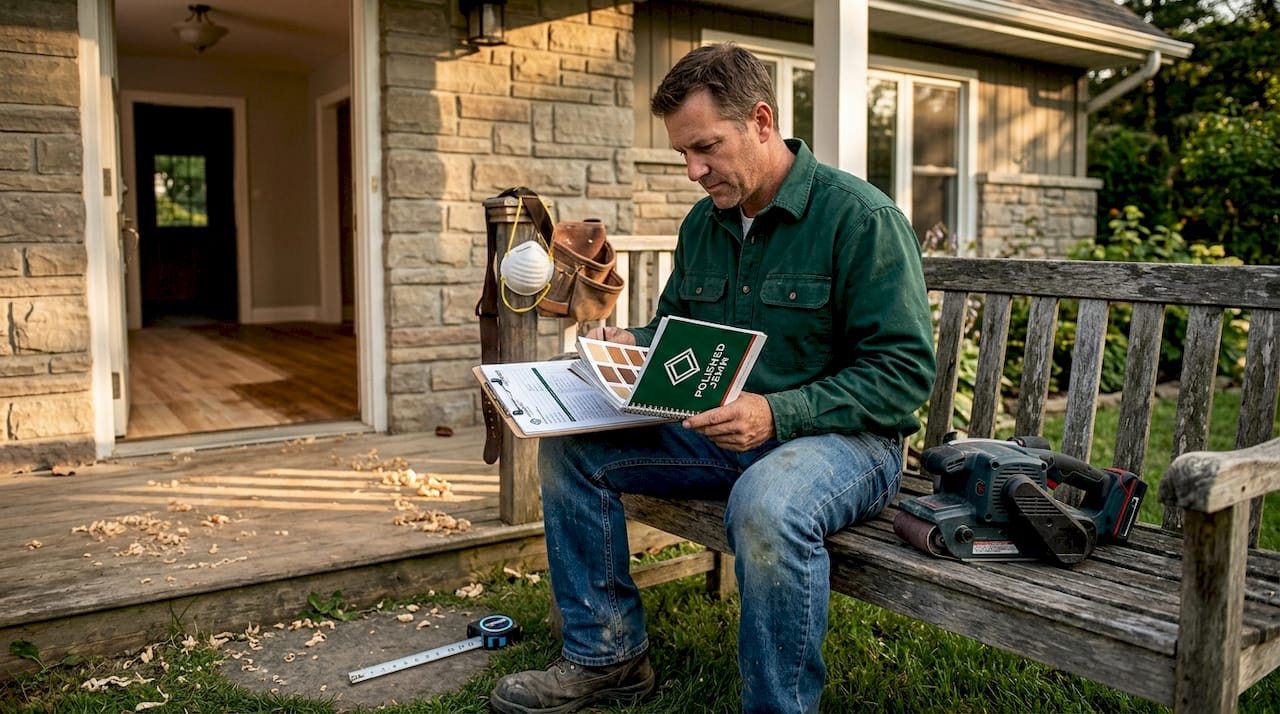
The choice between traditional sanding and dustless refinishing is worth considering beyond just price. Dustless systems use vacuums connected directly to sanding equipment to capture the vast majority of particles at the source. The process costs more, but it’s significantly better for homeowners with allergies and reduces post-project cleanup considerably.
Water-based and oil-based finishes also differ in price and timeline. Water-based finishes cost more per gallon but dry faster overall, with a full project wrapping in 3–5 days. Oil-based finishes typically take 5–7 days but produce a warm amber tone that many homeowners prefer for traditional wood species.
Pro Tip: Get quotes from at least two professionals and ask them to specify whether their price includes staining, all finish coats, and furniture moving. Those three items are where “budget quotes” often hide the real cost.
Refinishing vs. recoating, resurfacing, and replacement
These terms get used interchangeably, but they describe very different scopes of work. Knowing the difference helps you choose the right solution for your floor’s actual condition.
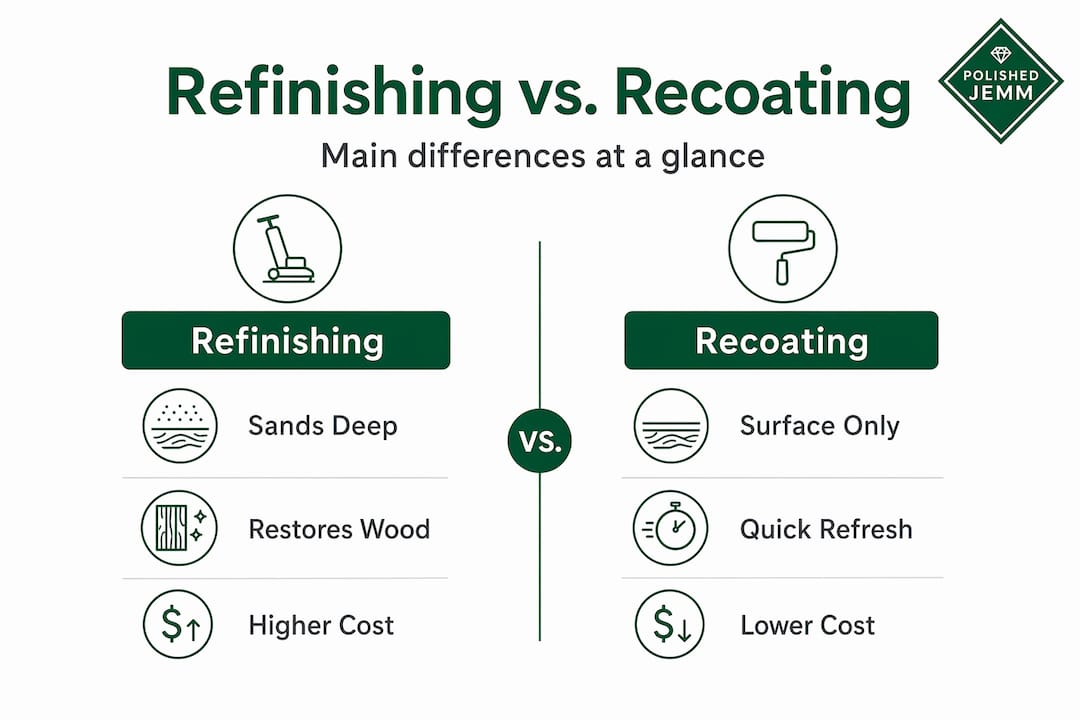
Recoating (screen and recoat): This process lightly abrades the existing finish, then applies one or two new finish coats over it. No sanding to bare wood. No stain changes. It works well for floors with surface-level dullness and minor wear, but it can’t fix scratches that have cut through to the wood. Recoating lasts about 2–5 years before it needs to be repeated, while full refinishing lasts significantly longer when maintained properly.
What is floor resurfacing: This term is sometimes used interchangeably with refinishing, but in professional floor care, resurfacing typically refers to more aggressive material removal, sometimes using specialized equipment to plane down high spots or severe damage before finishing. It’s less common in residential settings and more relevant when explaining residential vs commercial floor care, since commercial floors often see heavy traffic patterns that create uneven wear across large surfaces.
Here’s a side-by-side comparison:
| Method | Sanding depth | Best for | Relative cost | Lifespan |
|---|---|---|---|---|
| Recoating | Surface only | Minor dullness, light wear | Low | 2–5 years |
| Refinishing | Down to bare wood | Deep scratches, discoloration | Medium | 8–15 years |
| Resurfacing | Deep planing | Severe unevenness, heavy damage | Medium-high | Varies |
| Replacement | Full removal | Rotted wood, structural damage | High | 20+ years |
When does replacement make more sense? If your boards are rotted, structurally compromised, or if the wood has been sanded down through previous refinishing cycles and there’s no material left to work with, replacement is the honest answer. A reputable contractor will tell you this before starting work, not after.
What is commercial floor refinishing adds another layer to this conversation. Commercial spaces like restaurants, offices, and retail floors often need more durable finish systems and faster return-to-service times than residential projects. The process is fundamentally the same, but the finish products, the timeline expectations, and the logistics of clearing a commercial space make it a different planning conversation entirely.
My honest take after years on job sites
I’ve walked into hundreds of homes where the homeowner waited too long. They saw the scratches getting worse, noticed the finish losing its depth, and kept thinking they’d deal with it “next season.” By the time I arrived, what could have been a standard refinishing job had turned into a partial board replacement situation because moisture had worked its way into exposed wood.
The terminology of floor refinishing can feel intimidating, and I think that’s part of why people delay. Sanding, abrasion, finish coats, curing times. It sounds technical. But when you break it down, the logic is simple: the finish coat is a sacrificial layer protecting the wood. When that layer is gone, the wood is unprotected. Acting at the right time keeps refinishing straightforward and affordable.
What I’ve also learned is that the drying and curing window is where most homeowner damage happens after a project. The floor looks done. It feels dry. Someone puts a rug down on day two, and by day ten there’s a perfect outline in the finish. Full cure is not optional. That advice alone has saved more floors than any equipment upgrade I’ve made.
If you’re genuinely unsure whether your floor needs a recoat or a full refinish, look at a scratch under bright light. If the scratch is white and you can feel it with your fingernail but it doesn’t catch deeply, the finish is damaged. If the scratch is dark or the wood itself looks gray, you’re past recoating territory. That one test tells you most of what you need to know.
— Jim
Ready to restore your floors?
At Polishedjemmfloor, we’ve spent over a decade transforming worn hardwood floors across the tri-state area. Whether your floors need a full refinish or a one-day screen and recoat, our team uses eco-friendly products and the kind of attention to detail that shows in the final result.

Start with our step-by-step refinishing guide to understand exactly what to expect before you pick up the phone. Or, if you’re ready to talk specifics, visit our hardwood refinishing services page to see what a professional evaluation looks like and get a quote tailored to your home.
FAQ
What is floor refinishing in simple terms?
Floor refinishing is the process of sanding a hardwood floor down to bare wood and applying fresh stain and protective finish coats. It removes old damage and restores the floor’s appearance and durability.
How is refinishing different from recoating?
Refinishing sands to bare wood and starts the finish from scratch, while recoating only adds a new layer over the existing finish without sanding deep. Recoating works for minor wear; refinishing is needed for deep scratches, discoloration, or worn-through finish.
How long does floor refinishing take?
Most refinishing projects take 3–7 days total, including drying time between coats. Water-based finishes typically finish in 3–5 days, while oil-based finishes need 5–7 days due to slower drying.
How do I know if my floor needs refinishing?
Look for deep scratches that reach into the wood, gray or black discoloration near moisture sources, or widespread dullness that doesn’t improve after cleaning. These signs mean the protective finish is gone and the wood itself is exposed.
Is floor refinishing worth the cost?
Yes, in most cases. Refinishing costs $600–$4,500 on average, compared to $2,475–$7,030 for full replacement. It restores appearance, extends the floor’s life by years, and protects your home’s resale value at a fraction of the replacement cost.