
UV curing for hardwood floors is a finishing process that uses ultraviolet light to instantly harden a specially formulated coating, producing a surface that is harder, more wear-resistant, and more visually consistent than most conventional finishes can deliver. Unlike oil-based polyurethane, which can take 24 to 72 hours to dry between coats, UV-curable systems built around acrylate resins and photoinitiators cure in about 1 to 3 seconds under the right UV dose. Technologies like IST METZ UV systems and UV LED flood lamps have made this process accessible beyond factory settings and into professional residential refinishing. If you want floors that are ready to walk on the same day they are finished, this is the process worth understanding.
How does UV curing work on hardwood floors?
UV curing, known in the industry as photochemical polymerization, works by triggering a chemical reaction inside a specially formulated coating the moment UV light hits it. The coating contains acrylate resins and photoinitiators. When UV light strikes those photoinitiators, they release free radicals that cause the resin molecules to cross-link almost instantly, forming a hard, dense film. No waiting for solvents to evaporate. No overnight drying. The reaction is complete in seconds.
Here is how the process unfolds on a residential floor:
- Surface preparation. The floor is sanded to 240 to 400 grit and cleaned thoroughly to remove dust, oils, and debris. Any contamination at this stage compromises adhesion.
- Primer coat application. A UV-curable primer is applied at a specified weight and exposed to UV light at a dose of 150 to 300 mJ/cm². This seals the wood and creates a base for subsequent layers.
- Intermediate coat. A second layer builds film thickness and adds depth to the finish. It is cured separately under UV light.
- Topcoat application. The final coat receives a higher UV dose of 600 to 1000 mJ/cm² to achieve maximum hardness and wear resistance.
- UV exposure. Equipment passes over the coated surface, delivering a precise, uniform dose of UV energy. The floor is ready for foot traffic almost immediately.
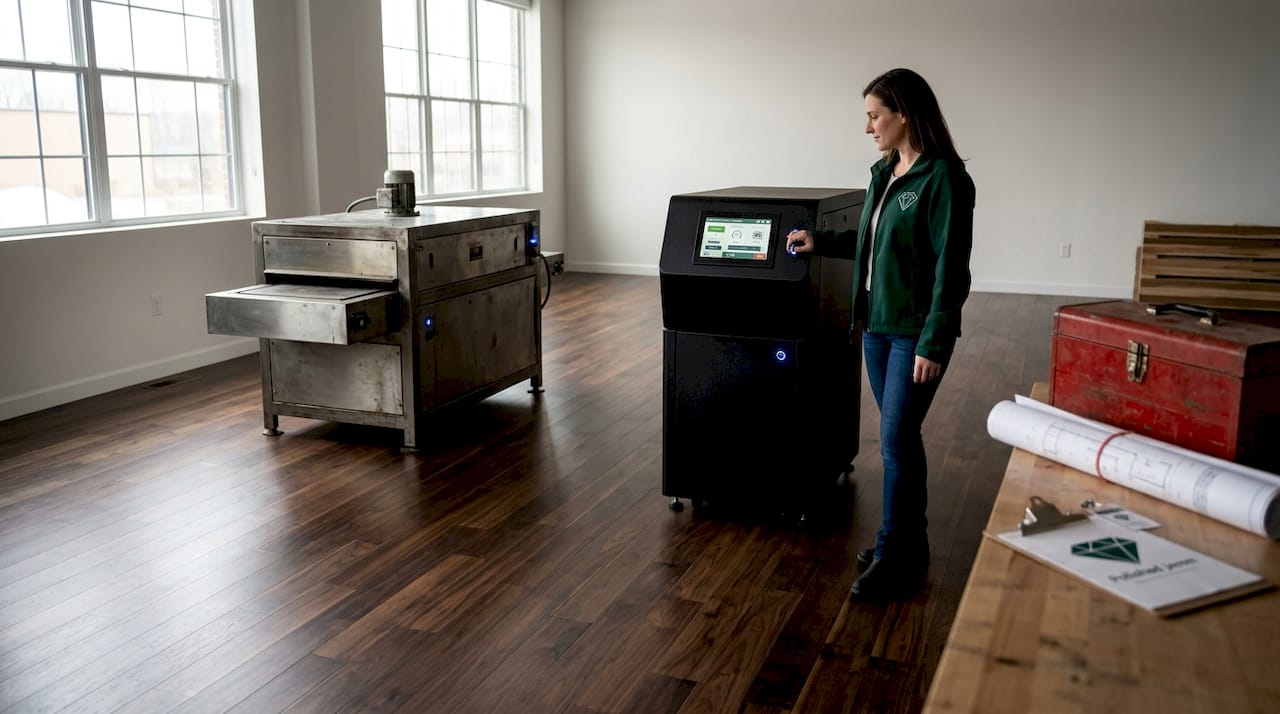
Two main equipment types are used: mercury vapor lamps and UV LED systems. Mercury vapor lamps have been the industry standard for decades, but UV LED curing is now preferred by many professionals because it emits minimal infrared radiation. That matters because less heat means less risk of warping, resin bleed-out, or discoloration in the wood beneath the coating.
Pro Tip: Ask your contractor specifically whether they use UV LED or mercury vapor lamps. UV LED systems raise surface temperature less than half as much as conventional methods, which is a meaningful advantage on heat-sensitive species like maple or cherry.
What are the benefits of UV curing vs. traditional finishes?
The speed advantage alone separates UV floor finishing from every conventional option. Oil-based polyurethane requires multiple coats with 24-hour drying windows between each one, meaning a standard refinishing job can keep a room out of service for three to five days. UV-cured floors are walkable the same day. For families with children, pets, or simply no patience for disruption, that difference is significant.
Beyond speed, the benefits stack up in ways that matter for long-term floor performance:
- Hardness and wear resistance. The cross-linked polymer network created by UV curing is denser than what air-dried finishes produce, resulting in a surface that resists scratches, scuffs, and daily foot traffic more effectively.
- Reduced VOC emissions. UV-curable coatings contain little to no solvent, which means lower energy consumption and reduced emissions compared to conventional finishes. This is a real environmental advantage, not just a marketing claim.
- Color preservation in sensitive woods. Heat generated during curing can cause tannin leaching in oak, producing an unwanted yellow or orange tint. UV LED systems that minimize heat transfer prevent tannin leaching and surface yellowing, preserving the natural color of the wood.
- Finish flexibility. UV-curable coatings are available in matte, satin, and gloss sheens, so the aesthetic outcome is not a compromise.
“UV curing is not just about speed. Managing heat during the curing process is equally critical, especially for tannin-rich species like oak where discoloration can permanently alter the floor’s appearance.” — IST METZ application specialists
The environmental footprint reduction is worth emphasizing. Conventional solvent-based finishes release volatile organic compounds into your home during and after application. UV-cured coatings react completely during the curing step, leaving virtually no off-gassing afterward. That is better for indoor air quality and better for the people living in the space.
What types of UV finishes are available for hardwood floors?
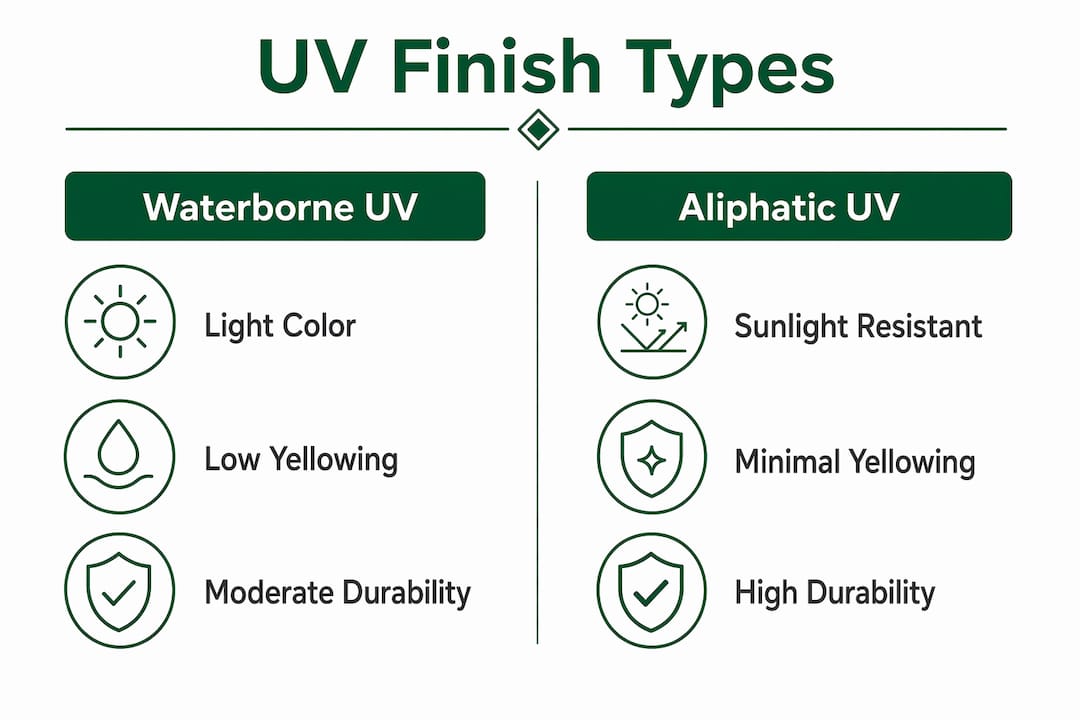
Not all UV finishes perform the same way, and the chemistry behind each type determines how your floor looks and holds up over time. The two most important distinctions are waterborne versus solvent-based UV coatings, and aliphatic versus aromatic clearcoats.
| Finish type | Best for | Yellowing risk | Durability |
|---|---|---|---|
| Waterborne UV coating | Light-colored woods, low-odor installs | Low | High |
| Aliphatic polyaspartic clear | Sun-exposed areas, near windows | Very low | Very high |
| Aromatic clearcoat | Interior spaces with minimal sunlight | Moderate to high | High |
| Matte UV topcoat | Contemporary, low-sheen aesthetics | Low | High |
| Gloss UV topcoat | Traditional looks, high visual impact | Low | High |
UV-stable aliphatic coatings resist yellowing far better than aromatic products in areas where daylight hits the floor regularly. Aromatic clearcoats are less expensive but degrade under UV sunlight exposure, which creates visible yellow bands near doorways and windows over time. That is a chemistry problem, not an application problem, and it cannot be fixed without recoating.
Waterborne UV finishes are the most common choice for residential hardwood floors. They produce minimal odor during application, dry clear, and are compatible with most wood species. Manufacturers like Bona and Loba formulate their waterborne UV products for specific wood species and traffic levels, so the coating is matched to the environment it will live in.
Pro Tip: If your floors get direct sunlight through large windows or glass doors, specify an aliphatic UV topcoat. The price difference over an aromatic product is small. The difference in appearance five years from now is not.
How to maintain UV-cured hardwood floors
UV-cured finishes are tough, but the wood underneath is still wood. Porosity, moisture sensitivity, and heat vulnerability do not disappear because the surface coating is hard. Steam mops can warp or degrade hardwood regardless of finish type, and UV-cured floors are no exception. The finish cures instantly, but it does not make the wood impervious to moisture that works its way through seams or edges over time.
Follow these practices to keep UV-finished floors performing at their best:
- Sweep or vacuum daily using a soft-bristle attachment. Grit and sand act like sandpaper underfoot and wear down any finish faster than normal foot traffic does.
- Mop with a barely damp microfiber mop and a pH-neutral cleaner. Products like Bona Hardwood Floor Cleaner are formulated to clean without leaving residue or disrupting the finish.
- Never use steam mops. The combination of heat and moisture is the fastest way to damage both the finish and the wood beneath it. Instant cure does not permit steam or soaking, and no UV finish changes that rule.
- Use felt pads under furniture legs. Hard feet on chairs and tables concentrate weight into small points, which can dent or scratch even a UV-cured surface.
- Limit direct sunlight exposure with rugs, curtains, or UV-filtering window film. Even UV-stable coatings benefit from reduced sun exposure over time.
For a practical maintenance guide tailored to hardwood floors with UV finishes, the cleaning protocol matters as much as the finish itself. A well-maintained UV-cured floor can look new for a decade or more. A poorly maintained one will show wear regardless of how good the original finish was.
Pro Tip: Place a quality entry mat at every exterior door. Studies on floor wear consistently show that the majority of finish damage originates from dirt tracked in from outside. A mat costs almost nothing. Refinishing costs significantly more.
What should homeowners consider before choosing UV curing?
UV curing is not a one-size-fits-all solution, and the quality of the outcome depends heavily on the contractor’s equipment, process knowledge, and coating selection. Before committing to a UV floor finishing project, ask the right questions.
- Verify UV dose parameters. Coating suppliers specify irradiance and dose targets for each product. A contractor who cannot tell you the mJ/cm² targets they are working to is guessing, not calibrating. Under-cured coatings feel soft, scratch easily, and may fail prematurely.
- Confirm the number of coating layers. Skipping layers or using incorrect UV doses leads to durability and appearance failures. A proper UV system applies primer, intermediate, and topcoat as separate cured layers, not a single thick application.
- Ask about heat management for your wood species. Oak, in particular, is prone to tannin leaching when exposed to excess heat during curing. Confirm that the contractor uses UV LED equipment or another low-heat system if your floors are oak or another tannin-rich species.
- Understand the coating chemistry. Ask whether the topcoat is aliphatic or aromatic, and whether it is rated for UV sunlight stability if your floors receive direct sun. This single question separates informed contractors from those selling on price alone.
- Request manufacturer documentation and warranty terms. Reputable coating manufacturers provide technical data sheets for every product. A contractor who uses professional-grade coatings from suppliers like Bona, Loba, or Pallmann should be able to produce that documentation.
- Compare total cost against long-term value. UV-cured finishes cost more upfront than conventional options. The tradeoff is a finish that lasts longer, requires less frequent recoating, and delivers better daily performance. For most homeowners, the math favors UV curing over a ten-year horizon.
You can also review the types of hardwood floor finishes available to compare UV curing against oil-modified polyurethane, water-based finishes, and hardwax oils before making a final decision.
Key takeaways
UV curing for hardwood floors delivers faster results, better durability, and lower VOC emissions than conventional finishes, but the outcome depends entirely on correct UV dose, proper coating layers, and the right chemistry for your specific wood and environment.
| Point | Details |
|---|---|
| Cure speed advantage | UV-cured coatings harden in 1 to 3 seconds, making floors walkable the same day. |
| Multi-layer process matters | Primer, intermediate, and topcoat must each be cured separately to achieve full durability. |
| Heat management is critical | UV LED systems reduce heat transfer, preventing tannin leaching and yellowing in oak floors. |
| Coating chemistry affects longevity | Aliphatic topcoats resist sunlight yellowing; aromatic coatings degrade near windows over time. |
| Maintenance rules still apply | Steam mops and excess moisture damage UV-cured floors just as they damage any hardwood finish. |
What I’ve learned after years of watching UV curing transform floors
I have watched UV curing technology move from factory-only equipment to something professional refinishers bring into residential homes, and the shift has been significant. What strikes me most is not the speed, though that genuinely changes the homeowner experience. It is the consistency. When the chemistry is right and the UV dose is dialed in, the finish is uniform in a way that hand-applied conventional coatings rarely achieve.
The part that most homeowners miss is the distinction between UV curing as a process and UV resistance as a coating property. These are two completely different things. A floor can be UV-cured and still yellow badly under sunlight if the topcoat chemistry is aromatic rather than aliphatic. I have seen beautiful floors near south-facing windows turn noticeably orange within two years because a contractor used the wrong clearcoat. The curing process was fine. The product selection was not.
My honest advice: do not choose a UV curing contractor based on price or turnaround time alone. Ask for the technical data sheet on the topcoat they plan to use. Ask whether it is aliphatic or aromatic. Ask what UV dose they target for the topcoat layer. A contractor who answers those questions confidently and specifically is one who actually understands what they are doing. One who deflects or gives vague answers is one who may be cutting corners you will not see until the finish starts to fail.
UV curing’s future in residential flooring is strong. As UV LED equipment becomes more affordable and portable, more professional refinishers will adopt it as their standard process. Homeowners who understand the technology now will be better positioned to evaluate contractors, ask the right questions, and get results that actually last.
— Jim
See UV curing results on your own floors
Polishedjemmfloor has been refining hardwood floors across the tri-state area since 2014, and UV curing technology is central to how we deliver results that last. Our process applies properly layered UV-curable coatings with calibrated UV LED equipment, which means your floors are ready for foot traffic the same day without sacrificing finish quality or durability. We use eco-friendly, low-VOC products and bring the same meticulous attention to every residential project we take on. If you are ready to see what a professionally UV-cured floor looks like in your home, start with our hardwood floor refinishing guide and reach out for a free estimate. You can also explore our full range of refinishing services to find the right fit for your floors.
FAQ
How long does UV curing take on hardwood floors?
UV-curable coatings cure in about 1 to 3 seconds per pass under UV light. The full refinishing process, including surface prep and multiple coating layers, typically takes one day, after which the floor is ready for normal use.
Is UV curing safe for all hardwood species?
UV curing works on most hardwood species, but tannin-rich woods like oak require low-heat UV LED equipment to prevent yellowing. Heat during curing causes tannin leaching in oak, which discolors the wood permanently if not managed correctly.
Can UV-cured floors be refinished later?
Yes. UV-cured floors can be screened and recoated when the finish shows wear. The process is similar to refinishing any hardwood floor, though the contractor should use UV-compatible products to maintain finish integrity across layers.
What is the difference between UV curing and UV-resistant coatings?
UV curing refers to the process of hardening a coating using ultraviolet light. UV resistance refers to how well the final coating holds up under ongoing sunlight exposure. Aliphatic coatings resist yellowing from sunlight; aromatic coatings do not, regardless of how they were cured.
How do I clean UV-cured hardwood floors without damaging them?
Use a pH-neutral cleaner and a barely damp microfiber mop. Avoid steam mops entirely, as heat and moisture penetrate wood through seams and edges over time, degrading both the finish and the substrate beneath it.