
If your hardwood floors are looking dull, scratched, or tired, you’ve probably searched for a fast fix. Explaining one-day floor refinishing matters because most homeowners assume it means full sanding down to bare wood. It doesn’t. One-day refinishing involves buffing the existing finish and applying fresh topcoats. That misconception alone causes countless homeowners to either overspend on a full job they didn’t need or get disappointed when a quick recoat doesn’t erase deep damage. This article clears all of that up.
Table of Contents
- Key takeaways
- Explaining one-day floor refinishing: the real process
- Benefits and limitations of one-day vs. full refinishing
- Preparing your home for one-day refinishing
- My honest take on one-day refinishing
- Ready for floors that look great again?
- FAQ
Key takeaways
| Point | Details |
|---|---|
| Not a full sand job | One-day refinishing buffs and recoats existing finish, it does not sand to bare wood. |
| Best for light wear | Works well on floors with minor scratches and dull finish, not deep gouges or stains. |
| Back in a day | Most homeowners can re-enter the room within 24 hours compared to 3-5 days for full sanding. |
| Temperature matters | Keep your home between 65 and 75°F during and after the process for proper curing. |
| Costs less upfront | One-day screen and recoat typically costs a fraction of a full professional sand and refinish. |
Explaining one-day floor refinishing: the real process
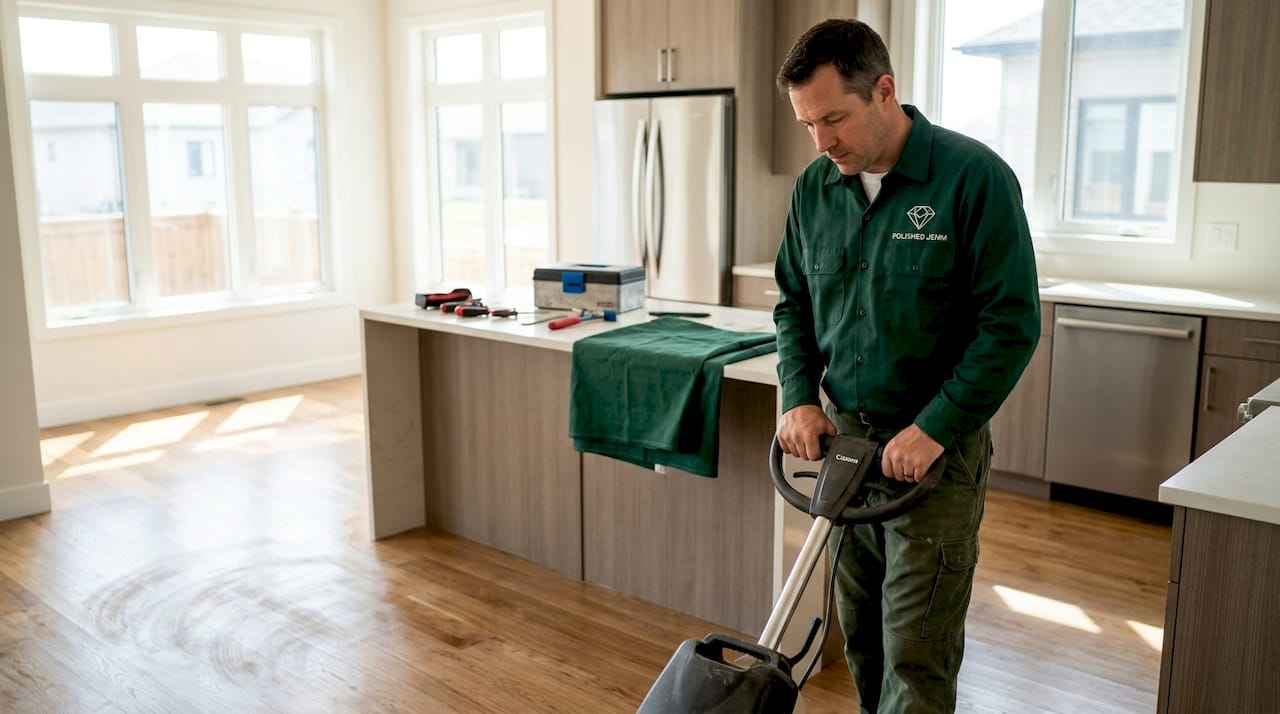
Let’s get one thing straight. One-day refinishing is a buff and recoat service, not a full sanding project. Professionals use a floor buffer with a screening pad to scuff the surface of the existing finish. This creates light abrasion so the new finish coats bond properly. The wood itself is rarely, if ever, touched directly.
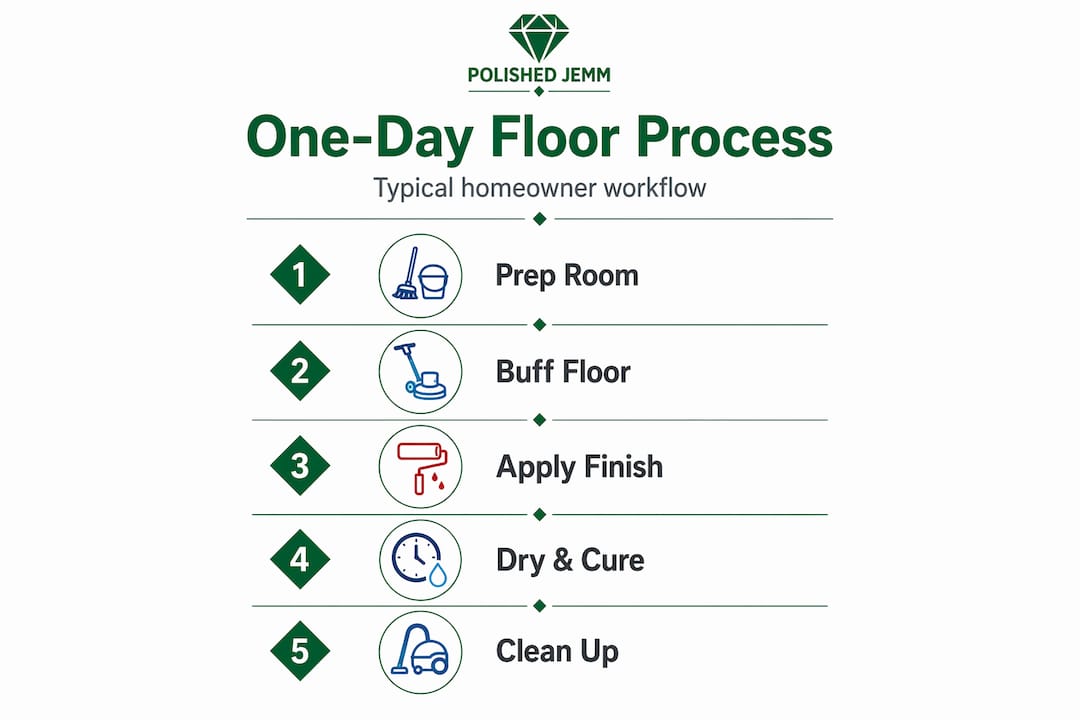
Here is how the fast floor refinishing process typically unfolds from start to finish:
- Initial inspection. The technician checks the floor for deep scratches, stains, or areas where the finish has worn through completely. These spots may need spot sanding before screening begins.
- Deep cleaning. The floor gets vacuumed, then wiped down with a cleaning solution to remove wax, residue, and debris. Dust and debris removal before applying finish is critical. Any contamination left behind will cause bumps, bubbles, and streaks in the final coat.
- Screening or buffing. A rotary buffer fitted with a mesh screen pad abrades the existing finish across the entire floor. This is not aggressive. It removes the sheen and creates a mechanical bond for the new coats without stripping wood material.
- Dust collection and tack wipe. After buffing, fine dust gets vacuumed up thoroughly. A tack cloth makes one final pass to catch anything left behind.
- Finish application. Two coats of finish are applied, usually with a T-bar applicator. Applying finish near baseboards requires careful brush cutting to avoid uneven coverage or bubbles at the edges. Slow, overlapping strokes give the cleanest result.
- Drying. Water-based polyurethane dries in 4 to 8 hours, making it the go-to choice for one-day wood floor refinishing. The low odor is a bonus. Oil-based options take much longer and create stronger fumes.
Pro Tip: Before any screen and recoat, test a small hidden area with a few drops of water. If the water soaks in instead of beading, the finish is too worn and a full sand may be necessary instead.
The entire process for an average-sized room typically wraps up in four to eight hours of active work, depending on square footage and how many coats are applied.
Benefits and limitations of one-day vs. full refinishing
The appeal of one-day floor restoration is real. Less noise, less dust, less disruption, and you get your space back fast. Traditional sanding takes 3 to 5 days for an average 800 square foot floor, while a screen and recoat is typically done the same day. That difference is huge if you have kids, pets, or limited space to relocate.
Cost is another factor. Professional full sanding can cost several thousand dollars, while one-day refinishing sits well below that price point. For floors that qualify, it’s the smarter financial move.
But the limitations are real too. One-day refinishing only works on floors with intact finish and light wear. If you have deep gouges, dark stains that have penetrated the wood, or sections where the finish has completely worn through, a screen and recoat won’t fix it. You’re bonding new finish to old finish. If the old finish is failing, that bond won’t hold.
| Feature | One-day screen and recoat | Full sanding and refinishing |
|---|---|---|
| Time to complete | 1 day | 3 to 5 days |
| Best for | Light scratches, dull finish | Deep damage, worn-through finish |
| Wood removal | None | Yes, removes thin wood layer |
| Cost | Lower | Significantly higher |
| Disruption level | Minimal | High (dust, noise, vacate rooms) |
| Finish customization | Limited | Full stain color change possible |
| How often needed | Every 3 to 5 years | Every 10 to 15 years |
Pro Tip: If you’re unsure which method your floor needs, check whether water still beads on the surface. Loss of luster combined with water absorbing into the wood signals the finish is gone and a full refinish may be the only option.
The honest answer is that many homeowners push for one-day refinishing hoping to avoid the cost of a full job, only to be disappointed when it doesn’t address the actual damage. Knowing which category your floor falls into before you call a contractor saves everyone time and money.
Preparing your home for one-day refinishing
Getting your home ready before the crew arrives makes a measurable difference in the final result. Here is what you should do:
- Clear the room completely. Move all furniture, rugs, and decorative items out. Don’t leave anything to chance. Even light items left behind become obstacles.
- Clean the floor yourself first. Sweep and vacuum thoroughly, but avoid steam mops or wet mopping in the days leading up to the appointment. Excess moisture affects how well the finish adheres.
- Control your indoor climate. Temperatures between 65 and 75°F give the finish the best chance of curing evenly. Humidity also matters. Aim for 35 to 55 percent relative humidity. Very dry or very humid conditions can cause the finish to bubble, blush, or cure unevenly.
- Protect adjacent areas. Close doors to other rooms and cover vents to keep fine dust from spreading. Even with dustless systems, some airborne particles are unavoidable.
- Plan for light foot traffic timing. Water-based finishes typically allow light foot traffic after about 4 to 8 hours, but you should wait a full 24 hours before moving furniture back. Full curing takes about 7 to 14 days, so avoid dragging furniture or placing area rugs too early.
What to expect during the day itself: plan for moderate noise from the buffer, some chemical smell depending on the finish type, and a crew present for most of the working hours. Most one-day projects are done by early afternoon if they start in the morning.
After the job, your floor maintenance habits determine how long the results last. Sweep regularly, use a pH-neutral hardwood floor cleaner, and add felt pads under furniture legs. Routine cleaning and polishing extend floor life, but the next professional screen and recoat will likely be needed within three to five years under normal use. You can learn more about signs your floor needs attention before the situation gets worse.
My honest take on one-day refinishing
In my experience, the biggest issue with one-day refinishing isn’t the process itself. It’s the expectation gap.
I’ve seen homeowners come in expecting a screen and recoat to look like a brand-new installation. When the pre-existing scratches are still faintly visible under the new sheen, they’re disappointed. But that result is actually correct. A recoat restores protection and gloss. It doesn’t rewrite the history of the wood.
What I’ve found over the years is that the homeowners who are most satisfied are the ones who understand going in that this is a renewal, not a reset. When I walk a client through the floor refinishing decision before any work starts, the outcome conversation is almost always smoother.
My honest advice: don’t let price alone drive the decision between a screen and recoat versus full sanding. I’ve watched people spend money on a recoat that lasted 18 months because the underlying finish was already failing. That’s not a good deal. Get an honest assessment first, even if it costs you a service call. The right process on the right floor is always worth more than the fastest or cheapest option.
— Jim
Ready for floors that look great again?
Polishedjemmfloor has been restoring hardwood floors across the tri-state area since 2014, and the team knows exactly which approach fits your floor’s condition. Whether your floors need a one-day screen and recoat or a full professional refinish, every job is handled with dustless sanding equipment, eco-friendly finishes, and the kind of attention that only a family-owned business delivers.

You don’t have to guess what your floors need. Polishedjemmfloor offers thorough assessments before any work begins so you get the right service at the right time. Explore the professional refinishing guide to see exactly what the process looks like, or head to the hardwood refinishing services page to request a consultation. Your floors deserve the right fix, not just a fast one.
FAQ
What is one-day floor refinishing exactly?
One-day floor refinishing is a screen and recoat process where the existing finish is lightly buffed and new finish coats are applied on top. It does not involve sanding down to bare wood.
How long before I can walk on floors after a recoat?
With water-based polyurethane, light foot traffic is usually safe within 4 to 8 hours. Full curing takes 7 to 14 days, so avoid rugs and heavy furniture during that period.
Can one-day refinishing remove deep scratches?
No. One-day wood floor refinishing works only on light surface scratches and dull finish. Deep gouges or stains that have penetrated the wood require full sanding and refinishing.
How much does one-day refinishing cost compared to full sanding?
One-day screen and recoat is significantly less expensive than a full sand and refinish. Full professional sanding can run several thousand dollars depending on floor size, while a recoat costs a fraction of that.
How often do hardwood floors need refinishing?
A screen and recoat is typically needed every 3 to 5 years under normal use. Full sanding and refinishing may only be required every 10 to 15 years, depending on foot traffic and how well the floors are maintained.