
Your hardwood floors put up with a lot, and most homeowners wait far too long before doing anything about it. Knowing the signs you need floor refinishing is the difference between a quick sanding job and a full replacement. By the time floors look obviously bad, the damage is often deeper than it appears. Catching the warning signs early keeps costs manageable and protects the investment you’ve already made in your home. Refinished floors are also more attractive to buyers, making this a financially smart decision beyond just aesthetics.
Table of Contents
- Key takeaways
- 1. Signs you need floor refinishing start with visible surface scratches
- 2. Dull or worn-through finish with no shine left
- 3. Water stains and gray or black discoloration
- 4. Warping, cupping, or crowning boards
- 5. Soft spots or squeaky sections underfoot
- 6. Floorboard thickness is running low
- 7. Gaps between planks that keep growing
- Visible damage vs. recommended action
- Maintenance tips to delay your next refinishing
- My honest take on when floors really need refinishing
- Let Polishedjemmfloor bring your floors back to life
- FAQ
Key takeaways
| Point | Details |
|---|---|
| Surface damage signals urgency | Scratches, stains, and fading are the earliest floor refinishing indicators and should not be ignored. |
| Structural damage changes the plan | Warping, cupping, and soft spots may require repair or replacement before refinishing can begin. |
| Board thickness limits your options | Floors thinner than 5/8 inch may only survive one more sanding, so assess thickness before proceeding. |
| Maintenance delays refinishing | Proper cleaning tools and seasonal care extend floor life and push back the need for refinishing. |
| Professional evaluation saves money | An expert eye catches issues a homeowner might miss and prevents costly sanding errors. |
1. Signs you need floor refinishing start with visible surface scratches
Surface scratches and fading are the most common and recognizable floor damage signs. You’ll typically notice them in high-traffic zones first: hallways, kitchens, and the area around the couch. Light scratches may only affect the finish layer, while deeper ones cut into the wood itself.
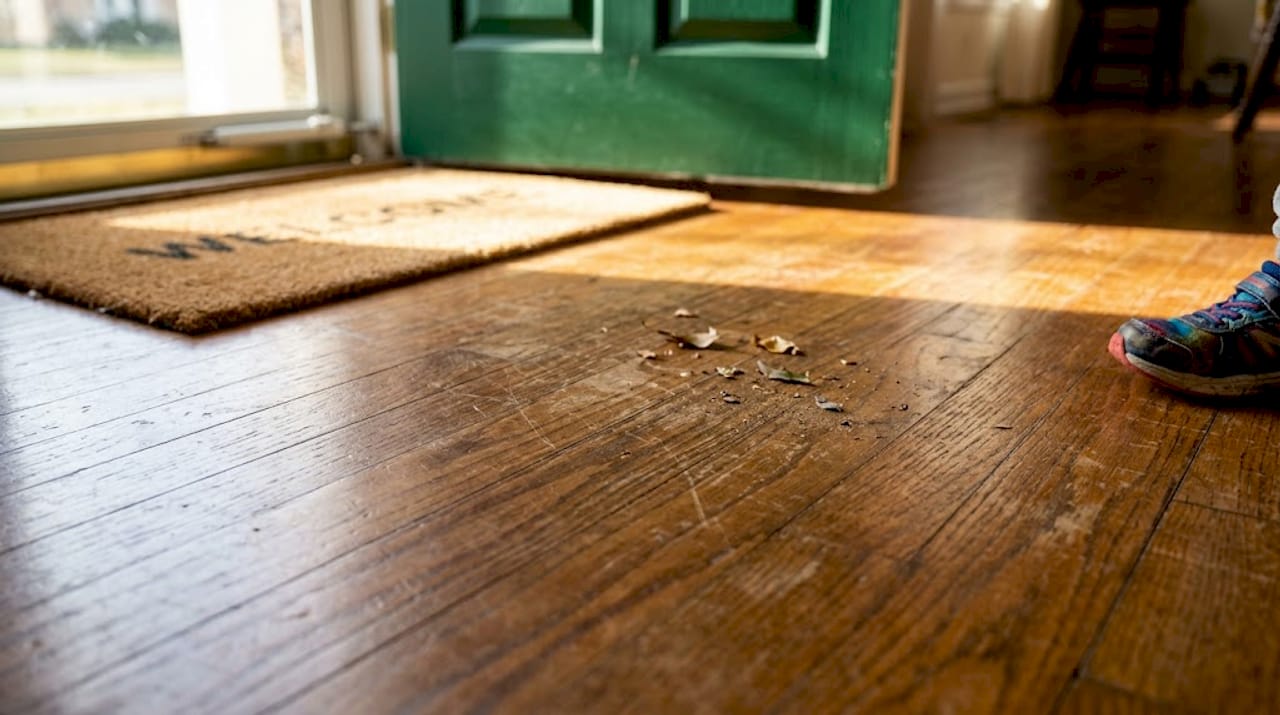
Here’s how to tell the difference. Run your fingernail across the scratch. If your nail catches and drops into a groove, that scratch goes into the wood. If it glides over, it’s likely a surface finish scratch. Both warrant attention, but deep wood scratches make refinishing more urgent.
Fading is trickier to spot because it happens gradually. Pull back a rug that’s been sitting in a sunny spot for a few years. If the wood underneath looks noticeably darker or richer than the surrounding floor, sun exposure has bleached your finish and likely the wood itself.
Pro Tip: Avoid vacuums with a spinning beater bar on your hardwood floors. Beater bars cause micro-scratches that accumulate over time and dull the finish faster than almost anything else.
Common surface damage types to watch for include:
- Fine scratches in high-foot-traffic paths
- Deep gouges from furniture legs or pet claws
- Stains from water rings, spills, or chemical cleaners
- Gray or white discoloration from moisture sitting on the surface
- Uneven color or sheen caused by UV fading
2. Dull or worn-through finish with no shine left
A floor with a healthy finish reflects light cleanly. When the finish wears through, you’ll see dull, matte patches in areas that used to gleam. This is one of the clearest floor finish wear signs you can find without any tools at all.
The test is simple. Shine a flashlight at a low angle across the floor surface. Worn areas scatter light unevenly and look chalky or flat compared to protected areas. If large sections of your floor look this way, refinishing is no longer optional. Bare wood without finish absorbs dirt, moisture, and bacteria at a rapid rate.
3. Water stains and gray or black discoloration
Gray or black staining in wood is a serious flag. This discoloration typically means moisture has penetrated the finish entirely and reached the wood fibers. It can come from pet accidents, plant pots, leaky appliances, or standing water after a spill.
Light gray stains sometimes come out with sanding and refinishing. Black stains are a different story. They usually indicate mold or tannin reactions deep in the wood, which may require targeted treatment or board replacement before refinishing makes sense.
If you see multiple black spots or a large blackened area, don’t assume refinishing will cover it. Get a professional assessment first.
4. Warping, cupping, or crowning boards
These are structural floor damage signs that go beyond cosmetic wear. When individual boards curve upward at the edges, that’s called cupping. When the center of a board rises above its edges, that’s crowning. Both result from moisture imbalance either in the wood itself or underneath the subfloor.
Refinishing over a cupped or crowned floor without fixing the moisture source first is a waste of time and money. The boards will continue to move, and your new finish will crack or peel within months. The right sequence is to address the moisture problem, allow the wood to stabilize, and then proceed with refinishing.
Signs of structural moisture damage to check for:
- Boards that feel raised or sunken when you walk across them
- Visible gaps between planks that widen in winter and close in summer
- A springy or spongy feel underfoot, especially near walls or windows
- Boards that creak or shift more than usual when walked on
Seasonal wood movement is normal. Dramatic movement is not.
5. Soft spots or squeaky sections underfoot
Walk slowly across your floor and pay attention to what you feel. A soft, spongy section that gives slightly underfoot is a serious warning sign. It suggests the wood has absorbed enough moisture to begin breaking down structurally, or that the subfloor beneath has deteriorated.
Press down firmly with your thumb in the suspect area. Healthy hardwood doesn’t compress. If it yields even slightly, the wood fiber has been compromised. This may disqualify that section from being refinished and require board replacement before any finishing work begins.
Squeaking alone doesn’t always mean damage. Squeaks often come from boards rubbing against each other or the subfloor. But squeaking combined with softness is a much more serious combination. Get those areas looked at before booking a refinishing job.
6. Floorboard thickness is running low
This one surprises most homeowners. You cannot sand and refinish hardwood floors indefinitely. Each refinishing cycle removes a thin layer of wood. Once your boards get thin enough, further sanding exposes the nail heads or compromises the tongue-and-groove joinery that holds everything together.
Boards thinner than 5/8 inch may only handle one more refinishing before replacement becomes the only option. Many older homes have floors that have already been refinished two or three times, meaning thickness is a real constraint.
You can check thickness yourself without tearing anything up. Look at a floor vent or heat register opening. The side profile of the boards is visible there. Alternatively, pull up a floor transition strip at a doorway to see the board edge. A floor professional can also measure using a moisture meter probe or by checking at an exposed edge.
Pro Tip: If your home was built before 1980 and the floors have never been replaced, have a professional measure board thickness before scheduling refinishing. Old floors often require careful thickness assessment before any sanding work begins.
7. Gaps between planks that keep growing
Small seasonal gaps between boards are completely normal. Wood expands in humid summer months and contracts in dry winter months. What you’re looking for is gaps that never fully close, gaps wide enough to trap debris, or gaps that appear in new places over time.
Refinishing can seal smaller gaps and protect against future moisture and dirt intrusion. Larger gaps may require a filler compound or individual board replacement before the finish coat goes down.
Visible damage vs. recommended action
Use this table as a quick reference. Match what you’re seeing to the most appropriate next step:
| Sign | Recommended action | Urgency |
|---|---|---|
| Light surface scratches | Refinishing | Moderate |
| Deep gouges into wood | Spot repair, then refinish | High |
| Gray or white stains | Refinishing, possible spot sanding | Moderate |
| Black mold stains | Board replacement or treatment first | Urgent |
| Dull, worn-through finish | Refinishing or screen and recoat | Moderate to high |
| Cupping or crowning | Fix moisture source, then refinish | High |
| Soft spots or spongy feel | Structural assessment before refinishing | Urgent |
| Persistent wide gaps | Filler or board replacement, then refinish | Moderate |
| Boards under 5/8 inch thick | Assess before refinishing, possible replace | High |
Maintenance tips to delay your next refinishing
You can push back the need for refinishing by months or even years with the right habits. This isn’t about obsessive upkeep. A few consistent practices protect your finish and reduce wear significantly.
Start with your cleaning tools. Microfiber mops trap dust and debris without scratching, and they’re far gentler on finish than traditional string mops. Use a pH-neutral cleaner made for hardwood floors. Harsh cleaners strip finish over time and leave residue that dulls the surface.
Good daily habits include:
- Sweep or vacuum (without the beater bar) at least twice a week in high-traffic areas
- Wipe up spills within minutes. Don’t let water sit on bare wood or a worn finish
- Use felt pads under all furniture legs and replace them annually
- Place mats at every exterior door to capture grit before it reaches the floor
Seasonal care matters too. In winter, indoor air gets dry, causing boards to contract and gaps to form. A humidifier keeps relative humidity between 35 and 55 percent, which is the sweet spot for hardwood stability. In spring and summer, check for any changes in the floor after high-humidity months.
When the finish does start to show light wear, a screen and recoat service can refresh the surface without full sanding. This extends floor life considerably and delays a full refinishing by several years. Modern low-VOC finishes also make the process healthier for your family and pets.
Pro Tip: Schedule a screen and recoat every three to five years in moderate-traffic homes. It costs a fraction of full refinishing and keeps your floors looking freshly done year-round.
My honest take on when floors really need refinishing
I’ve been in enough homes to know that most people wait about two years longer than they should. The thinking is usually: “It doesn’t look that bad yet.” But by the time a floor looks obviously bad, it’s absorbed moisture, collected grit into the raw wood, and often developed structural problems that a simple refinishing won’t fix.
What I’ve learned is that the right time to refinish is when the damage is still primarily cosmetic. That’s when you get the best result at the lowest cost. A light sanding and fresh finish on a floor with mild scratches costs a fraction of what you’ll spend once those scratches become gouges and that surface wear becomes subfloor damage.
I also see homeowners skip professional evaluation because they assume they can judge it themselves. And sometimes they’re right. But thickness assessment, moisture readings, and checking for subfloor movement are things you simply cannot eyeball. I’ve seen floors that looked fine on the surface that had serious moisture damage underneath. And I’ve seen floors that looked terrible but were structurally solid and took a finish beautifully.
The other thing worth saying: refinished floors genuinely increase how fast a home sells and what buyers are willing to pay. That’s not marketing. Buyers notice floors immediately, and a dull, scratched floor signals neglect whether that’s fair or not.
Don’t wait until you’re embarrassed to have people over. That’s always two years too late.
— Jim
Let Polishedjemmfloor bring your floors back to life
If you’ve spotted several of the signs above, your floors are telling you something worth listening to. Polishedjemmfloor has been restoring hardwood floors across the tri-state area since 2014, and this family-owned team knows the difference between a floor that needs a recoat and one that needs a full refinishing with structural attention.
Their process uses dustless sanding technology that keeps nearly all particles out of your living space, paired with low-VOC finishes that are safe for kids and pets. Whether your floors need a one-day screen and recoat or a full refinishing from the ground up, the team handles it with precision and care. Read through the professional refinishing guide to understand what the process looks like from start to finish, and reach out for a consultation when you’re ready.
FAQ
What are the most obvious signs your floors need refinishing?
The most obvious floor refinishing indicators are visible scratches, a dull or worn-through finish, gray or black water stains, and fading from sun exposure. If the floor no longer reflects light evenly, it’s time to refinish.
How do you know if floor damage needs refinishing or replacement?
Surface-level scratches, stains, and finish wear typically call for refinishing. Soft spots, black mold stains, severe warping, or boards thinner than 5/8 inch may require repair or replacement before any refinishing work begins.
How often should hardwood floors be refinished?
Most hardwood floors need full refinishing every 7 to 10 years, depending on foot traffic and maintenance. A lighter screen and recoat can extend the time between full refinishing cycles significantly.
Can gaps between floorboards be fixed during refinishing?
Yes. Smaller gaps can be sealed with filler during the refinishing process, which helps prevent dirt and moisture from working their way under the boards. Larger gaps may need individual board repairs first.
Does refinishing floors actually increase home value?
Yes. Well-maintained hardwood floors make homes more attractive to buyers and can contribute to a faster sale and stronger offers. Floor condition is one of the first things buyers notice during a showing.