
Most homeowners shopping for hardwood floors zero in on one number: the hardness rating. It feels logical. Harder wood, tougher floor. But that thinking misses most of the story, and it leads buyers to overpay for species they don’t need while ignoring factors that matter far more. Real durability in hardwood flooring comes from a system, not a single spec. The species, the construction, the finish, and your daily habits all work together to determine how long your floors stay beautiful. Once you understand how that system works, you can make smarter decisions and get far more value from your investment.
Table of Contents
- The whole system: what truly makes hardwood floors durable
- Wood hardness: what the Janka test tells (and what it doesn’t)
- Engineered vs. solid hardwood: wear layer thickness and long-term durability
- Why your finish matters: factory vs. site-applied and surface protection
- Maintenance: how daily care extends hardwood’s lifespan
- The uncomfortable truth: hardwood durability is a lifestyle, not just a purchase
- Explore expert hardwood floor solutions for lasting durability
- Frequently asked questions
Key Takeaways
| Point | Details |
|---|---|
| Durability is multi-factor | True hardwood resilience relies on species, construction, finish, and consistent maintenance. |
| Janka hardness isn’t everything | A high rating helps prevent dents but doesn’t guarantee decades of lasting floors. |
| Wear layer thickness matters | Thicker engineered wear layers deliver more opportunities for refinishing and long-term use. |
| Finish is the first defense | Factory-applied, advanced finishes like aluminum oxide provide superior scratch and spill protection. |
| Maintenance makes or breaks it | Regular care and protective routines are essential to preserving hardwood durability over time. |
The whole system: what truly makes hardwood floors durable
Walk into any flooring showroom and the salesperson will probably hand you a Janka rating chart. That chart shows how hard various wood species are. Harder equals more durable, right? Not exactly. Engineered hardwood durability factors point to a much more complete picture: hardwood durability comes from the whole system, wood species plus construction plus finish, not hardness alone.
Think of it like a car. The engine matters, but so do the tires, the brakes, and how often you get an oil change. A powerful engine in a neglected car still breaks down. Hardwood floors work the same way.
Common misconceptions about hardwood durability:
- Harder wood is always the best choice for busy households
- Engineered hardwood is less durable than solid hardwood
- An expensive floor will automatically outlast a budget option
- Refinishing is only necessary when floors look visibly damaged
- All urethane finishes offer the same level of protection
The “total durability package” is what you actually need to evaluate. That means looking at species hardness, construction type (solid vs. engineered), wear layer thickness, finish chemistry, and your own maintenance habits. If one of those elements is weak, it drags down the whole system. Understanding hardwood vs epoxy floors can also help you figure out which flooring category is the right fit for your specific lifestyle before you even pick a species.
| Feature | Solid hardwood | Engineered hardwood |
|---|---|---|
| Wood species options | Very wide | Wide |
| Construction | Single plank, one species | Multi-ply core with hardwood veneer |
| Typical finish | Site-applied | Factory or site-applied |
| Moisture tolerance | Low | Moderate to high |
| Refinishing potential | High (multiple cycles) | Depends on wear layer |
The biggest mistake homeowners make is treating durability as a one-time purchase decision rather than an ongoing relationship with their floor. Choosing a tough species is step one of many.
Pro Tip: Before buying, ask your flooring dealer to describe the full system: species, construction, finish type, and care requirements. If they only talk about hardness, keep asking.
Wood hardness: what the Janka test tells (and what it doesn’t)
The Janka hardness test measures how much force it takes to embed a steel ball halfway into a wood plank. The result is expressed in pounds-force (lbf). A higher number means the wood resists indentation better. That is genuinely useful information, but understanding Janka ratings reveals important limits. Wood hardness helps predict dent and wear resistance, but it is only one input to real-world longevity.
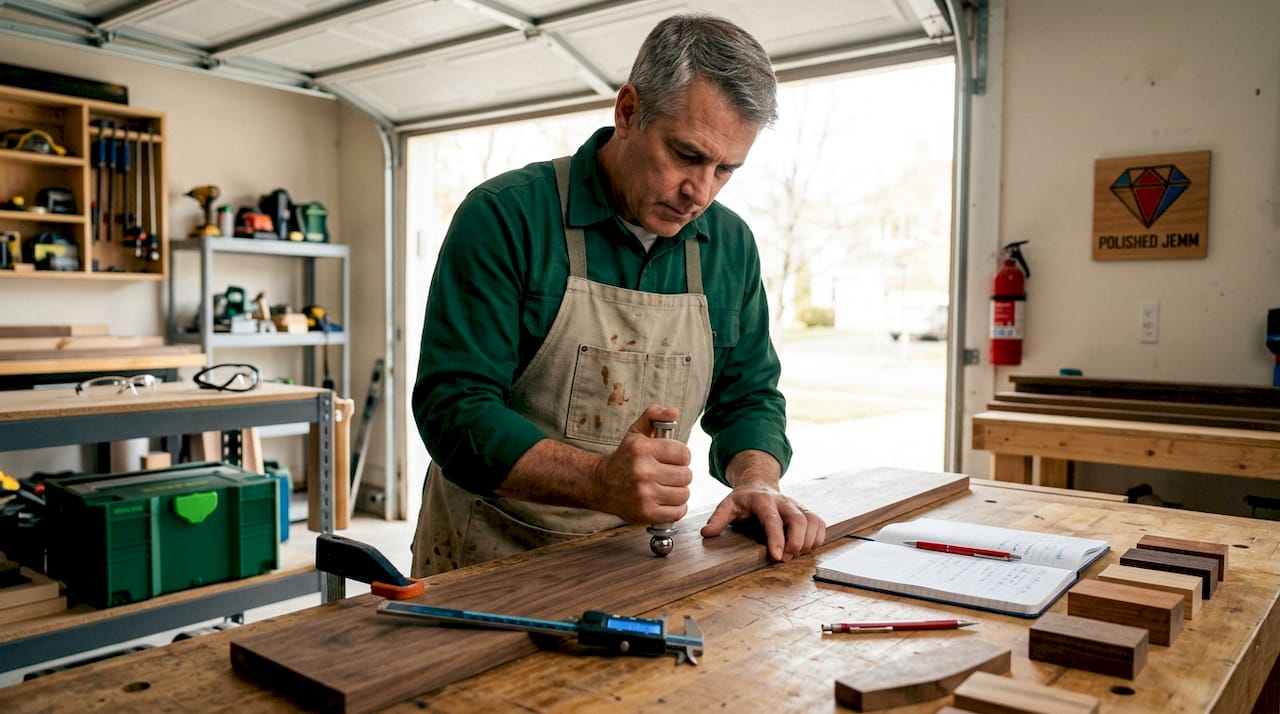
Here is how common hardwoods stack up:
| Wood species | Janka rating (lbf) | Common use |
|---|---|---|
| Brazilian Walnut (Ipe) | 3,680 | High-traffic commercial |
| Hickory | 1,820 | Active family homes |
| White Oak | 1,360 | General residential |
| Red Oak | 1,290 | Traditional residential |
| Maple | 1,450 | Kitchens, gyms |
| Black Walnut | 1,010 | Bedrooms, low traffic |
| Pine (Heart) | 870 | Historic renovations |
What Janka scores tell you:
- How well the wood resists dents from dropped objects or pet claws
- How much foot traffic the raw wood surface can absorb before showing wear marks
- Which species might be better suited for kitchens versus formal living rooms
- Approximately how the wood will behave if the finish is worn away in high-traffic zones
What Janka scores do not tell you:
- How well the finish will hold up over time
- Whether the floor can be refinished to extend its life
- How stable the wood is under humidity changes common in New Jersey and Pennsylvania winters
- Whether the construction type supports long-term structural integrity
A Brazilian Walnut floor with a cheap finish and no maintenance will fail faster than a Red Oak floor that is properly finished and cared for every season. Hardness is the foundation, not the whole house.
For New Jersey and Pennsylvania homeowners, seasonal humidity swings are a real factor. Even a very hard species can develop gaps and cracks if it is not stable enough to handle those changes. That is where construction type, which we cover next, becomes critical. If your floors are already showing wear, refinishing hardwood floors is one of the most powerful ways to restore both their look and their protective layer.
Engineered vs. solid hardwood: wear layer thickness and long-term durability
Here is where a lot of homeowners get surprised. Solid hardwood sounds more durable because it is all wood, top to bottom. But engineered hardwood, when built well, can match or exceed solid hardwood in real-world longevity, especially in climates with humidity variation. The key variable is wear layer thickness, and wear layer thickness affects durability over decades by enabling multiple sanding and refinishing cycles.
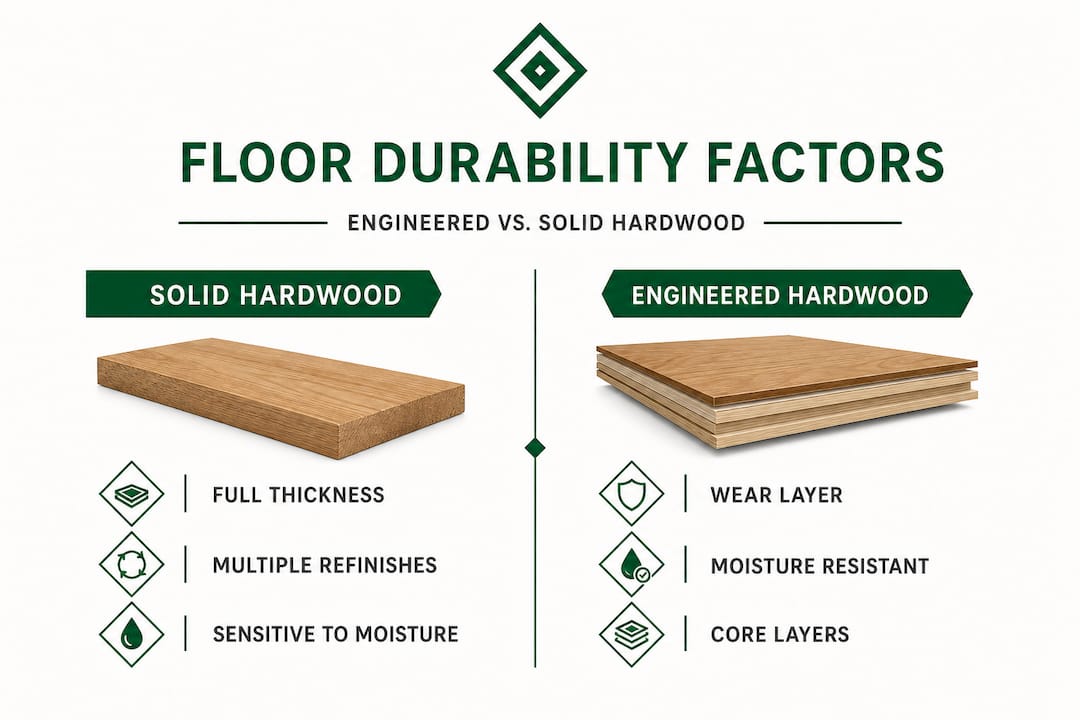
The wear layer is the top hardwood veneer that sits above the engineered core. Thin wear layers (under 2mm) may only allow one refinishing cycle, or none at all. Thicker wear layers (4mm to 6mm) can be sanded and recoated two or three times, just like solid hardwood. That matters enormously over a 30 or 40-year floor lifespan.
| Factor | Solid hardwood | Engineered hardwood (thin wear layer, under 2mm) | Engineered hardwood (thick wear layer, 4 to 6mm) |
|---|---|---|---|
| Refinishing cycles | 5 to 8+ | 0 to 1 | 2 to 3+ |
| Humidity stability | Lower | Higher | Higher |
| Average upfront cost | Higher | Lower | Moderate to high |
| Long-term value | Very high | Lower | Very high |
| Best environment | Stable humidity zones | Finished basements, mild climates | Most NJ and PA homes |
Pros and cons of engineered vs. solid hardwood:
Engineered hardwood pros:
- Better dimensional stability in humid or variable climates
- Can be installed in basements and over radiant heat systems
- Wide variety of species and finishes available
- Thick wear layer options give nearly identical refinishing potential to solid
Engineered hardwood cons:
- Thin wear layer versions cannot be refinished
- Quality varies widely, so you must know what to look for
- Does not add the same structural mass as solid in very old homes
Solid hardwood pros:
- Maximum refinishing potential
- Adds structural value and classic appeal
- Can last 100 years with proper care
Solid hardwood cons:
- Sensitive to humidity changes, which is a genuine issue in NJ and PA
- Typically higher upfront cost
- Cannot be installed below grade
Pro Tip: When shopping for engineered hardwood, always ask for the wear layer thickness in millimeters. Anything under 3mm should be treated as a short-term floor. Anything 4mm and above is worth the investment. For help understanding your options and your floor’s current condition, a professional refinishing guide can walk you through what is possible.
Why your finish matters: factory vs. site-applied and surface protection
Your finish is the layer between your floor and the world. Every footstep, spilled glass of water, and dragged chair leg hits the finish before it ever reaches the wood. Durable hardwood finish selection is one of the biggest durability levers available, because the finish is the first line of defense against scratches, spills, and wear.
Common finish types and their strengths:
- Polyurethane (oil-based): Deep amber tone, very durable, longer cure time, strong solvent smell during application. Excellent for high-traffic areas.
- Polyurethane (water-based): Clear finish, faster drying, lower odor, slightly less hard than oil-based but more than adequate for most homes.
- Aluminum oxide: Applied at the factory, this is the hardest commercial finish available. It can extend floor life by five to ten years compared to softer finishes.
- UV-cured finish: Cured instantly with ultraviolet light in a factory setting, creating an extremely dense, consistent protective layer.
- Penetrating oil/wax: Soaks into the wood rather than sitting on top. Beautiful, natural look, but requires more frequent reapplication and is less resistant to spills.
The factory vs. site-applied distinction matters more than most buyers realize. Factory finishes are applied and cured under controlled industrial conditions. The result is a harder, more consistent layer than almost any site-applied finish can achieve. Aluminum oxide factory finishes, in particular, contain aluminum oxide particles (the same material used in sandpaper) that dramatically increase scratch and abrasion resistance.
Site-applied finishes give you more control over sheen level and let you finish floors already installed in your home, which matters for refinishing projects. A skilled professional site application can still produce an excellent result, especially when multiple coats are applied with proper sanding between each layer.
Think of your finish as the paint on a car. Even the most beautiful car, with the most powerful engine, looks terrible and corrodes fast without quality paint and regular waxing. Your hardwood floor deserves the same logic.
For active households in New Jersey and Pennsylvania, aluminum oxide or UV-cured factory finishes offer the strongest out-of-the-box protection. When those eventually wear, protecting hardwood floors through professional recoating is the next smart step.
Maintenance: how daily care extends hardwood’s lifespan
You can buy the hardest species, choose the best construction, and apply the most advanced finish in the industry. Then one season of neglect can undo years of that investment. Seasonal hardwood care routines, especially protecting the finish from grit and water at entryways and avoiding soaking or steam, directly influence whether hardwood stays durable over its full lifespan.
Daily, weekly, and monthly care routines:
- Daily: Sweep or dry dust with a microfiber mop to remove grit and debris. Grit acts like sandpaper underfoot and scratches the finish faster than almost anything else.
- Weekly: Vacuum using a hardwood-safe setting (no beater bar). Wipe up spills immediately with a barely damp cloth. Never let liquid sit on the floor.
- Monthly: Clean with a hardwood-specific cleaner, applied sparingly to a microfiber mop. Check entryways for scratches and address any finish wear early.
- Annually: Evaluate whether a professional screen and recoat is needed. A light buff and fresh coat of finish can add years to your floor without the cost of full refinishing.
- Seasonally: Monitor indoor humidity. In New Jersey and Pennsylvania, winters get dry and summers get humid. Keep indoor humidity between 35% and 55% to prevent wood movement, gaps, and cracking.
Common mistakes that shorten floor life:
- Using a wet mop or steam mop, which forces moisture into seams and weakens the finish bond
- Skipping entryway mats, which allows grit and road salt to travel from the door across your floors
- Using multi-surface cleaners not designed for hardwood, which can leave residue and strip finish over time
- Ignoring early signs of finish wear, like dull patches or slight haziness in high-traffic zones
- Placing furniture directly on hardwood without felt pads
Pro Tip: Place thick, absorbent mats at every exterior door, not just the front entry. In New Jersey and Pennsylvania winters, road salt tracked in from the garage or back door is one of the fastest ways to scratch and dull a hardwood finish. Use only microfiber mops, never sponge or string mops. Your floor care workflow should include this as a non-negotiable first step.
If you have questions about buffing and cleaning services between full refinishing cycles, clean and buff services are worth exploring as a cost-effective maintenance option.
The uncomfortable truth: hardwood durability is a lifestyle, not just a purchase
After more than a decade working with hardwood floors across New Jersey and Pennsylvania, we have watched homeowners spend serious money on premium species and factory finishes, then undo all of it within five years through neglect and bad habits. We have also seen modest Red Oak floors, nothing exotic, outlast those premium installations by a decade or more because the homeowner treated floor care as part of home care.
The uncomfortable truth is this: the floor you choose at the showroom sets your ceiling. But your daily habits determine how close you actually get to it. A floor warrantied for 25 years only performs at that level when you give it what it needs. Grit, moisture, wrong cleaners, and skipped maintenance cycles quietly erode the system from the first year.
For homeowners in active households, with kids, pets, and real foot traffic, durability is not a feature you buy once. It is a practice. The most durable floor in your neighbor’s house might fail faster in your house if the care habits are different. That is not a knock on the product. It is just how wood and finish work.
We also see a lot of homeowners wait too long between refinishing or recoating cycles because they do not want the disruption. By the time they call us, the finish is gone and the raw wood has started absorbing dirt and moisture. At that point, you are looking at a full sand and refinish instead of a quick screen and recoat. The cost difference is significant. Staying current with maintenance is almost always cheaper than catching up. Our floor care tips and guides are a good place to build that habit from the start.
Explore expert hardwood floor solutions for lasting durability
Understanding what makes hardwood last is the first step. Acting on it is where real value gets created for your home.
At Polished JEMM Floor Care, we have been helping New Jersey and Pennsylvania homeowners get the most from their hardwood floors since 2014. Whether you need a full refinishing service to restore a worn floor back to its original beauty, or you want to explore our premium turnkey home floor services for a complete floor transformation, we bring precision and eco-friendly products to every job. If your floors just need a refresh before the finish deteriorates, our floor screening guide explains how a screen and recoat can extend your floor’s life without the full refinishing process. We treat every floor like it belongs to our own family.
Frequently asked questions
Is a harder wood always more durable for floors?
A harder wood resists dents better, but true durability depends on finish, construction, and maintenance. Wood hardness through the Janka test predicts dent resistance, but it is only one input to real-world floor longevity.
What type of finish offers the best protection for hardwood floors?
Factory-applied aluminum oxide or UV-cured finishes typically provide the longest-lasting surface protection. The finish is the first line of defense against scratches, spills, and everyday wear, making finish type one of the most important durability decisions you can make.
Why does wear layer thickness matter for engineered hardwood?
Thicker wear layers allow more sanding and refinishing cycles, extending both daily and lifetime durability. Wear layer thickness is the key variable that determines how many decades your engineered floor can be restored rather than replaced.
How should I care for hardwood floors to keep them durable?
Sweep or vacuum often, protect entryways from grit and water, and avoid soaking or steam mopping for best results. Maintenance routines, especially shielding the finish from abrasives and moisture at entry points, directly determine how long your hardwood stays in strong condition.