
Choosing the right finish for your hardwood floors is one of the most consequential decisions in any flooring project, yet most homeowners walk into it with almost no guidance. The types of hardwood floor finishes available today range from fast-drying, crystal-clear water-based coatings to rich, amber-toned oil-based formulas and natural penetrating oils that soak into the wood grain itself. Each option affects how your floor looks, how long it lasts, and how much work it takes to maintain. This guide breaks down the most common finish types in plain language so you can make a confident, informed choice before the first coat ever hits your floors.
Table of Contents
- Key takeaways
- 1. Understanding the types of hardwood floor finishes
- 2. Water-based polyurethane: fast, clear, and low-odor
- 3. Oil-based polyurethane: warm tone, proven durability
- 4. Hardwax oil finish: natural look with easy touch-ups
- 5. Aluminum oxide factory finish: the durability benchmark
- 6. Choosing the right finish: a practical comparison
- My take on what homeowners consistently get wrong
- Let Polishedjemmfloor match your floor to the right finish
- FAQ
Key takeaways
| Point | Details |
|---|---|
| Finish type affects everything | Your choice determines appearance, durability, dry time, and long-term maintenance demands. |
| Water-based dries fastest | Water-based polyurethane is ready for recoating in 2 to 4 hours and fully cured in 5 to 7 days. |
| Oil-based needs patience | Oil-based polyurethane takes 30 days to fully cure, requiring careful planning before heavy use. |
| Hardwax oil allows spot repairs | Unlike polyurethane, hardwax oil finishes let you touch up a single damaged area without refinishing the whole floor. |
| Aluminum oxide lasts longest | Factory-applied aluminum oxide finishes can last 20 to 25 years or more but are difficult to refinish on site. |
1. Understanding the types of hardwood floor finishes
Before you compare specific products, you need to understand the two fundamental categories that all hardwood floor finish options fall into: film-forming finishes and penetrating finishes.
Film-forming finishes, like polyurethane, cure on top of the wood surface and create a protective layer. Penetrating finishes, like hardwax oils, soak into the wood fibers and cure from within. This distinction shapes everything downstream: how the floor feels underfoot, how it handles scratches, and how you repair it when something goes wrong.
A few key attributes will help you evaluate any finish type you consider.
Durability and lifespan. Some finishes hold up for decades with minimal intervention. Others need refreshing every few years. Think honestly about your home’s foot traffic, pets, and kids before prioritizing either end of that spectrum.
Appearance effects. Finishes change how your floor looks, sometimes dramatically. Some add a warm amber tone that deepens over time. Others preserve the wood’s natural color with zero tint. Sheen level, from matte to high gloss, is another variable you control at the finish stage.
Drying and curing time. These are two different things. A floor can feel dry to the touch in hours but still be chemically soft for weeks. Full cure times are routinely underestimated by homeowners, which leads to premature dents, scratches, and finish failure.
Maintenance and repairability. How you clean the floor and what you do when the finish gets damaged matters a great deal. Improper cleaners can permanently damage certain finishes, and some finish types require full sanding to fix a single deep scratch.
VOC levels and environmental impact. VOCs (volatile organic compounds) are the fumes that off-gas during application. Oil-based finishes typically have higher VOC levels, requiring better ventilation and sometimes professional-grade respirators. Water-based formulas are generally lower in VOCs, making them friendlier for occupied homes.
Pro Tip: Not sure what finish is already on your floor? Try the water drop test. Drop a few beads of water on the surface. If the water beads up on sealed floors, the floor has an intact film-forming finish. If it soaks in, the finish is compromised or the floor is bare wood.
2. Water-based polyurethane: fast, clear, and low-odor
Water-based polyurethane is the go-to finish for modern homes, and it earns that reputation for good reason. It is the most common residential finish, drying in 2 to 4 hours between coats and reaching full cure in 5 to 7 days. That timeline is a game-changer for busy households that cannot afford to be off their floors for long stretches.
The appearance is what sets it apart visually. Water-based polyurethane is clear and non-yellowing, making it the right call for light wood species like maple, ash, and white oak. It preserves the wood’s natural tone without adding a warm cast, which pairs beautifully with modern, Scandinavian, and minimalist interior styles.
Durability is where things get nuanced. Budget water-based products can be softer and less scratch-resistant than their oil-based counterparts. However, high-quality water-based formulas with additives can rival oil-based abrasion resistance and are worth the extra cost.
- Dry time between coats: 2 to 4 hours
- Full cure: 5 to 7 days
- Appearance: clear, non-yellowing, available in all sheen levels
- VOCs: low, minimal odor during application
- Best for: light wood species, modern interiors, DIY projects
- Coats required: typically 3 coats for adequate protection
Pro Tip: Apply water-based polyurethane with a synthetic bristle brush or a foam applicator. Natural bristle brushes absorb water and leave streaks in the finish.
The repairability of water-based polyurethane is one of its weaker points. Because it forms a film on the wood surface, repairing polyurethane requires full sanding to blend properly. A small scratch in one area often means refinishing the entire floor to get a uniform result. If your home sees a lot of pet activity or furniture movement, factor that into your decision.
3. Oil-based polyurethane: warm tone, proven durability
Oil-based polyurethane has been the professional standard for decades, and it still has a strong case in the right context. The tradeoff you accept is time. Drying requires 8 hours between coats, and full cure stretches to 30 days for complete hardening. Placing furniture or area rugs before that 30-day window closes risks trapping impressions in the still-soft finish.
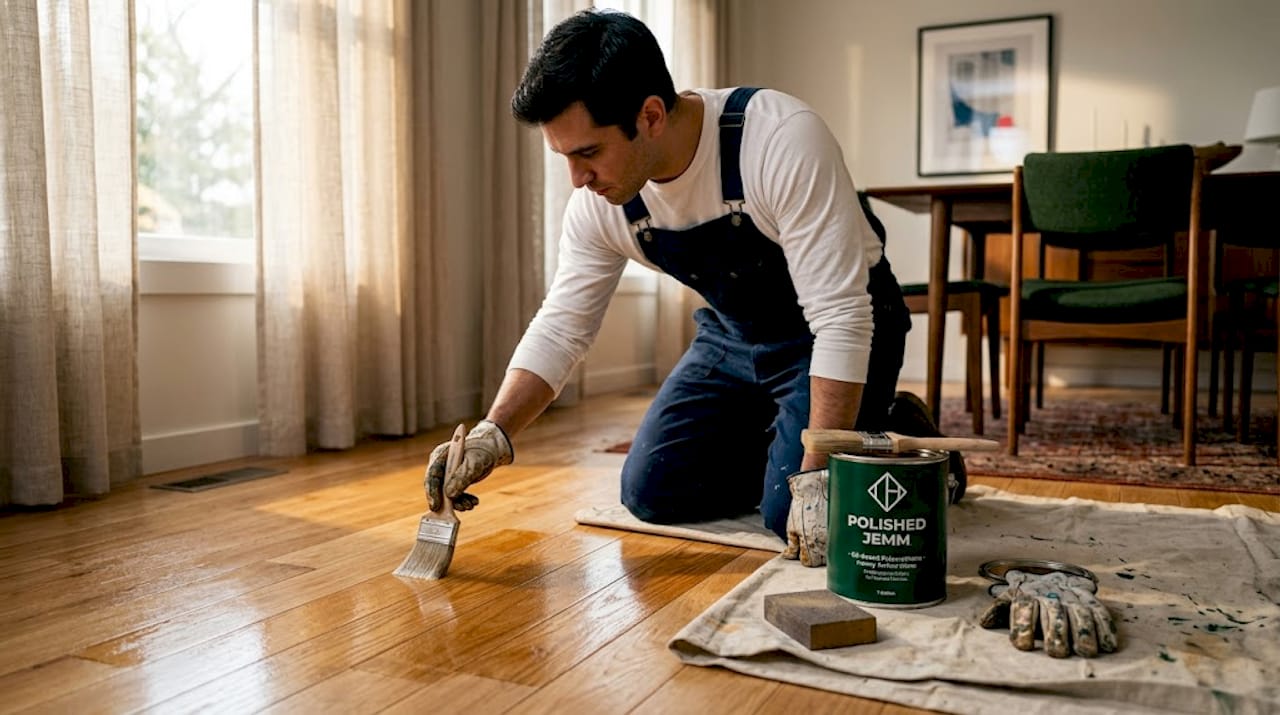
What you get for that patience is a rich amber tone that enhances the natural warmth of dark hardwoods like red oak, cherry, and walnut. The finish deepens slightly over time, giving older floors a classic, well-lived character that many homeowners find more appealing than the crisp clarity of water-based products. Oil-based polyurethane suits traditional styles far better than it does modern, light-toned interiors.
The application itself produces strong fumes. You need serious ventilation, and if you are applying it yourself, a respirator rated for organic vapors is non-negotiable. Most professionals prefer to apply oil-based polyurethane in vacant homes or commercial spaces where occupants can stay out for extended periods.
- Dry time between coats: 8 hours
- Full cure: 30 days
- Appearance: amber tone that deepens with age
- VOCs: high, strong odor requires significant ventilation
- Best for: dark or red-toned hardwoods, traditional and classic interiors
- Coats required: typically 2 to 3 coats
Durability is genuinely strong with oil-based formulas when applied correctly. Proper sanding between coats and avoiding dust contamination during application are critical steps that separate a flawless result from a gritty, uneven one.
4. Hardwax oil finish: natural look with easy touch-ups
Hardwax oil is the finish type that surprises most homeowners. It does not look like a finish at all. That is the point.
Unlike polyurethane, hardwax oil does not form a film on top of the wood. It penetrates into the fibers and cures from within, which means the wood still looks and feels like wood. No plastic sheen. No surface layer. Just authentic grain with enhanced depth and a matte finish that has become increasingly popular as homeowners move away from high-gloss floors.
Hardwax oil finishes have surged in popularity precisely because they deliver a natural, lived-in aesthetic that matches current interior trends. They also offer one practical advantage that polyurethane simply cannot: spot repair. If a dog drags its nails across a hardwax-oiled floor, you can sand that specific area, apply fresh oil, and blend it invisibly. No need to refinish the whole surface.
- Lifespan: 3 to 5 years with regular maintenance
- Appearance: matte, grain-forward, natural wood feel
- Maintenance: requires periodic re-oiling, more frequent than polyurethane
- Spot repair: yes, localized repairs are practical and effective
- VOCs: typically low, especially water-based hardwax oil formulas
- Best for: character-grade wood, wide-plank floors, homes prioritizing authentic aesthetics
One often-overlooked benefit is breathability. Hardwax oils allow better vapor transmission than film-forming finishes, which means the wood can respond more naturally to seasonal humidity changes. For wide-plank floors in particular, this dimensional flexibility helps reduce gapping and movement over time.
Pro Tip: Hardwax oil floors need periodic re-oiling to maintain their protection, typically once every 1 to 2 years depending on traffic. Use manufacturer-recommended maintenance oils, not generic wood conditioners, to avoid compromising the finish.
5. Aluminum oxide factory finish: the durability benchmark
If you have purchased prefinished hardwood in the last decade, chances are it already has an aluminum oxide finish. This type is applied in a factory under controlled conditions with UV curing equipment that no on-site refinisher can replicate. The result is an exceptionally hard, wear-resistant surface that is genuinely in a different durability category from site-applied finishes.
Aluminum oxide finishes last 20 to 25 years or more under normal residential use. That longevity is remarkable and makes prefinished aluminum oxide flooring an appealing option for homeowners who want to install and forget about their floors for a generation.
The limitation is refinishing. Because aluminum oxide is so hard and is often layered with multiple factory coats, sanding it down on site is time-consuming and can damage the thin wear layer of prefinished planks. Many contractors decline to refinish prefinished aluminum oxide floors for this reason.
| Feature | Details |
|---|---|
| Lifespan | 20 to 25+ years |
| Application method | Factory-applied only |
| Durability | Exceptional, hardest consumer finish type |
| Refinishing on site | Difficult and limited |
| Customization | Very limited, finish is preset at factory |
| Best for | High-traffic homes, long-term low-maintenance goals |
6. Choosing the right finish: a practical comparison
With the main finish types covered, the decision comes down to matching your specific situation to the right option. Here is a direct side-by-side comparison followed by the situations where each finish makes the most sense.
| Finish Type | Dry Time | Full Cure | Appearance | Spot Repair | VOCs |
|---|---|---|---|---|---|
| Water-based polyurethane | 2 to 4 hours | 5 to 7 days | Clear, non-yellowing | No | Low |
| Oil-based polyurethane | 8 hours | 30 days | Amber, deepens over time | No | High |
| Hardwax oil | 8 to 12 hours | 3 to 5 days | Matte, natural | Yes | Low to medium |
| Aluminum oxide | Factory only | N/A | Varied, preset | No | N/A |
Once you understand the key differences between finish options, match your choice to your life:
- You have light hardwood and want a modern look. Choose water-based polyurethane. It will not alter the wood’s color and dries fast enough for a weekend project.
- You have red oak or walnut and want a classic, warm aesthetic. Oil-based polyurethane will enhance that amber richness. Just plan around the cure time.
- You prioritize natural feel and easy repairs over longevity. Hardwax oil is the right call. You will do more maintenance, but individual repairs are painless.
- You are buying new prefinished hardwood and want zero maintenance concerns for decades. Aluminum oxide prefinished planks are worth the premium.
- You are a DIYer on a budget. Water-based polyurethane is the most forgiving option. It dries fast, cleans up with water, and produces manageable fumes.
For professional application decisions and guidance on what your specific wood species needs, reviewing a full hardwood refinishing guide before committing to a finish type is well worth your time.
My take on what homeowners consistently get wrong
I have seen hundreds of hardwood floor projects over the years, and the single most common mistake is not picking the wrong finish. It is picking the right finish and then treating it as if it were the other kind.
Homeowners who choose water-based polyurethane for the fast turnaround often place furniture back on the floor at day three and wonder why they see compression marks by day ten. The floor felt dry. It was not cured. Those are not the same thing, and that misunderstanding costs people real money.
The spot repair myth is the other one that gets people into trouble. Someone chooses polyurethane because they want durability, then expects to touch up a single scratched area the same way they would on a hardwax oil floor. When they try, the fresh coat does not blend. It looks like a patch because that is exactly what it is. Film-forming finishes build a continuous layer, and breaking that layer in one spot means the whole surface needs to be addressed to look uniform.
My honest advice: choose your finish based on your maintenance tolerance, not just your aesthetic preference. A beautiful matte hardwax oil floor sounds wonderful until you realize it needs re-oiling every year and you have three dogs. A high-gloss polyurethane finish looks dramatic until you see how quickly it shows every footprint in raking afternoon light. The finish that fits your life is the best hardwood finish, full stop.
— Jim
Let Polishedjemmfloor match your floor to the right finish
Choosing between finish types on paper is one thing. Getting a flawless result on your actual floors is another. Polishedjemmfloor has been helping tri-state homeowners make exactly this decision since 2014. Their team evaluates your wood species, subfloor conditions, household lifestyle, and aesthetic goals before recommending a finish. Whether you are looking at a full hardwood floor refinishing or a One-Day Screen and Recoat to refresh an existing surface, Polishedjemmfloor brings the expertise to do it right the first time. Every project uses eco-friendly products without compromising on durability or finish quality.
FAQ
What is the most durable hardwood floor finish?
Aluminum oxide is the most durable finish available, lasting 20 to 25 years or more, but it is factory-applied to prefinished hardwood and not practical for on-site refinishing.
How long before I can put furniture back after refinishing?
With water-based polyurethane, you can typically replace light furniture after 24 to 48 hours, but full cure takes 5 to 7 days. Oil-based polyurethane needs 30 days for full cure before placing heavy furniture or area rugs.
Can I change my hardwood floor finish type when refinishing?
Yes. Sanding the floor down removes the existing finish and gives you a clean surface to apply a different finish type, though switching from oil-based to water-based requires thorough sanding to avoid adhesion problems.
What is the easiest hardwood floor finish to maintain?
Aluminum oxide prefinished floors require the least ongoing maintenance. Among site-applied finishes, water-based polyurethane is the easiest to care for with regular sweeping and pH-neutral cleaners.
How do I know what finish is already on my floor?
Use the water drop test. If water beads on the surface, the floor has a sealed film-forming finish like polyurethane. If water soaks in quickly, the floor is either bare wood, wax-finished, or the existing finish has worn through.