
Hardwood floors are often seen as a one-time investment that takes care of itself. Buy them, install them, and enjoy them for decades, right? That’s the most common misconception we hear from New Jersey homeowners, and it’s also the thinking that leads to floors needing full replacement decades earlier than they should. The truth is, hardwood is a natural material that responds to how you treat it every single week. This article will walk you through exactly what maintenance looks like, how to build a routine that works, where DIY care is enough, and when it’s time to call in professionals before small problems become big expenses.
Table of Contents
- Why maintenance matters for hardwood floor longevity
- Essential hardwood floor maintenance routines
- Comparing DIY floor care with professional maintenance
- Avoiding common pitfalls that threaten floor longevity
- The overlooked truth about floor maintenance: What really counts
- Take your floor maintenance further with Polished Jemm
- Frequently asked questions
Key Takeaways
| Point | Details |
|---|---|
| Routine care is essential | Consistent cleaning and maintenance directly leads to longer hardwood floor life. |
| Professional services add value | Periodic expert care protects against deep damage and major repairs. |
| Avoid common mistakes | Steer clear of excess moisture and neglect to prevent costly deterioration. |
| Humidity affects longevity | Managing indoor climate is crucial for New Jersey homeowners. |
| Application matters most | Following proper techniques and routines delivers lasting results. |
Why maintenance matters for hardwood floor longevity
Most people think hardwood floors are damaged by dramatic accidents: a furniture leg gouging the surface, a burst pipe, or a dropped appliance. While those events certainly cause harm, the real threat to your floors is far more ordinary. It’s the slow, daily accumulation of grit tracked in from outside, the humidity shifts between New Jersey’s winters and summers, and the gradual breakdown of the protective finish layer that eventually exposes bare wood.
Here’s what your floors deal with on a regular basis:
- Fine abrasive particles like sand and dirt act like sandpaper underfoot, scratching the finish with every step
- Moisture from spills and mopping seeps into wood fibers, causing swelling and warping over time
- Seasonal humidity swings make boards expand and contract, loosening joints and creating gaps
- Sunlight exposure fades and dries out the finish, making it brittle and prone to peeling
- Furniture weight and movement creates pressure dents and scuff marks that collect dirt
Professional floor care addresses these threats through a layered approach: routine cleaning removes damaging particles before they cause wear, and periodic protective treatments rebuild the finish before it fails completely. As stated directly, maintenance prevents premature wear and extends the usable lifespan of hardwood floors. That’s not marketing language; it’s the straightforward reality of how wood behaves over time.
The cost of replacing a 500-square-foot hardwood floor in New Jersey averages between $5,000 and $12,000. A proper maintenance routine costs a fraction of that and can easily double the time between replacements.
Following a smart care workflow isn’t about being obsessive; it’s about being strategic. Think of it the same way you think about changing the oil in your car. You don’t wait until the engine seizes. You follow a schedule because prevention is always less expensive than repair.
Essential hardwood floor maintenance routines
Knowing that maintenance matters is one thing. Knowing exactly what to do and when is what separates floors that last 80 years from floors that need work after 20. Here is a structured breakdown of what your routine should include.
- Sweep or dry-mop daily in high-traffic areas. Grit accumulates fast, especially near entryways, kitchens, and hallways. A microfiber dry mop picks up particles without pushing them around the way a broom does.
- Vacuum once a week using a hardwood-safe attachment. Avoid beater bars, which can scratch the finish. Focus on edges and corners where debris collects but sweeping misses.
- Damp-mop with a hardwood-approved cleaner once a week or as needed. Wring the mop until it’s barely damp. The floor should dry within minutes. If it stays wet, you’re using too much water.
- Inspect the floor monthly for scratches, dull patches, and soft spots. Catching small issues early prevents them from spreading. A dull patch usually means the finish is thinning in that area and needs attention.
- Apply a clean and buff service every 6 to 12 months. This refreshes the topcoat without sanding the wood itself, extending time between full refinishing jobs.
- Schedule professional deep cleaning annually. Surface cleaning doesn’t reach the embedded grime and oils that build up in the grain. Deep cleaning addresses this and restores the floor’s true luster. For more on this, the deep cleaning tips page covers the signs that your floor needs more than a mop.
- Recoat the finish every 3 to 5 years depending on traffic. This is different from refinishing. A recoat adds a new protective layer without removing existing wood. It’s faster, less disruptive, and significantly cheaper than a full refinish.
Adopting a structured routine significantly enhances the durability and appearance of hardwood floors. The key word there is “structured.” Random cleaning when the floor looks bad is far less effective than consistent care that prevents damage in the first place.
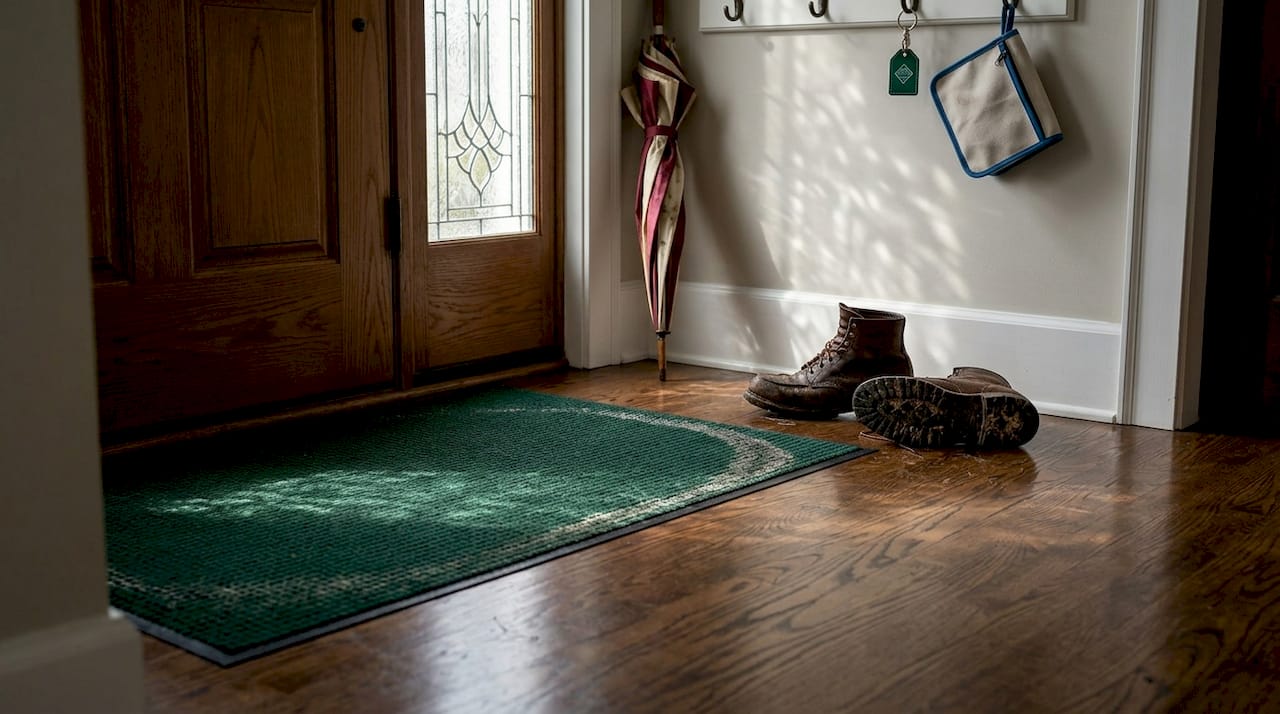
Pro Tip: Place water-absorbent mats at every exterior door in your home. New Jersey winters mean boots come in wet and gritty from December through March. That single habit can cut your floor’s wear rate significantly in high-traffic entry zones.
Comparing DIY floor care with professional maintenance
This is the question we get constantly: “Can’t I just do this myself?” The honest answer is yes, mostly, and sometimes no. Let’s lay it out clearly.
| Task | DIY feasible? | Cost range | Professional advantage |
|---|---|---|---|
| Daily sweeping and mopping | Yes | Minimal | None needed |
| Monthly inspection | Yes | Free | Professionals spot issues earlier |
| Annual deep cleaning | Possible with rental equipment | $150 to $300 in equipment costs | Better results, less risk of water damage |
| Screen and recoat | Not recommended for most homeowners | $400 to $700 DIY cost | Consistent coat thickness, no lap marks |
| Full refinishing | No | $1,500 to $4,000 DIY attempt | Only professionals get it right |
Daily and weekly maintenance is firmly in DIY territory. You don’t need a professional to sweep your floors or clean up a spill. What you do need to understand is that consistent DIY care creates the foundation that makes professional treatments work better and last longer.
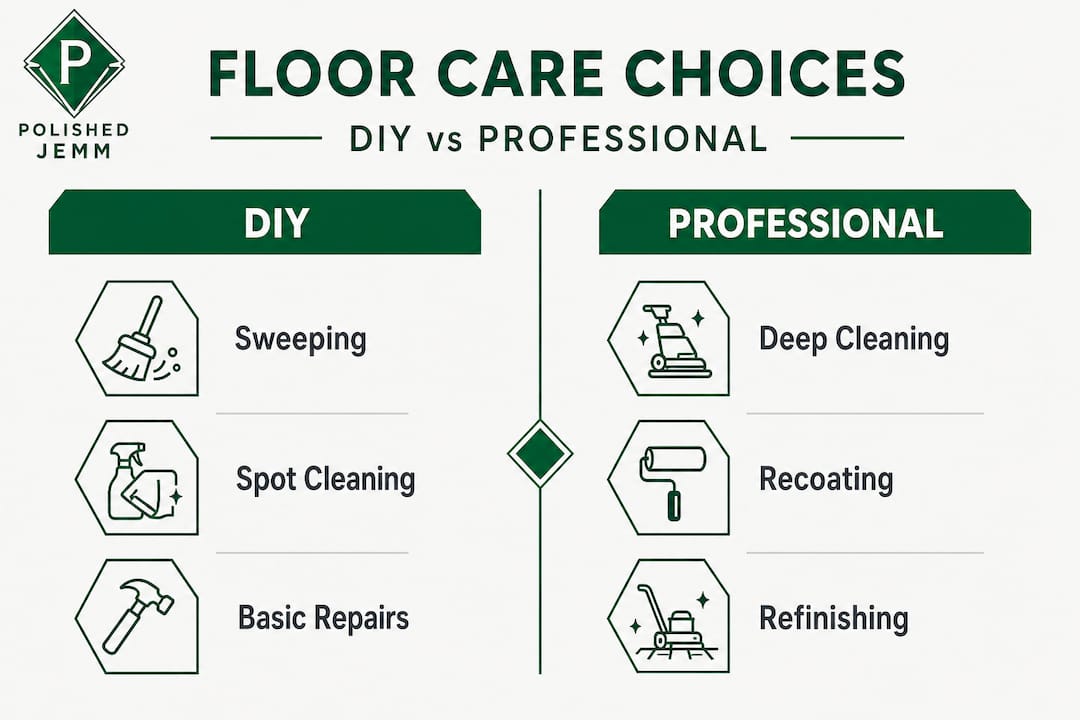
Where things get complicated is the zone between basic cleaning and full refinishing. A screen and recoat, for example, requires buffing the existing finish lightly before applying a new coat. Done incorrectly, it leaves swirl marks, uneven sheen, or adhesion failures that actually look worse than the floor did before. This is where the refinishing guide becomes essential reading: professional services provide protection and restoration that routine DIY care cannot replicate.
If you’re weighing hardwood against other options entirely, understanding your flooring choices helps put the long-term maintenance picture in better context.
Pro Tip: If you’re not sure whether your floor needs a recoat or a full refinish, do the water droplet test. Drop a small amount of water on the surface. If it beads up, the finish is still working. If it soaks in within 30 seconds, the finish has worn through and you need professional attention soon.
Avoiding common pitfalls that threaten floor longevity
Even homeowners with great intentions make mistakes that shorten floor life. Here are the ones we see most often in New Jersey homes.
- Using too much water when cleaning. Steam mops, wet mops, and even damp Swiffer pads left too wet on the floor cause cumulative moisture damage. Over time, boards cup (edges curl upward) or crown (center rises), and that damage cannot be fixed with cleaning alone.
- Using the wrong cleaning products. Vinegar, dish soap, and multi-surface sprays are popular home remedies that actually break down hardwood finishes. Vinegar is acidic and strips the top coat. Dish soap leaves a residue that dulls the finish and attracts more dirt.
- Skipping the annual deep clean. Surface dirt is visible. Embedded grime and oil residue are not. Skipping deep cleaning means this buildup continues until it becomes a finish problem, not just a cleanliness issue. Ignoring early signs of wear or moisture leads to faster deterioration and expensive repairs.
- Neglecting humidity control. New Jersey summers are humid, often sitting above 70% relative humidity indoors without air conditioning. Ideal indoor humidity for hardwood floors is between 35% and 55%. Running a dehumidifier in summer and a humidifier in winter protects the wood from constant expansion and contraction cycles that loosen boards and open gaps.
- Dragging furniture instead of lifting it. Even with felt pads under furniture legs, dragging leaves marks. Lift and place every time.
- Ignoring pet nail scratches. Regular pet nail trimming is a real floor maintenance strategy. Dog nails hitting hardwood repeatedly score the finish layer faster than almost anything else.
Pro Tip: Check your floor care tips periodically for seasonal advice. New Jersey’s climate means your care routine in January should look different from your routine in July, and having that guidance available keeps you ahead of the season.
The overlooked truth about floor maintenance: What really counts
Here is something most articles won’t say directly: perfect floor maintenance is not the goal. Consistent floor maintenance is.
We’ve seen homes in New Jersey where the owners used every premium product on the market, hired someone once every five years for a deep treatment, and otherwise let the floor go. The results were mediocre. We’ve also seen homes where the owners swept daily, wiped up spills immediately, ran a dehumidifier through the summer, and got a professional clean and buff once a year. Those floors looked spectacular after 30 years on a modest maintenance budget.
The hardwood floor industry has a quiet obsession with selling expensive treatments. Some products absolutely deliver value, but the marketing around them often implies that buying the right bottle replaces the need for disciplined habits. It doesn’t. A $60 bottle of hardwood treatment applied quarterly does far less for your floor than a $3 microfiber mop used every single day.
The other myth we encounter constantly is that refinishing is a failure state, something you only do when you’ve neglected your floor. That’s simply not true. Refinishing is a scheduled part of a well-maintained floor’s lifecycle. Most hardwood floors can be refinished 5 to 10 times over their lifespan. Treating it as a routine investment rather than a last resort changes how you think about the overall cost of ownership.
We’ve seen this play out across hundreds of homes throughout New Jersey. The homeowners who understand professional care insights and pair them with consistent daily habits are the ones who call us years apart for maintenance, not months apart for emergency repairs. Frequency of professional service should decrease over time as your daily routine gets stronger, not increase because problems are piling up.
The real secret? Decide that your floors are worth 10 minutes of attention every day, and then actually follow through on that decision every week without exception. Everything else, the right products, the right professionals, the right schedule, builds on that foundation.
Take your floor maintenance further with Polished Jemm
Knowing what to do is the first step. Having the right team in your corner for the jobs that go beyond daily care is the next one.
At Polished JEMM Floor Care, we’ve been serving New Jersey and the tri-state area since 2014 with a straightforward commitment: do the job right and make it last. Whether your floors need a complete transformation through our hardwood refinishing services, a fast and affordable refresh with our screen and recoat services, or a personalized plan through our smart care workflow, we have the tools, experience, and eco-friendly products to protect your investment. Contact us today to schedule a consultation and find out exactly what your floors need next.
Frequently asked questions
How often should hardwood floors be professionally cleaned?
Annual professional cleaning is ideal for most hardwood floors, though high-traffic homes may benefit from twice-yearly service to maintain finish quality and remove embedded grime.
Can regular sweeping really prevent damage and extend floor life?
Yes, sweeping or dry-mopping daily removes abrasive particles that scratch and dull the finish. Regular cleaning is a critical aspect of preventive floor care that most homeowners underestimate.
What’s the risk of using water or harsh chemicals on hardwood?
Excessive moisture warps boards and causes cupping, while acidic or abrasive products strip the finish. Water and abrasive products accelerate hardwood damage in ways that aren’t immediately visible but compound over time.
When should I consider professional refinishing?
If your floors show deep scratches, gray or black staining, or widespread dullness that cleaning can’t fix, it’s time. Refinishing restores the floor’s protective layer and appearance when surface-level care is no longer enough.
Do New Jersey homes need different floor care because of humidity?
Absolutely. New Jersey’s regional humidity requires extra attention because high summer moisture causes boards to swell and winter dryness causes them to shrink, making humidity control a year-round priority.