
Most homeowners assume hardwood floor refinishing is priced by a simple formula: square footage times a flat rate. That assumption leads to budget shock. The factors impacting floor refinishing costs are far more layered than any single number can capture, and in New Jersey and Pennsylvania, where labor rates and seasonal demand run above national averages, that complexity hits your wallet faster. This guide breaks down every meaningful cost driver so you can plan with confidence, not guesswork.
Table of Contents
- Understanding the base costs of hardwood floor refinishing
- How floor condition significantly drives refinishing labor and costs
- Regional pricing and seasonal impacts for NJ and PA homeowners
- Additional factors homeowners should consider that influence final costs
- Practical tips for homeowners to manage and reduce refinishing costs
- Rethinking floor refinishing costs: What most homeowners overlook
- How Polished Jemm helps tri-state homeowners refinish floors with confidence
- Frequently asked questions
Key Takeaways
| Point | Details |
|---|---|
| Labor dominates cost | Labor accounts for 60–70% of refinishing costs, mainly due to sanding and detailed prep work. |
| Floor damage increases price | Heavily damaged floors require more sanding and repairs, raising labor costs by up to 25%. |
| Location affects pricing | Refinishing costs in NJ and PA are higher than national averages because of local labor rates and demand. |
| Seasonal timing matters | Scheduling refinishing outside peak spring and summer seasons can yield lower prices and faster service. |
| Wood type influences labor | Softer or exotic woods add sanding complexity or material costs, affecting the final price. |
Understanding the base costs of hardwood floor refinishing
The floor refinishing cost breakdown starts with two core buckets: labor and materials. Labor is the dominant expense. Sanding the field (the open area a drum sander reaches), edging along walls, screening between coats, and final cleanup all require skilled hands and real time. Materials, including sandpaper belts and discs, wood stain, polyurethane or water-based finish, and equipment wear, make up the remainder.
Professional pricing typically runs $3 to $8 per square foot, with labor accounting for 60 to 70 percent of the total. For a standard 300-square-foot living room, that puts your realistic range between $1,200 and $2,400. Higher-end quotes in that range often reflect better finish products, more sanding passes, or a more experienced crew.
Here is a quick breakdown of where the money goes on a typical project:
| Cost component | Approximate share of total |
|---|---|
| Labor (sanding, edging, cleanup) | 60–70% |
| Finish materials (stain, polyurethane) | 15–20% |
| Sandpaper and equipment wear | 10–15% |
| Miscellaneous (tape, tack cloths, masks) | 5% |
Key materials your contractor will factor into the quote:
- Sandpaper (multiple grits from coarse to fine)
- Wood filler for small gaps and minor dents
- Stain if you’re changing the floor color
- Finish coat (water-based dries faster; oil-based is more durable but smells stronger)
- Screen discs for the buffing passes between finish coats
Understanding the hardwood floor refinishing benefits helps put this investment in perspective. A properly refinished floor can add real value to your home and delay replacement by 10 to 15 years.
Pro Tip: Ask your contractor to itemize labor and materials separately on the quote. This makes it easier to compare bids and spot where one contractor is cutting corners.
How floor condition significantly drives refinishing labor and costs
Beyond base rates, the actual state of your floor is the single biggest variable in any floor refinishing price factor conversation. A floor with light wear, small surface scratches, and no staining is fast to sand. A floor with deep gouges, pet urine discoloration, cupping from water damage, or old paint requires significantly more work.
Here is how floor condition typically escalates costs, step by step:
- Assessment and sanding plan. The contractor evaluates damage depth. Deep damage means starting with a coarser grit and running more sanding passes before reaching a smooth surface.
- Wood filler application. Gaps, cracks, and gouges get filled. This adds dry time before sanding can continue.
- Board replacement. Severely damaged boards may need to be swapped before refinishing even starts. This is priced separately, usually per board.
- Stain testing. Pet urine and deep water stains sometimes bleed through stain color. Contractors test patches to confirm coverage, which adds time.
- Additional finish coats. Heavily sanded floors may need an extra coat of finish to reach an even sheen.
“Floor condition can increase labor costs by 10 to 25 percent because of extra sanding and repairs for deeper gouges and stains.”
That 10 to 25 percent jump sounds modest until you do the math. On a $2,000 project, that is $200 to $500 in additional charges you were not counting on. Floors with heavy damage regularly hit the upper end of the $6 to $8 per square foot range, and sometimes beyond.
Reviewing common refinishing issues before you schedule a quote gives you a realistic sense of where your floor stands. Contractors who follow industry standards will always assess condition before locking in a price.
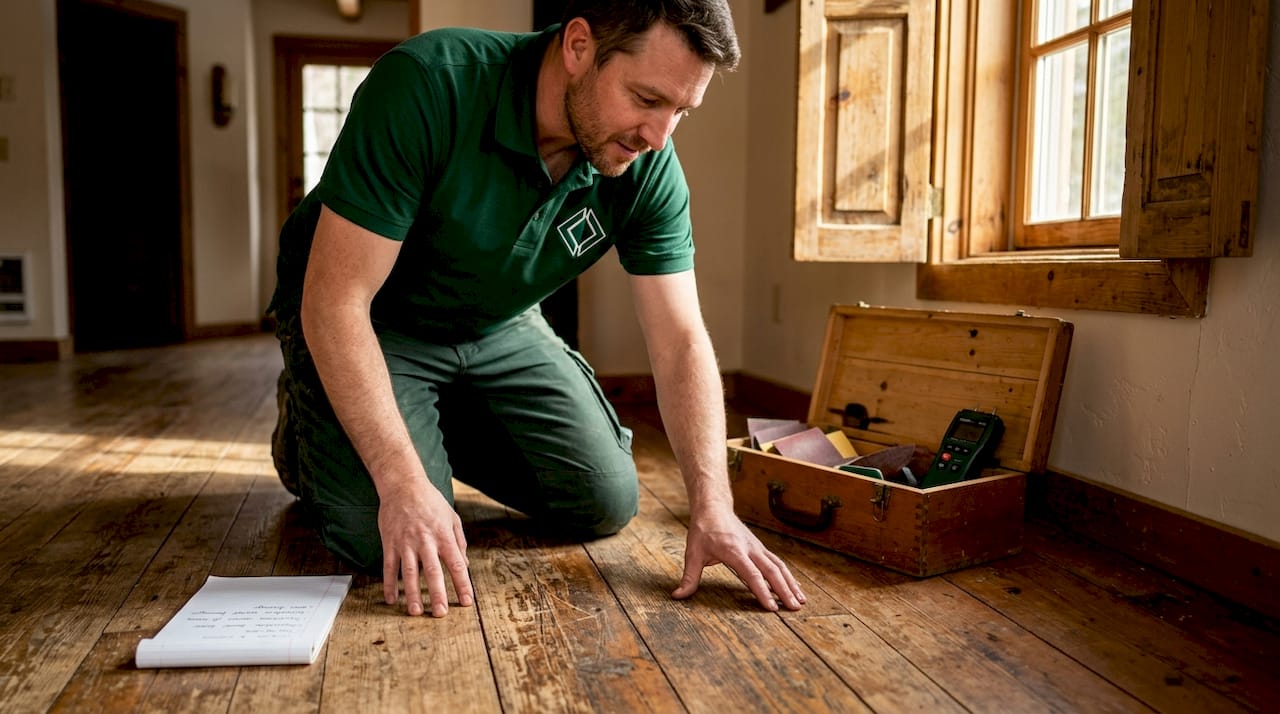
Pro Tip: Take close-up photos of your worst floor areas before getting quotes. Sharing them upfront lets contractors give you a more accurate number instead of a lowball estimate that rises after they see the job.
Regional pricing and seasonal impacts for NJ and PA homeowners
Location and timing add another layer of complexity to your refinishing budget that should not be overlooked. The cost of floor refinishing in New Jersey and Pennsylvania is not the same as it is in rural Ohio or central Texas. Local labor costs, union wages in some markets, higher business operating costs, and simply the concentration of renovation activity all push prices up in the Northeast.
Northeast refinishing prices run about 25 to 50 percent above the national average due to higher labor costs and peak season demand. That means a job priced at $4 per square foot in the Midwest might realistically cost $5 to $6 per square foot in suburban New Jersey.
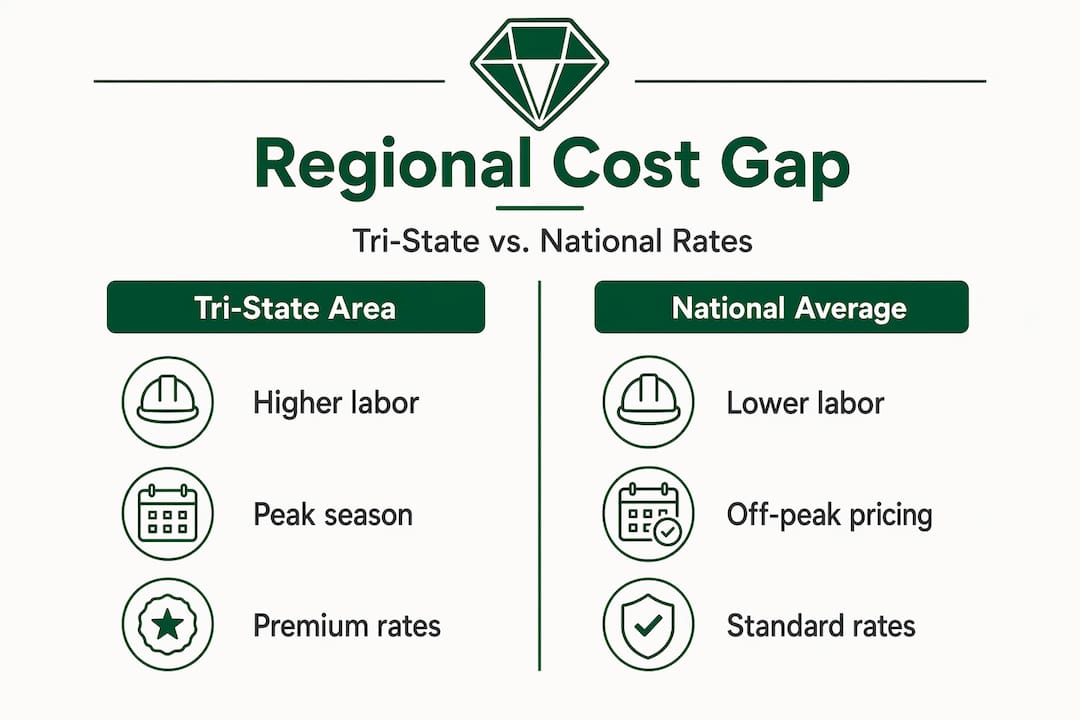
Timing matters just as much as location. Peak renovation season in spring and summer pushes prices to the top of the range. Scheduling in fall or winter may yield lower bids and faster availability. Contractors have more open slots, fewer competing jobs, and more incentive to price competitively.
Seasonal pricing comparison for the tri-state area:
| Season | Typical demand | Price impact | Contractor availability |
|---|---|---|---|
| Spring (March–May) | Very high | Prices at peak | Limited |
| Summer (June–August) | High | Prices near peak | Limited |
| Fall (September–November) | Moderate | Prices may soften | Good |
| Winter (December–February) | Low | Best pricing opportunity | Excellent |
Key points tri-state homeowners should keep in mind:
- Labor rates in NJ often reflect higher contractor overhead and licensing costs than many other states.
- Philadelphia-area PA follows a similar pattern, with demand peaking during spring home sales season.
- Booking in January or February frequently means your contractor can start within days, not weeks.
Staying current on floor refinishing trends in the tri-state area can also help you time finish and color choices to avoid special-order materials that extend project timelines.
Additional factors homeowners should consider that influence final costs
In addition to floor condition and location, these nuanced factors can increase or decrease your final refinishing bill in ways most homeowners do not anticipate until the quote arrives.
Wood species. Not all hardwood is equal under a sander. Softer woods like pine may add 10 to 15 percent to labor costs because they dent and sand unevenly. Exotic hardwoods like Brazilian cherry or tigerwood are extremely dense, which wears through sandpaper faster and increases material expense.
Dustless refinishing. Standard floor sanders throw fine wood dust into the air and into every corner of your home. Dustless refinishing costs more upfront but connects the sanding equipment to industrial vacuums that capture dust at the source. For families with asthma, allergies, or young children, the cleanup savings and health benefit often justify the premium.
Room layout and stairs. Open-plan living areas sand quickly. Rooms with multiple closets, alcoves, and irregular angles require more hand edging and detail work. Stair refinishing adds $25 to $50 per step, plus extra labor for tight corners and edges where a drum sander cannot reach. Furniture moving by the contractor can add $50 to $200 depending on what needs to move.
Additional cost factors to watch:
- Number of finish coats requested (two is standard; three costs more)
- Stain color changes require more careful application and dry time
- Existing finish type (wax-coated floors need full stripping before any new product adheres)
- Multiple small rooms vs. one open area (more edging, more setup time per room)
Knowing what a truly turnkey refinishing service includes helps you compare quotes that seem similar on paper but differ significantly in scope.
Pro Tip: If you have stairs, ask specifically whether stair treads are included in the base quote or priced as a separate line item. This is one of the most common sources of surprise charges.
Practical tips for homeowners to manage and reduce refinishing costs
Understanding the cost factors and preparing accordingly puts you in a much stronger position to manage the final number. The expenses for floor refinishing services are not fixed, and there are real levers you can pull.
- Move furniture yourself. Contractor furniture moving typically adds $50 to $200. Clear the room before they arrive and you eliminate that charge entirely.
- Schedule in fall or winter. Off-peak timing gives you pricing leverage and often better contractor attention since crews are less stretched.
- Prepare your floor description in detail. Reducing sanding prep time is the most effective way to lower labor costs. Tell your contractor exactly where damage is concentrated so they can plan efficiently.
- Discuss sanding stages upfront. Ask how many passes they plan and what condition they’re assuming. Misaligned expectations cause cost increases mid-project.
- Bundle multiple rooms. Contractors often discount per-square-foot rates when total square footage increases, since setup time is spread across a larger job.
- Ask about water-based finish. It costs slightly more per gallon but dries faster, often allowing the job to finish in fewer days and reducing your displacement time.
Reviewing a solid guide to hardwood floor refinishing before your contractor consultation helps you ask the right questions and avoid costly miscommunication.
Pro Tip: Request a written scope of work, not just a price. A detailed scope specifies the number of sanding passes, finish coats, and what happens if hidden damage is found mid-job. This document protects both you and the contractor.
Rethinking floor refinishing costs: What most homeowners overlook
Most homeowners focus on the wrong variable when they start comparing quotes. They look at price per square foot and try to find the lowest number. What they miss is that labor time — not the finish type or the square footage — is the real driver of cost differences between contractors.
A quote at $5 per square foot from a crew that plans three sanding passes, uses a dustless system, and includes two finish coats is often a better value than a $4 quote from a crew planning one pass with a cheaper finish. The first crew is doing more work for a marginally higher price. The second crew may be setting you up for a floor that looks good for 18 months and then needs to be done again.
The other thing most homeowners underestimate is how much a complicated room layout inflates labor. An L-shaped room with two closets and a hallway connection takes meaningfully longer to edge, detail, and finish than a single rectangular bedroom of the same total square footage. Contractors know this. Their quote may reflect it. Yours should too.
Scheduling flexibility and honest contractor communication are genuinely undervalued cost tools. Homeowners who call in October instead of April, who describe their floor damage accurately, and who ask pointed questions about sanding plans tend to get better pricing and better outcomes. There is no magic in it. Contractors simply have more room to negotiate, plan carefully, and deliver quality work when they are not juggling four other jobs that week.
Finally, choose your refinishing method based on your household, not just price. If anyone in your home has respiratory sensitivities, dustless refinishing is not an upgrade. It is a necessity. And if you plan to stay in the house during the project, water-based finishes with faster dry times are worth the extra cost per gallon. Understanding the full picture of premium turnkey floor services helps you recognize what genuine value looks like when you see it.
How Polished Jemm helps tri-state homeowners refinish floors with confidence
Knowing every factor that affects your refinishing quote is only useful if you have a contractor who is equally transparent about them. That is where working with a team that has spent years serving NJ and PA homeowners makes a real difference.
At Polished JEMM Floor Care, we provide detailed, itemized quotes that break down labor, materials, sanding stages, and finish coats so you understand exactly what you are paying for and why. Our hardwood floor refinishing guide walks homeowners through the process before we even show up. We offer dustless refinishing, flexible scheduling designed around your family’s schedule, and turnkey home floor services that include furniture handling so you do not have to coordinate it yourself. Ready to get an honest, no-surprise quote? Visit our professional floor refinishing services page to schedule your free consultation.
Frequently asked questions
What is the average cost per square foot to refinish hardwood floors in the tri-state area?
Costs typically run $3 to $8 per square foot nationally, but Northeast pricing often reaches $5 to $10 per square foot due to higher local labor rates and demand, particularly in suburban NJ and PA markets.
How does floor damage affect refinishing cost?
Damaged floors require more sanding passes, repairs, and prep time. Heavy damage can increase labor costs by 10 to 25 percent, which at scale can add several hundred dollars to your total bill.
Is dustless refinishing worth the extra cost for occupied homes?
For households with allergies or children, yes. Dustless refinishing runs approximately $5 to $8 per square foot but captures dust at the source, dramatically reducing mess and respiratory exposure during the project.
Can scheduling renovations in off-peak seasons reduce costs?
Absolutely. Off-peak scheduling in fall or winter typically yields lower bids, faster project start dates, and better contractor availability compared to the busy spring and summer renovation season.
What additional costs should I expect beyond the per-square-foot refinishing rate?
Plan for possible furniture moving fees ($50 to $200), stair refinishing ($25 to $50 per step), board replacements if damage is severe, and potential temporary housing costs if oil-based finishes require extended ventilation.