
Hardwood floors are one of the most valuable features in any home, and keeping them looking great takes more than the occasional mop. The everyday ways to protect hardwood floors go beyond cleaning — they involve smart habits, the right products, and a bit of scheduled maintenance. Scratch by scratch, spill by spill, foot traffic wears your floor down. The good news is that most of the damage homeowners see is entirely preventable. This guide covers the practical, proven methods that will keep your hardwood beautiful for decades.
Table of Contents
- Key takeaways
- 1. Understand what actually damages your hardwood floors
- 2. Choose the right finish for your lifestyle
- 3. Sweep or vacuum before you ever mop
- 4. Use a microfiber mop and pH-neutral cleaner
- 5. Place felt pads on all furniture legs
- 6. Use entry mats and area rugs strategically
- 7. Control indoor humidity year-round
- 8. Recoat your floors before the finish wears through
- 9. Handle spills fast and protect floors from pets
- 10. Maintain a consistent care routine rather than periodic deep cleans
- My honest take on protecting hardwood floors
- Keep your floors looking their best with expert help
- FAQ
Key takeaways
| Point | Details |
|---|---|
| Control indoor humidity | Keep humidity between 30% and 50% year-round to prevent gapping, buckling, and warping. |
| Use microfiber for cleaning | Microfiber mops clean with minimal moisture, protecting finish and preventing water damage. |
| Add furniture pads and entry mats | Felt pads and well-maintained mats stop grit and scratches before they start. |
| Recoat before the finish fails | Schedule a screen-and-recoat every 3 to 10 years depending on traffic to avoid costly sanding. |
| Spills and pets need fast responses | Wipe spills immediately and keep pet nails trimmed to reduce finish damage and deep scratches. |
1. Understand what actually damages your hardwood floors
Before you can protect your floors, you need to know what’s working against them every day. Three factors cause most of the damage: grit, moisture, and humidity swings.
Grit is the biggest offender. Sand, dirt, and tiny debris tracked in from outside act like sandpaper underfoot, grinding away the sealant layer with every step. You can’t always see it happening, but over time it dulls and scratches even a strong finish.
Moisture is the second threat. Any water left sitting on hardwood will eventually work its way into the wood fibers, causing warping and finish damage that’s expensive to reverse. Steam, standing water, and even high-humidity air all fall into this category.
Finally, indoor humidity swings are more damaging than most people expect. Humidity below 30% causes contraction and gapping between boards; above 60%, wood expands and buckles. The target range is 30% to 50% relative humidity.
Consistency matters more than perfect numbers. Rapid humidity fluctuations cause more stress to wood than a stable level that’s slightly outside the ideal range.
2. Choose the right finish for your lifestyle
Your floor’s finish is its primary shield. Not all finishes are equal, and choosing the wrong one for your household creates problems that protection habits alone can’t fix.
Water-based polyurethane and oil-based polyurethane are the two dominant options. Water-based finishes dry in 2 to 3 hours and retain the natural wood color with minimal yellowing. Oil-based finishes take 8 to 24 hours to dry and add a warm amber tone. For years, oil-based was considered the tougher choice, but modern water-based finishes have closed that durability gap significantly.
If you have pets, kids, or a busy household, a commercial-grade water-based finish like Bona Traffic HD gives you fast dry times, lower odor, and serious durability. If you prefer a warmer, classic look and can tolerate longer dry times during refinishing, oil-based is still a perfectly valid choice. Understanding your finish type also helps you choose the right cleaner — and avoid the wrong one.
3. Sweep or vacuum before you ever mop
This one step makes every cleaning session more effective and less damaging. Mopping over loose grit doesn’t clean the floor. It drags abrasive particles across the finish and creates micro-scratches you accumulate over time.
The correct order is always the same:
- Dry sweep or dust mop the entire floor to remove loose dirt and grit.
- Follow with a vacuum on a hardwood setting (no beater bar) to pick up anything the sweep missed.
- Then mop with a lightly dampened microfiber mop and a hardwood-specific cleaner.
Daily dry mopping at entry points makes a noticeable difference in how quickly your finish degrades. High-traffic areas like hallways and kitchens deserve daily attention. The rest of the floor can typically be vacuumed two or three times a week.
Pro Tip: Avoid vacuums with a rotating beater bar on hardwood. The bristles spin fast enough to leave fine scratches across your finish. Switch to the hard floor setting or use a dedicated floor brush attachment.
4. Use a microfiber mop and pH-neutral cleaner
When it comes to tips for hardwood floor care, your mop choice matters more than most people realize. Traditional string mops hold too much water. Steam mops force moisture and heat directly into wood seams. Both can cause irreversible damage from overwetting, including warping, staining, and finish separation.
Microfiber flat mops are the standard for a reason. They use 97% less water than traditional mopping and lift dirt rather than pushing it around. Pair your microfiber mop with a pH-neutral hardwood floor cleaner. Products formulated for hardwood, like Bona Hardwood Floor Cleaner, are designed not to strip your finish or leave residue.
Vinegar is a popular DIY cleaner, but skip it on hardwood. Its acidity breaks down polyurethane finishes over time, making your floors duller and more vulnerable. The same goes for dish soap, all-purpose sprays, and anything with ammonia.
5. Place felt pads on all furniture legs
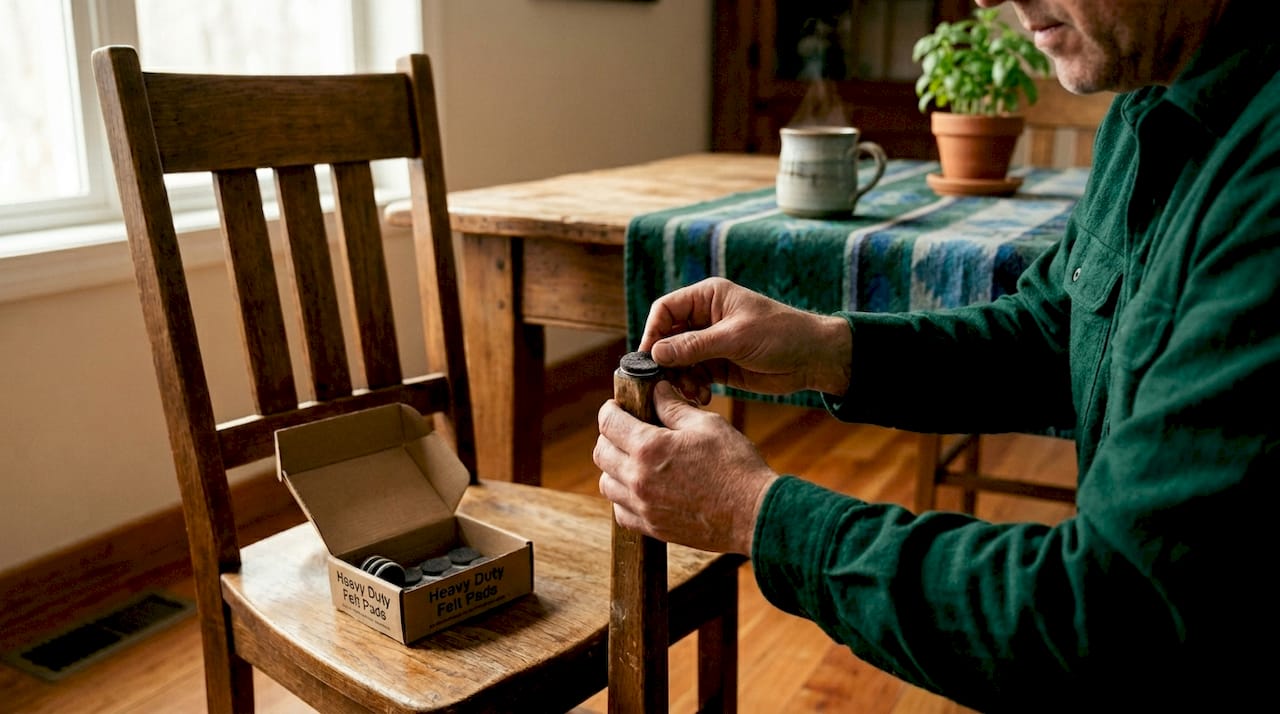
Every chair pull, every sofa shift, every table scoot across the floor leaves a mark. This is one of the simplest and most overlooked ways to prevent scratches on hardwood. Felt pads placed under furniture legs absorb the friction that would otherwise gouge directly into the finish.
Here’s what to keep in mind when using furniture pads:
- Felt or fabric pads are the most effective option. They stay soft and provide real buffering against gouges and scuffs.
- Replace pads every few months. Dirt and grit embed into the felt over time, and a dirty pad becomes an abrasive instead of a protector.
- Check chair wheels. Hard plastic casters on office chairs are particularly damaging. Replace them with soft rubber or felt-tipped wheels, or place a chair mat under any rolling furniture.
- Fabric glides guard against scuffs from routine furniture movement, not just heavy rearranging.
Avoid rubber-backed furniture leg covers. Rubber can react with polyurethane finishes and leave permanent discoloration, especially on lighter wood.
6. Use entry mats and area rugs strategically
A well-placed mat at your front door stops a significant amount of grit before it ever reaches your hardwood. This is one of the most cost-effective ways to safeguard hardwood floors, and most homeowners either skip it or use mats they never maintain.
Mats must be cleaned regularly to stay effective. A saturated, dirty mat stops trapping debris and starts releasing it onto your floor when you walk over it. Shake or vacuum entry mats at least once a week, and wash them monthly.
Area rugs in high-traffic zones like hallways, living rooms, and kitchens add another layer of protection. A few key rules apply:
- Choose rugs with natural backings like cotton or felt. Rubber and vinyl backings can discolor or scratch hardwood finishes.
- Use a rug pad underneath to prevent slipping and to allow airflow between the rug and the floor.
- Rotate rugs periodically so sunlight and traffic wear the floor evenly underneath.
7. Control indoor humidity year-round
Protecting hardwood from humidity damage requires consistency across every season. In summer, air conditioning keeps indoor air drier. In winter, heating systems strip moisture from the air. Both extremes stress your wood.
A whole-home humidifier in winter and a dehumidifier in humid summer months helps you stay in that 30% to 50% range without constant attention. An inexpensive hygrometer placed in a main living area gives you a real number to work with rather than guessing. If you own a vacation home or plan to be away for a long stretch, keeping your HVAC running at a stable setting protects your floors from the worst kind of damage, the kind caused by dramatic swings from hot to cold and dry to wet.
8. Recoat your floors before the finish wears through
Scheduled recoating is one of the most valuable and most ignored periodic maintenance steps a homeowner can take. Most people wait until the floor looks dull, scratched, or bare before calling anyone. By then, what could have been a screen-and-recoat becomes a full sand-and-refinish.
Here’s a straightforward comparison to help you plan:
| Traffic Level | Recommended Recoat Interval | What Happens If You Wait |
|---|---|---|
| High (entryways, kitchens) | Every 3 to 5 years | Finish wears through, wood exposed |
| Medium (living rooms, hallways) | Every 5 to 7 years | Dullness and micro-scratching compound |
| Low (bedrooms, formal rooms) | Every 7 to 10 years | Surface gradually loses protection |
Professional maintenance with timely recoating can extend a polyurethane finish from a typical 7 to 10 year life to 15 years or more. The screen-and-recoat process scuffs the existing finish lightly and applies a fresh coat, no sanding required, preserving more of your wood for the long run.
Pro Tip: Do the water test to check your finish. Drip a few drops of water on the floor. If it beads up, your finish is intact. If it soaks in within a minute or two, your finish is compromised and it’s time to recoat.
9. Handle spills fast and protect floors from pets
Cleaning hardwood floors safely includes spill response time. Most polyurethane finishes resist everyday spills if you wipe them up quickly. Leave a spill sitting for more than a few minutes and you risk finish penetration, staining, or the beginning of a moisture problem that gets worse over time. Immediate cleanup requires less repair and keeps your floors looking sharp.
Protecting hardwood from pets takes a few consistent habits. Here’s what actually works:
- Trim pet nails every two to three weeks. Long nails are one of the top causes of fine scratching across hardwood finishes.
- Wipe paw pads after outdoor walks to remove grit and moisture before your dog or cat crosses the floor.
- Place food and water bowls on a waterproof mat to catch splashes. Pet water bowls are a surprisingly common source of moisture damage near the bowl perimeter.
- Consider a tougher finish, like a commercial-grade water-based polyurethane, if you have multiple large dogs. It holds up better under that kind of daily traffic.
10. Maintain a consistent care routine rather than periodic deep cleans
One of the best hardwood floor protectors is a habit you build over time. Inconsistent care causes more cumulative damage than most single incidents do. Floors that get neglected for weeks and then scrubbed hard experience more stress than floors that get gentle, regular attention.
A simple weekly routine tied to your hardwood floor care workflow keeps the finish intact longer and means you’re rarely dealing with anything serious. Daily sweeping at entry points, weekly vacuuming and damp mopping, and quarterly checks on furniture pads and mat condition. That’s genuinely most of what it takes.
My honest take on protecting hardwood floors
I’ve spent years looking at hardwood floors after homeowners thought they’d done everything right. The most common issue I see isn’t neglect. It’s good intentions applied in the wrong order.
People spend money on great flooring, install it beautifully, and then grab whatever household cleaner is under the sink. Or they mop first and wonder why the floor looks worse. Or they wait until they see bare wood before calling anyone. The floor was giving signals long before that.
What I’ve learned is that the most expensive mistake homeowners make is waiting. A screen-and-recoat is a fraction of the cost of a full refinish. Felt pads cost a few dollars. A microfiber mop runs less than $50. None of this is complicated or costly. The investment is in building consistent habits and catching problems early.
I’ve also found that the homeowners whose floors look best ten or fifteen years later aren’t the ones who spent the most on cleaning products. They’re the ones who swept regularly, kept humidity stable, and called a professional at the right time rather than the last possible moment.
Your floors can last a lifetime. They just need you to take them seriously before the damage shows up, not after.
— Jim
Keep your floors looking their best with expert help
Even the most diligent daily care eventually meets its match in years of traffic and wear. When your floors need more than a routine clean, Polishedjemmfloor brings the professional experience to restore and protect what you’ve built.
Since 2014, Polished JEMM Floor Care has served homeowners across the tri-state area with hardwood floor refinishing and One-Day Screen and Recoat services that add real years to your floor’s life. If you’re wondering whether your floors are ready for a recoat or a full refinish, the step-by-step refinishing guide at Polishedjemmfloor walks you through exactly what to expect, what the process involves, and how to prepare. Your floors made a serious first impression. Keep them that way.
FAQ
How often should I clean hardwood floors?
Dry sweep or dust mop high-traffic areas daily, vacuum two to three times per week, and damp mop with a pH-neutral cleaner once a week. Adjust frequency based on household foot traffic and pets.
What is the best way to prevent scratches on hardwood?
Place felt pads under all furniture legs, use entry mats to trap incoming grit, and keep pet nails trimmed. These three steps stop most scratches before they happen.
Can I use vinegar to clean hardwood floors?
No. Vinegar’s acidity gradually breaks down polyurethane finishes, leaving floors duller and more susceptible to damage. Use a pH-neutral cleaner designed specifically for hardwood floors instead.
How do I know when my hardwood floors need recoating?
Drip a few drops of water on the floor. If the water beads up, your finish is holding. If it soaks in quickly, the finish is worn and a screen-and-recoat should be scheduled before the bare wood gets exposed.
Does indoor humidity really affect hardwood floors?
Yes, significantly. Humidity below 30% causes boards to contract and gap; above 60%, they expand and buckle. Keeping indoor humidity consistently between 30% and 50% prevents the most common forms of structural wood floor damage.